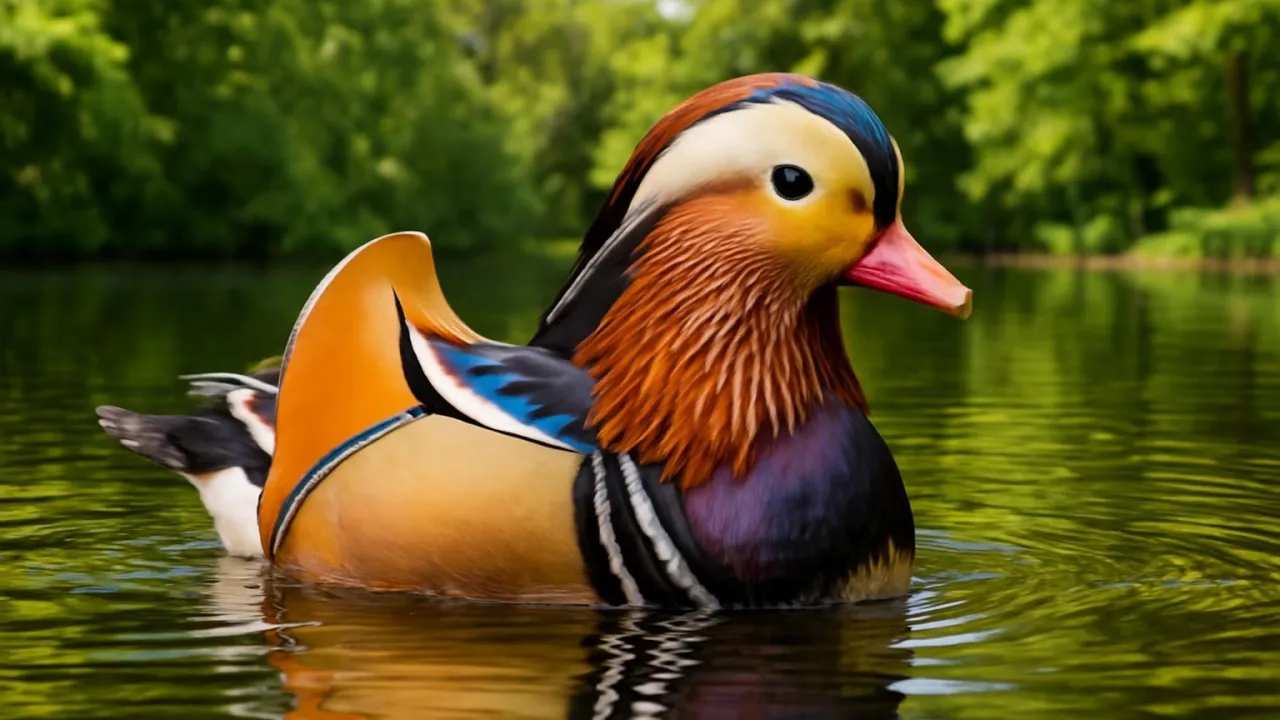
Baby mandarin ducks can leap from high tree nests without getting hurt!
✨ Word Sparks (Grade 2 Glossary)
Tap 🔊 to hear
nest
A bird's home for eggs
duckling
A baby duck
stripe
A line of color
🪝
Did you know some ducks sleep in trees?
1
Colorful Feathers
The male mandarin duck has orange, blue, and green feathers. Its wings look like tiny fans, and its beak is bright red. Females are brown and white, which helps them hide. Both males and females have white near their eyes.
2
Homes Near Water
Mandarin ducks live in ponds and slow rivers with lots of trees. They like places where they can hide and find food. In spring, they build in tree holes. Baby jump down to the ground after hatching.
3
What They Eat
Mandarin ducks eat seeds, plants, and small bugs in the water. Sometimes, they also eat tiny fish or snails. They use their beaks to dabble and find food. Dabbling means they tip forward and splash in the water.
Mandarin ducklings can fall over 30 feet from a tree and land safely!
✨ Word Sparks (Grade 3 Glossary)
Tap 🔊 to hear
camouflage
Colors that help animals hide
predator
An animal that hunts others
plumage
All the feathers on a bird
🪝
What bird wears orange 'sails' on its back?
1
A Living Rainbow
Male mandarin ducks are famous for their bright orange 'sail' feathers and rainbow colors. Their orange, blue, and green helps them stand out during courtship displays. Female mandarin ducks are brown and white, which gives them . This camouflage helps females hide from while nesting.
2
Tree-Nesting Wonders
Mandarin ducks nest in holes high up in trees near water. When ducklings hatch, they bravely leap from the nest to the ground below. Their light, fluffy bodies help them bounce safely. This amazing adaptation keeps them safe from many ground .
3
Habitat and Food
Mandarin ducks live in wooded ponds and slow rivers in East Asia. They eat seeds, water plants, insects, and sometimes small fish or snails. Dabbling in shallow water helps them find food easily. Their strong beaks are perfect for picking up seeds and tiny creatures.
4
A Surprising Traveler
Mandarin ducks are native to China, Japan, and Russia, but some now live in Europe. People brought them to parks and gardens, where they sometimes escape and form wild flocks. These ducks do not migrate far, but they may move to find new ponds. Their colorful feathers make them easy to spot in new places.
1. Why do female mandarin ducks have brown feathers?
2. What helps ducklings survive their big jump?
🤯 Mind-Blowing Fact • Grade 4
Male mandarin ducks shed their rainbow colors after breeding to stay safe from predators.
✨ Word Sparks (Grade 4 Glossary)
Tap 🔊 to hear
ornamental
Used for decoration or beauty
cavity
A hollow space, like in a tree
omnivore
An animal that eats both plants and animals
🪝
How can a duck look like a floating flower?
1
Brilliant Plumage and Courtship
Male mandarin ducks are famous for their spectacular orange 'sail' feathers, blue wings, and green crests, which they display during courtship rituals to attract females. These vivid colors make them one of the most beautiful ducks in the world, while the females remain brown and white for effective camouflage. The males' bright plumage is vital during mating season but is shed after breeding, leaving them looking more like the females. This seasonal color change helps protect them from predators when they are not trying to attract a mate.
2
Tree-Nesting and Duckling Survival
Mandarin ducks are unique among ducks because they build their nests in tree cavities, often high above the ground near water. After hatching, ducklings leap from their nest, sometimes falling over 30 feet, and land safely due to their lightweight, fluffy bodies. This extraordinary adaptation helps them avoid ground predators that might threaten eggs or young birds. The mother leads her ducklings to the water soon after they land, where they begin to swim and feed. Tree-nesting also allows mandarin ducks to occupy habitats that ground-nesting ducks cannot use.
3
Habitat and Diet
Mandarin ducks are native to East Asia, especially in China, Japan, and parts of Russia, where they live in wooded ponds, lakes, and slow-moving rivers. They are , feeding on seeds, aquatic plants, insects, and small fish, which they find by dabbling and foraging in shallow water. Their strong, flat beaks are perfect for picking up seeds and sifting through mud for tiny animals. In autumn, they eat more seeds and nuts to prepare for colder weather. This varied diet helps them survive in changing environments.
4
Mandarin Ducks Around the World
Although native to Asia, mandarin ducks have been introduced to parks and estates in Europe, especially in the United Kingdom, where small wild populations now thrive. Their striking appearance makes them popular in ponds and gardens, but escaped birds can form new colonies in the wild. Mandarin ducks play an important role in their ecosystems by spreading seeds and serving as prey for larger animals. However, habitat loss and pollution threaten their native populations, making conservation efforts increasingly important.
1. Why do mandarin ducklings leap from high nests?
2. What helps mandarin ducks survive in different environments?
🤯 Mind-Blowing Fact • Grade 5
A mandarin duck’s orange 'sails' are actually upright feathers only males display during courtship.
✨ Word Sparks (Grade 5 Glossary)
Tap 🔊 to hear
sexual dimorphism
When males and females look very different
dabbling
Feeding by skimming water and mud
biodiversity
Many different living things in nature
🪝
Why do scientists call the mandarin duck 'nature’s living jewel'?
1
Taxonomy and Unique Appearance
The mandarin duck, scientifically named Aix galericulata, belongs to the family Anatidae, which includes all ducks, geese, and swans. Male mandarins are renowned for their ornate plumage, featuring bold orange 'sails,' iridescent blue and green feathers, and a striking red bill. These colors are produced by microscopic structures in the feathers that refract light, rather than by pigments alone. Females, in contrast, have mottled brown and gray feathers, which provide excellent camouflage while nesting. Seasonal molting causes males to lose their vivid colors after breeding, making them less visible to predators. This is a classic example of how natural selection shapes animal appearance.
2
Tree-Nesting Behavior and Duckling Adaptations
Unlike most duck species, mandarin ducks nest in tree cavities sometimes as high as 30 feet (9 meters) above ground, often near wooded ponds or rivers. After hatching, the ducklings, weighing less than an ounce, leap from the nest and land safely due to their lightweight, downy bodies and flexible bones. This adaptation allows them to avoid many ground predators and quickly reach the safety of water. The mother calls to her ducklings from below, guiding them to their first swim. This remarkable nesting strategy enables mandarin ducks to exploit habitats inaccessible to ground-nesting waterfowl.
3
Diet, Feeding Mechanics, and Ecological Role
Mandarin ducks are omnivorous, consuming a diverse diet that includes seeds, acorns, aquatic plants, insects, snails, and occasionally small fish. Their broad, flat bills are specially adapted for —skimming the water’s surface and sifting mud to find food. In autumn, they rely heavily on acorns and seeds, which provide essential energy for surviving colder months. By dispersing seeds and acorns, mandarin ducks help maintain healthy forest and wetland ecosystems. They also serve as prey for raptors, foxes, and other predators, making them an important part of the food web.
4
Global Distribution and Conservation Challenges
Native to East Asia, especially China, Japan, and Russia, wild mandarin duck populations have declined due to habitat loss, wetland drainage, and pollution. However, introduced populations are now established in the United Kingdom and parts of Europe, where they thrive in parks and ornamental lakes. Despite their beauty, escaped ducks can sometimes compete with native species for resources. Conservation efforts in Asia focus on protecting nesting habitats, restoring wetlands, and reducing pollution to ensure sustainable populations. Monitoring and research help scientists track population trends and understand the impact of environmental changes.
5
Human Connections and Cultural Significance
Mandarin ducks have been celebrated in East Asian art, poetry, and folklore for centuries, symbolizing love and fidelity because pairs often stay together for life. Their dazzling appearance makes them a favorite subject in paintings and garden ponds worldwide. Scientists study their unique adaptations to learn about evolution, animal behavior, and the importance of . In some regions, captive breeding programs help maintain healthy populations and raise awareness about wetland conservation. The mandarin duck’s story reminds us of the delicate balance between human activity and the survival of spectacular wildlife.