Mahi-Mahi
The Rainbow Rocket of the Ocean
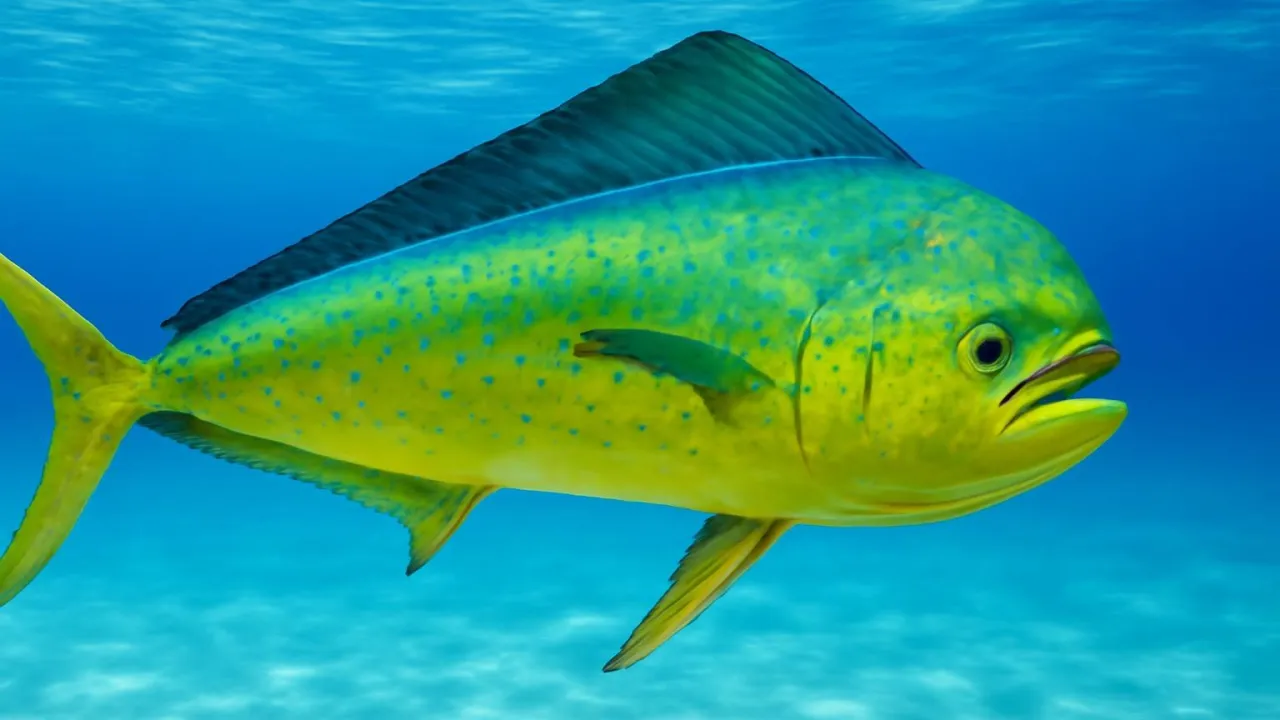
A mahi-mahi’s color can fade to dull gray within minutes after it leaves the water due to stress or death.
1 Taxonomy and Scientific Wonders
Mahi-mahi, scientifically known as Coryphaena hippurus, belong to the family Coryphaenidae and are sometimes called dolphinfish, though they are unrelated to marine mammals. Their genus name comes from Greek, meaning 'to leap,' highlighting their acrobatic jumps. Unlike many fish, mahi-mahi have a blunt, steep forehead and a long dorsal fin running nearly the length of their bodies. They are classified as fish, meaning they live in the open sea rather than near the bottom or the shore. This unique anatomy and lifestyle make mahi-mahi a fascinating subject for marine biologists.
2 Physiology: Color-Changing and Speed Mechanics
Mahi-mahi possess specialized pigment cells called chromatophores that allow rapid color changes, shifting from bright greens and yellows to silvery blue within seconds. These changes are triggered by hormones and nerve signals, often in response to excitement, stress, or hunting. Their streamlined bodies, deeply forked tails, and powerful muscles enable speeds up to 50 miles per hour, rivaling the fastest fish in the ocean. Mahi-mahi’s large eyes help them spot prey from a distance, while their sharp teeth and strong jaws make them efficient hunters. Their gills extract oxygen efficiently, supporting their high-energy lifestyle.
3 Life Cycle and Reproduction
Mahi-mahi grow at an astonishing rate, often reaching full size—up to six feet and 50 pounds—within just two years. They have one of the shortest life spans among large ocean fish, rarely living beyond five years. Females are prolific spawners, releasing hundreds of thousands of eggs multiple times per year, which helps maintain population stability despite heavy predation and fishing pressure. Eggs hatch in about two days, and young mahi-mahi quickly join floating seaweed for protection and food. This rapid growth and early reproduction are key adaptations for survival in the open ocean.
4 Ecosystem Roles and Human Connections
As , mahi-mahi help control populations of smaller fish, squid, and crustaceans, maintaining balance in tropical and subtropical marine ecosystems. They are prey for larger predators like sharks, billfish, and marine mammals, making them a vital link in the oceanic food web. Mahi-mahi are also highly prized by commercial and recreational fishers for their fighting spirit and delicious meat, supporting coastal economies worldwide. Sustainable fishing practices are important to ensure healthy mahi-mahi populations for future generations.
5 Conservation, Distribution, and Quantitative Comparisons
Mahi-mahi inhabit warm waters in the Atlantic, Pacific, and Indian Oceans, often following ocean currents and floating debris. They can be found from the surface down to about 279 feet (85 meters) deep, but prefer the upper sunlit layers. Unlike many overfished species, mahi-mahi are considered sustainable because of their rapid growth and high reproductive rates. However, threats like , plastic pollution, and climate change still impact their numbers. A mature mahi-mahi can weigh as much as a medium-sized dog and swim faster than most Olympic swimmers, making it one of the ocean’s most impressive and resilient fish.
1. What allows mahi-mahi to change color so quickly?
2. Why are mahi-mahi considered a sustainable seafood choice?