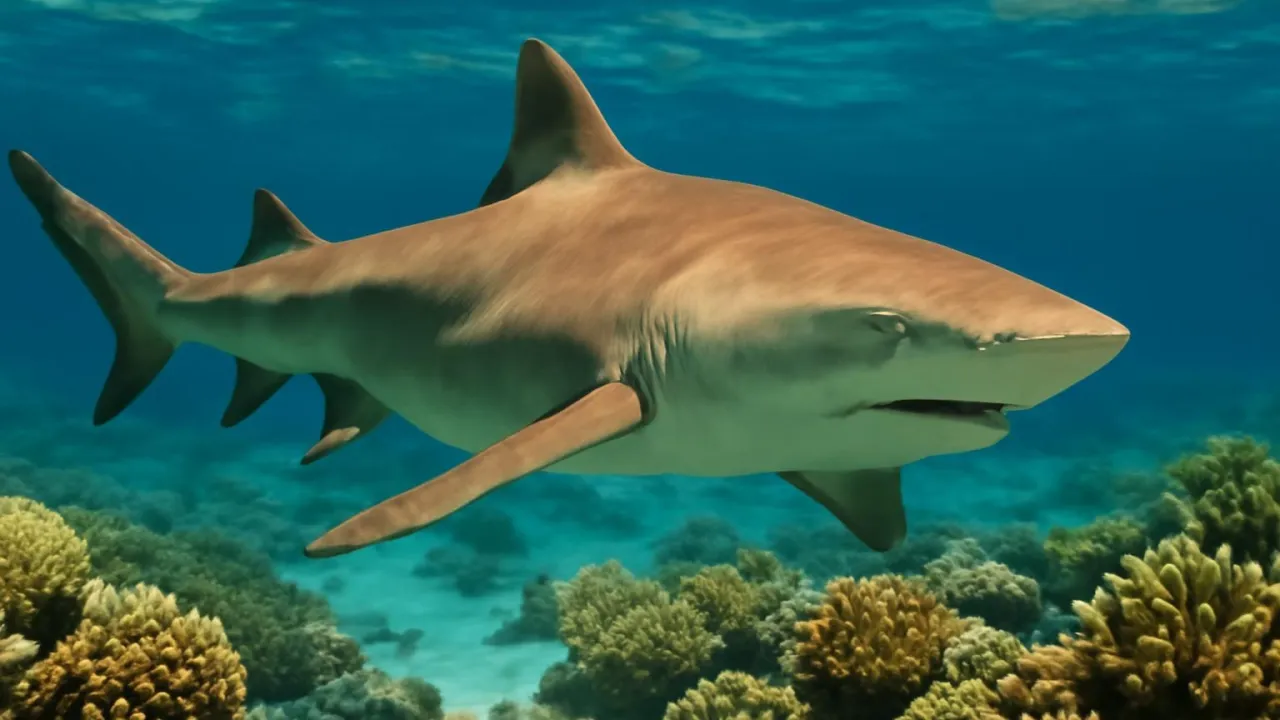
Lemon sharks use their yellow skin to blend in and sneak up on prey!
✨ Word Sparks (Grade 2 Glossary)
Tap 🔊 to hear
prey
Animals that other animals eat
estuaries
Where rivers meet the ocean
camouflage
Colors that help hide animals
🪝
Have you ever seen a shark that looks like a yellow lemon?
1
Bright Yellow Skin
Lemon sharks have bright yellow skin that helps them hide in shallow water. They swim near coral reefs and sandy bottoms. Their color makes it hard for to see them. This helps them catch food more easily.
2
Warm Water Home
These sharks live in warm coastal waters in the Atlantic and Pacific Oceans. They like shallow areas near beaches where the water is calm. Lemon sharks often stay in mangroves and to rest and find food.
3
Eating and Growing
Lemon sharks eat fish, crabs, and small marine animals. They use their sharp teeth to catch . Young lemon sharks grow quickly and stay near safe shallow waters. Adults can grow up to 10 feet long.
1. Why is the lemon shark’s yellow skin important?
2. Where do lemon sharks often live?
🤯 Mind-Blowing Fact • Grade 3
Lemon sharks sometimes form schools to protect themselves and hunt more effectively!
✨ Word Sparks (Grade 3 Glossary)
Tap 🔊 to hear
adaptation
A body change that helps survival
gestation
Time baby sharks grow inside mom
nursery
Safe shallow water where baby sharks live
🪝
Did you know lemon sharks use their yellow color as camouflage to hunt better?
1
Camouflage and Hunting
Lemon sharks have bright yellow skin that blends well with sandy ocean floors. This camouflage helps them sneak up on their prey without being seen. Their sharp teeth are perfect for catching fish and crustaceans. This gives them an advantage in shallow water habitats.
2
Habitat and Behavior
These sharks live mostly in warm coastal waters, including mangroves and coral reefs. They often swim in shallow water less than 30 feet deep. Lemon sharks are social and sometimes travel in groups called schools. Their habitat provides both food and shelter from predators.
3
Life Cycle and Growth
Lemon sharks give birth to live pups after a of about 10 to 12 months. The young sharks stay in shallow nurseries to avoid predators. As they grow, they learn to hunt and survive on their own. Adults can reach lengths up to 10 feet and weigh over 200 pounds.
4
Physical Features
Their broad, flat snout helps them detect prey hidden in the sand. Lemon sharks have two dorsal fins that help with swimming stability. Their yellow skin color varies with water depth and sunlight. These features all help lemon sharks survive in their environment.
Lemon sharks help keep ocean food webs balanced by controlling fish populations!
✨ Word Sparks (Grade 4 Glossary)
Tap 🔊 to hear
symbiosis
Two animals help each other live
predator
Animal that hunts other animals
conservation
Protecting animals and their homes
🪝
How does the lemon shark’s bright yellow color affect its role in the ocean ecosystem?
1
Camouflage and Hunting Success
The lemon shark’s bright yellow skin acts as camouflage in shallow, sandy waters, allowing it to sneak up on prey effectively. This adaptation increases its hunting success and helps maintain balance in the food web by controlling fish and crustacean populations. Their ability to blend into their environment reduces energy spent chasing prey.
2
Ecosystem Roles and Symbiosis
Lemon sharks play a vital role as mid-level in coastal ecosystems, helping keep prey populations healthy. They sometimes interact with cleaner fish that remove parasites, showing symbiotic relationships. Human activities like fishing and habitat destruction impact their populations, highlighting the need for efforts.
3
Geographic Distribution and Habitat
Lemon sharks are found in warm coastal waters of the Atlantic and Pacific Oceans, especially near Florida, the Caribbean, and Central America. They prefer shallow waters, mangroves, and coral reefs where food and shelter are abundant. Seasonal movements help them find optimal breeding and feeding grounds.
4
Physical Adaptations and Survival
Their broad snout enhances sensory detection of prey hidden in sand, while two dorsal fins provide swimming stability. The yellow skin varies with light and water depth, improving camouflage. These physical traits combined with social behaviors like schooling increase their chances of survival in dynamic coastal ecosystems.
1. Why is the lemon shark important to ocean food webs?
2. What human activity threatens lemon sharks?
🤯 Mind-Blowing Fact • Grade 5
Lemon sharks use special sensors to detect tiny electrical signals from prey buried in sand!
✨ Word Sparks (Grade 5 Glossary)
Tap 🔊 to hear
viviparous
Giving birth to live baby sharks
electroreceptors
Sensors that detect electrical signals
chromatophores
Cells that change skin color
🪝
What makes the lemon shark a fascinating species in marine biology and conservation science?
1
Scientific Classification and Taxonomy
The lemon shark belongs to the family Carcharhinidae and is scientifically named Negaprion brevirostris. It is a requiem shark known for its distinctive yellow coloration and coastal habitat preferences. Its taxonomy places it among other important predatory sharks that influence marine ecosystems. Understanding its classification helps scientists study its evolutionary relationships.
2
Physiological Adaptations and Mechanics
Lemon sharks possess called ampullae of Lorenzini that detect electrical signals from prey hidden in sand. Their broad, flattened snout enhances this sensory ability. Their yellow pigmentation is due to specialized that reflect light, aiding camouflage in shallow, sunlit waters. These adaptations improve hunting efficiency and survival in coastal habitats.
3
Life History and Reproductive Biology
Lemon sharks have a reproductive strategy, giving birth to live young after a gestation period of approximately 10 to 12 months. Females typically give birth to 4 to 17 pups in shallow nursery habitats that provide protection from predators and abundant food resources. Juveniles remain in nurseries for several months before venturing into deeper waters.
4
Ecological Role and Conservation Status
As mid-level predators, lemon sharks regulate populations of fish and crustaceans, maintaining ecosystem balance. They are vulnerable to overfishing and habitat degradation, especially in mangrove nurseries. Conservation programs focus on habitat protection and sustainable fishing to ensure population stability. Public awareness and marine protected areas are critical for their survival.
5
Quantitative Comparisons and Facts
Adult lemon sharks can grow up to 10 feet (3 meters) long and weigh around 220 pounds (100 kilograms). They swim at speeds up to 10 miles per hour (16 kilometers per hour) when hunting. Their preferred water temperature ranges from 68 to 85 degrees Fahrenheit (20 to 29 degrees Celsius). These measurements help researchers understand their biology and habitat needs.