1. About how much extra time beyond 365 days does Earth take to circle the Sun?
2. Which month gets the extra bonus day in a leap year?
🤯 Mind-Blowing Fact • Grade 2
Every leap year in modern times—such as 2024, 2028, and 2032—also lines up with the Summer Olympic Games!
✨ Word Sparks (Grade 2 Glossary)
Tap 🔊 to hear
Quarter
One fourth of a whole thing
Leapling
Someone born on Leap Day, February 29
Drift
To slip slowly out of place
🪝
What would happen to summer vacation if we stopped celebrating Leap Day?
1
Spins Don't Fit Evenly
Clap your hands for each daily spin Earth makes as it loops around the Sun! Nature didn't design Earth's daily spin to fit into its yearly orbit with a neat whole number. Instead, one full orbit takes about 365 and one- days.
2
Four Quarters Make One Day
Just like four add up to one whole dollar, four quarter-days add up to one full twenty-four-hour day! Adding February 29 every fourth year makes a 366-day leap year.
3
Keeping Seasons in Place
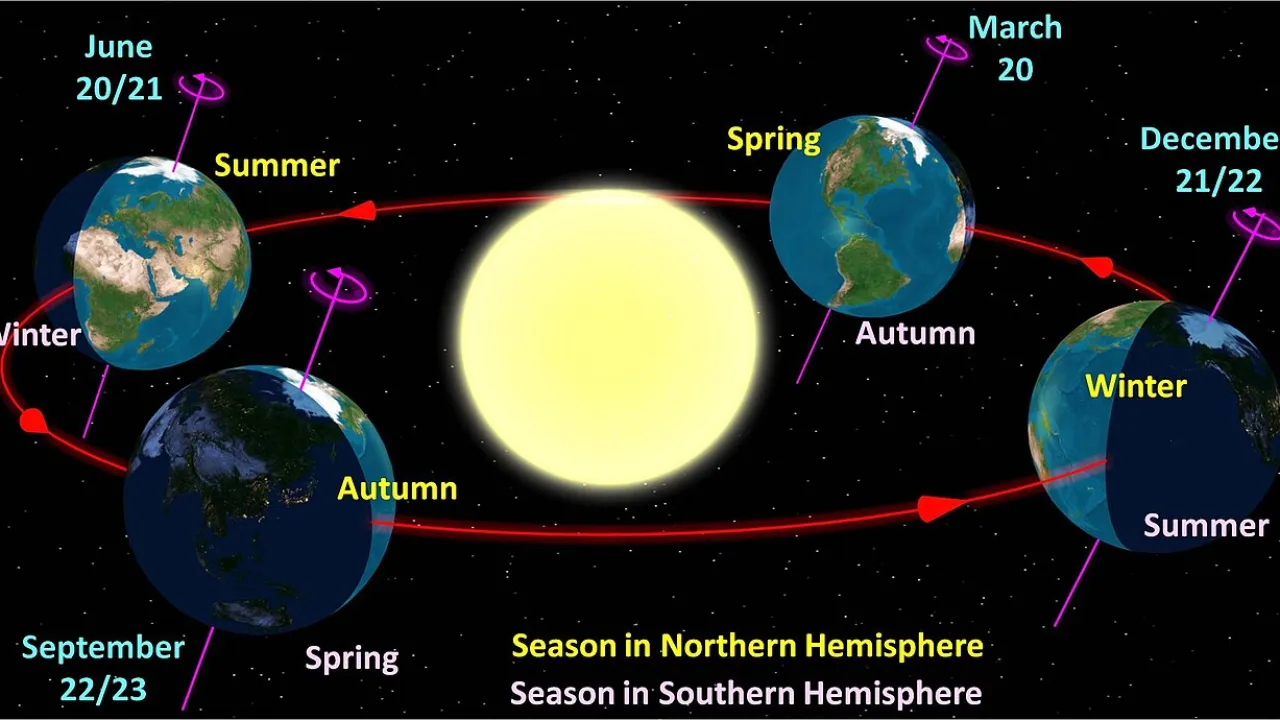
Without leap years, our calendar would slip ahead by six hours every year. After a few hundred years, Northern Hemisphere snowstorms would arrive in July while December felt hot!
2. What would happen over centuries if we never added leap days?
🤯 Mind-Blowing Fact • Grade 3
Planet Mars also has leap years—scientists running Mars rovers use a Martian calendar where six out of every ten Martian years are leap years!
✨ Word Sparks (Grade 3 Glossary)
Tap 🔊 to hear
Solar Year
Exact time Earth takes to orbit Sun
Gregorian Calendar
Modern world calendar using century leap rules
Century
A time span of one hundred years
🪝
Why did the year 2000 get a Leap Day while the year 1900 skipped right over February 29?
1
Almost—Not Quite—Six Hours
Grab a stopwatch for a cosmic math secret! Earth's trip around the Sun doesn't take 365 days and 6 hours on the nose. Measured carefully, one lasts 365 days, 5 hours, 48 minutes, and 45 seconds—about eleven minutes shy of six hours!
2
Julius Caesar's Eleven-Minute Slip
Over two thousand years ago, Roman leader Julius Caesar started adding one leap day every four years. Because eleven extra minutes crept in each year, by 1582 the spring equinox had drifted ten whole days early on European calendars!
3
The Clever Century Rule
In 1582, astronomers introduced the we use today. Years divisible by 4 are leap years, EXCEPT years ending in '00'—unless they also divide evenly by 400!
4
Testing the Rule
Under that smart rule, 1700, 1800, and 1900 skipped Leap Day, while 2000 kept February 29—keeping our calendar accurate for thousands of years!
1. About how much shorter than 365 days and 6 hours is Earth's true solar year?
2. According to the Gregorian century rule, which of these future century years WILL be a leap year?
🤯 Mind-Blowing Fact • Grade 4
When Britain and colonial Virginia switched calendars in September 1752, Benjamin Franklin cheerfully joked in Poor Richard's Almanack that early risers shouldn't complain because they got to sleep right through eleven skipped days!
✨ Word Sparks (Grade 4 Glossary)
Tap 🔊 to hear
Julian Calendar
Ancient Roman calendar adding leap day every four years
Synchronize
To match two moving things in time
Remainder
Amount left over after dividing whole numbers
🪝
Why did George Washington celebrate his birthday on February 11 as a boy in Virginia and on February 22 as an adult?
1
Two Independent Planetary Motions
Earth keeps time with two completely separate motions in space: rotation (one 24-hour spin on its axis, giving us day and night) and revolution (one 940-million-kilometer journey around the Sun, giving us our year). Because gravity and planetary formation never synchronized spin rate with orbital distance, 365.2422 rotations fit inside a single seasonal revolution.
2
Why Eleven Days Vanished in 1752
Although many countries adopted the accurate Gregorian calendar in 1582, Great Britain and its American colonies—including colonial Virginia—kept using the older until September 1752! By then, the Julian calendar had drifted eleven days behind Earth's seasons. Lawmakers jumped Wednesday, September 2, 1752 straight to Thursday, September 14, shifting young George Washington's February 11 birthday onto February 22!
3
Why Do Dates 'Leap' Over a Day?
Ever wonder why it's called a 'leap' year? Because 365 divided by 7 leaves a of 1, a normal year shifts your birthday forward by one weekday (Monday to Tuesday). In a 366-day leap year, dates after February 29 'leap' over a weekday—jumping two days ahead!
4
Ultra-Precise Modern Clocks
With the 400-year Gregorian rule averaging 365.2425 days per year, our calendar drifts by only one day in over 3,000 years!
1. Why did George Washington's birthday shift from February 11 to February 22 during his lifetime?
2. Why is a 366-day year called a 'leap' year on weekly calendars?
🤯 Mind-Blowing Fact • Grade 5
Because twenty-seven seconds of annual Gregorian calendar error still adds up to one extra day every ~3,225 years, future astronomers around the year 4800 will decide whether to skip a special extra leap day!
✨ Word Sparks (Grade 5 Glossary)
Tap 🔊 to hear
Sidereal Year
Earth's orbit measured against distant fixed stars
Intercalation
Inserting extra days or months into calendars
Leap Second
One-second adjustment matching atomic clocks to Earth's spin
🪝
Why is Earth's orbit against distant stars twenty minutes longer than the seasonal year our leap-year calendar tracks?
1
Sidereal Year vs. Tropical Year
Ask an astronomer how long Earth takes to orbit the Sun, and you will get two slightly different answers! Measured against fixed background stars, one full 360-degree revolution—the —takes 365.25636 solar days (365 days, 6 hours, 9 minutes, 10 seconds). However, because axial precession slowly nudges Earth's equinoxes westward, the Sun returns to the March equinox 20 minutes and 24 seconds sooner, creating a 365.24219-day tropical year.
2
Why Civil Calendars Track the Tropical Year
Human agriculture and meteorology depend on solstices and equinoxes, not which constellation sits behind the Sun! If calendars tracked the longer instead of the shorter tropical year, northern spring would gradually migrate across the calendar by one full month every ~2,150 years.
3
Mathematical Elegance of Intercalation
Adding extra time units to align cycles is called . In 46 BCE, Julius Caesar consulted Alexandrian astronomer Sosigenes to establish a 365.25-day mean year (excess of +11 minutes 15 seconds annually). In 1582, Aloysius Lilius and Christopher Clavius refined intercalation by retaining 97 leap years per 400-year cycle: 365 + (97 / 400) = 365.2425 days—reducing annual error to just 26.8 seconds!
4
Alternative Intercalation Systems Worldwide
Other cultures engineered equally ingenious astronomical solutions. Traditional Hebrew and Chinese lunisolar calendars track 29.53-day lunar months and insert an entire thirteenth 'leap month' seven times every nineteen years (the Metonic cycle), while the Persian Solar Hijri calendar uses direct vernal-equinox observations for extraordinary multi-millennial precision.
5
Leap Seconds and Earth's Tidal Braking
Separate from orbital leap days, ultra-precise cesium atomic clocks occasionally insert or adjust '' because ocean-tide friction from the Moon gradually slows Earth's daily spin by ~1.7 milliseconds per century!