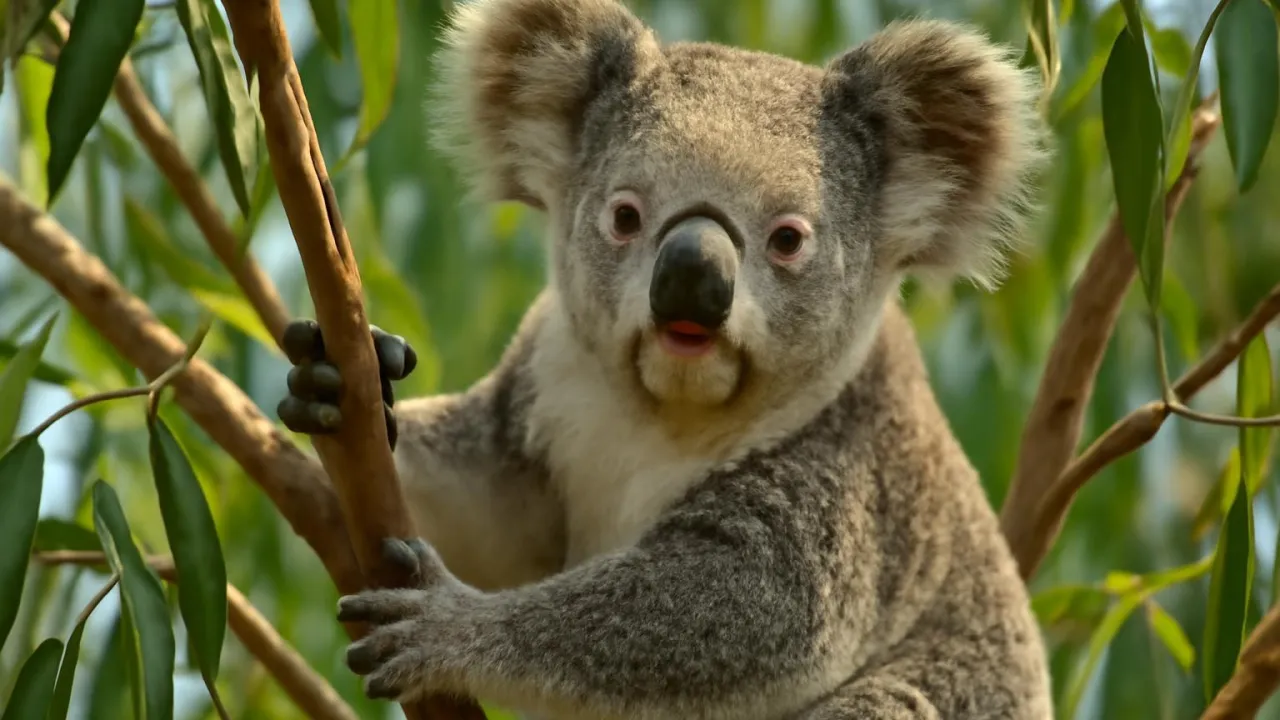
Koalas eat so many eucalyptus leaves that they can eat up to two pounds daily!
✨ Word Sparks (Grade 2 Glossary)
Tap 🔊 to hear
fur
Soft hair that covers an animal’s body
predator
An animal that hunts other animals for food
claws
Sharp nails that help animals climb or catch food
🪝
Have you ever seen a koala hugging a tree while it sleeps?
1
Koalas Sleep a Lot
Koalas sleep up to twenty hours each day because they need lots of rest. They hug tree branches tightly while sleeping. Their thick keeps them warm in the cool forest.
2
What Koalas Eat and Drink
Koalas eat only eucalyptus leaves, which are tough and bitter. They get most of their water from these leaves, so they rarely drink water. This special diet helps them live in dry forests.
3
Where Koalas Live
Koalas live in eucalyptus forests in Australia, mostly in the east. They climb trees with strong paws and sharp . Trees give them food, shelter, and safety from .
Koalas have a special digestive organ called a cecum to break down toxic eucalyptus leaves.
✨ Word Sparks (Grade 3 Glossary)
Tap 🔊 to hear
adaptation
A body change that helps animals survive better
camouflage
Colors or shapes that help animals hide
territory
An area animals protect as their home
🪝
Did you know koalas have special fur to help them live in trees?
1
Koalas’ Sleep and Energy
Koalas sleep nearly twenty hours daily to save energy. Their diet of eucalyptus leaves is low in nutrients and hard to digest. This sleep helps them digest food slowly and stay healthy. Their slow movement is an to conserve energy.
2
Eating Eucalyptus Leaves
Eucalyptus leaves contain toxins that most animals cannot eat. Koalas have a special digestive system to break down these toxins safely. They select the youngest leaves because they have fewer toxins. This unique diet helps koalas avoid competition with other animals.
3
How Koalas Climb and Live
Koalas use sharp claws and strong paws to climb tall eucalyptus trees. Their thick fur provides against tree bark, hiding them from predators. They mark their with scent glands to avoid fights. Koalas live mostly alone but sometimes share trees.
4
Koalas’ Role in Nature
Koalas help eucalyptus forests by eating leaves and pruning trees. Their droppings return nutrients to the soil, supporting plant growth. They are prey for some predators like owls and dingoes. Koalas are a symbol of Australian wildlife and need forest protection.
Koalas can sleep up to 20 hours a day to conserve energy while digesting toxic eucalyptus leaves.
✨ Word Sparks (Grade 4 Glossary)
Tap 🔊 to hear
metabolism
How an animal’s body uses energy to live
deforestation
Cutting down trees that animals need to live
ecosystem
A place where plants and animals live together
🪝
How do koalas survive eating leaves that are toxic to most animals?
1
Koalas’ Unique Diet and Energy
Koalas survive by eating eucalyptus leaves that contain toxins harmful to most animals, which limits their food choices. Because these leaves have low nutrients and require a long digestion process, koalas sleep up to twenty hours daily to conserve energy. Their slow and long rest periods are crucial adaptations for survival in their habitat. This energy-saving lifestyle allows them to thrive in nutrient-poor environments.
2
Climbing Skills and Camouflage
Koalas have strong, sharp claws and padded paws that help them climb tall eucalyptus trees efficiently and safely. Their thick, gray fur blends with the tree bark, providing excellent camouflage that protects them from predators like owls and dingoes. By marking their territory with scent glands, koalas avoid conflicts with others, ensuring access to food and shelter. These behaviors are vital for maintaining their place in the forest .
3
Ecological Role and Human Impact
Koalas play an important role in eucalyptus forest by pruning leaves, which encourages new growth and maintains forest health. Their droppings enrich the soil with nutrients, supporting other plants and animals. However, habitat loss from and urban development threatens koala populations, making conservation efforts critical. Protecting their habitat helps preserve biodiversity and the balance of the ecosystem.
4
Where Koalas Live
Koalas are native to the eucalyptus forests along Australia’s eastern coast, including Queensland, New South Wales, and Victoria. They prefer areas with abundant eucalyptus trees and avoid dry or heavily urbanized regions. Seasonal changes affect leaf quality, influencing koalas’ feeding and movement patterns. Understanding their geographic distribution helps scientists protect their habitats effectively.
Koalas have a highly specialized liver and gut that detoxify eucalyptus toxins, a rare adaptation among mammals.
✨ Word Sparks (Grade 5 Glossary)
Tap 🔊 to hear
marsupial
Animals with pouches for their babies
detoxify
To remove poisons from the body safely
vulnerable
At risk of becoming endangered or harmed
🪝
How does the koala’s unique biology allow it to thrive on a toxic diet in Australian forests?
1
Scientific Classification and Biology
Koalas belong to the family Phascolarctidae and are scientifically named Phascolarctos cinereus. As arboreal herbivores, they have evolved specialized teeth and digestive systems to process eucalyptus leaves, which contain toxins. Their low basal metabolic rate supports their energy-conserving lifestyle. Koalas’ slow movements and long sleep cycles are physiological adaptations to their nutrient-poor diet.
2
Physiological Adaptations for Digestion
Koalas possess an enlarged cecum and colon that ferment eucalyptus leaves, breaking down toxins and extracting nutrients. Their liver enzymes harmful compounds, allowing safe consumption of otherwise poisonous foliage. This digestive specialization is rare among mammals and enables koalas to exploit a food source few others can use. Their selective feeding on young leaves reduces toxin intake further.
3
Conservation Status and History
Koalas are currently listed as due to habitat loss, disease, and climate change impacts. Historically, hunting and land clearing drastically reduced their populations. Conservation programs focus on habitat restoration, disease management, and public education. Scientific research on koalas’ genetics and health aids in developing effective protection strategies to ensure their survival.
4
Ecological Role and Environmental Impact
By feeding on eucalyptus leaves, koalas influence forest structure and nutrient cycling, contributing to ecosystem balance. Their droppings enrich soil fertility, supporting plant growth and biodiversity. Koalas also serve as indicator species for forest health, signaling environmental changes. Protecting koalas helps preserve the integrity of Australian eucalyptus forests and their complex food webs.
5
Quantitative Comparisons and Facts
Koalas weigh between 9 and 33 pounds (4 to 15 kilograms) and measure about 2 to 3 feet (0.6 to 0.9 meters) tall. They can sleep up to 20 hours daily and consume nearly two pounds (1 kilogram) of eucalyptus leaves each day. Their body temperature averages around 36.5 degrees Celsius, and they can live up to 13 years in the wild. These numbers highlight their unique adaptations to a specialized lifestyle.