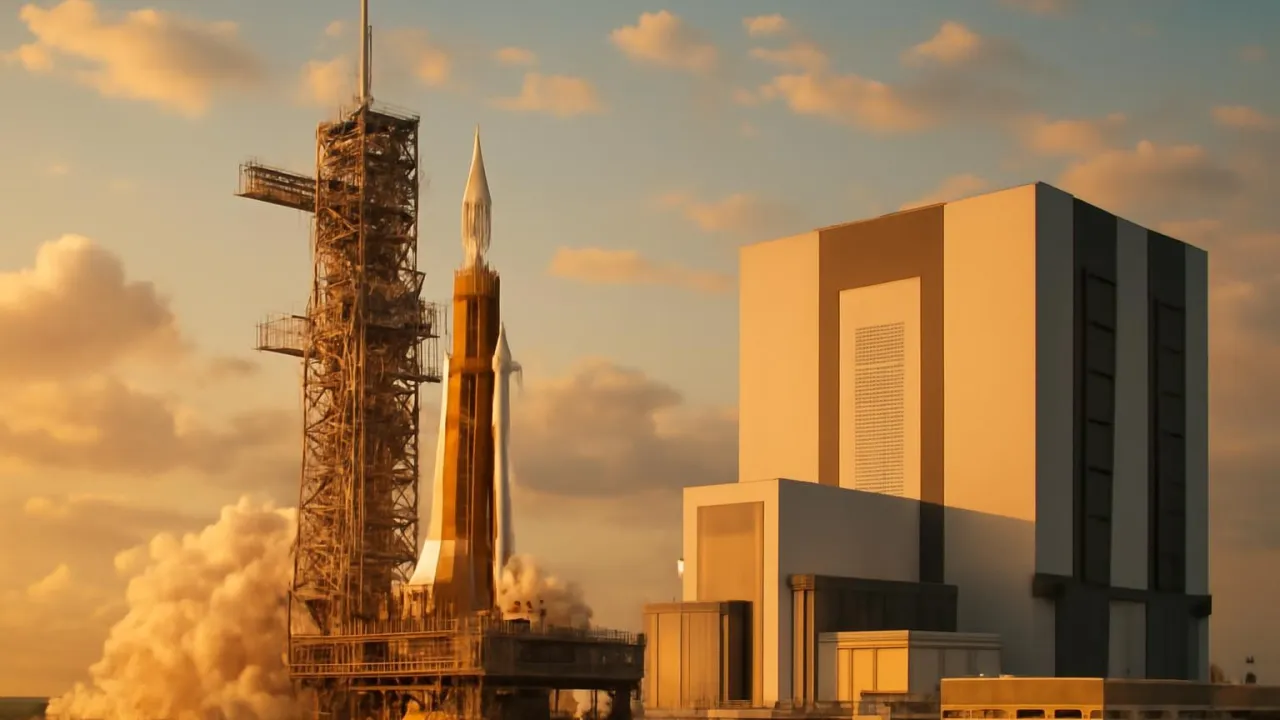
The Apollo 11 rocket launched from here and took humans to the Moon!
✨ Word Sparks (Grade 2 Glossary)
Tap 🔊 to hear
engineer
A person who designs and builds things
pad
A flat place where rockets stand
launch tower
A tall structure that helps rockets
🪝
Have you ever felt the ground shake from a rocket launch?
1
Rocket Power and Noise
When rockets blast off, the ground trembles and air rumbles with sound. People cover their ears as smoke and fire burst out. The rocket rises high into the sky.
2
A Place for Space Heroes
This is where astronauts start their space journeys. Families and friends wave as the rocket takes off. Many people come to watch these special moments.
3
Building a Launch Pad
built strong towers and for rockets. They use giant cranes and special machines. The launch pad keeps rockets safe until they are ready to fly.
The launch pad uses 300,000 gallons of water in seconds to cool and dampen sound!
✨ Word Sparks (Grade 3 Glossary)
Tap 🔊 to hear
vibration
A shaking or trembling movement
monument
A special place that honors something important
engineer
A person who solves problems and builds things
🪝
Can you imagine standing close as a rocket shakes the earth?
1
The Roar of Liftoff
When a rocket launches, you hear a thunderous in the air. The engines burn fuel, creating huge clouds of steam and fire. The ground rumbles, and the rocket slowly lifts off the pad. People cheer as the rocket climbs higher into the sky.
2
How the Launch Complex Works
The launch pad is made of strong concrete and steel. designed it to handle the intense heat and pressure of liftoff. A tall launch tower helps astronauts enter the rocket safely. Special water systems spray the pad to cool it and reduce noise.
3
A Place for Space Exploration
The Kennedy Space Center Launch Complex is a famous to space travel. It has sent astronauts to the Moon, the International Space Station, and beyond. Scientists and work together to prepare rockets for flight. Each launch is a step toward new discoveries.
4
Visiting the Launch Complex
People from all over the world visit to see rocket launches. They tour the Vehicle Assembly Building and see real rockets up close. The complex is part of NASA’s history and future. It inspires kids and adults to dream about exploring space.
The Vehicle Assembly Building is so huge, clouds sometimes form inside it!
✨ Word Sparks (Grade 4 Glossary)
Tap 🔊 to hear
acoustic resonance
A loud echo made by sound waves
crawler-transporter
A giant machine that moves rockets
deluge system
A system that pours water to cool and quiet
🪝
What would you feel if you watched a rocket launch from just a mile away?
1
The Science of Rocket Launches
A rocket launch at Kennedy Space Center begins with a deep rumble that shakes the ground for miles. The engines burn liquid fuel, producing powerful thrust and a deafening . Engineers use water to absorb heat and dampen the intense sound waves. This protects the rocket, pad, and nearby equipment from damage.
2
Building an Engineering Marvel
The launch complex features massive concrete pads and steel towers built to withstand extreme forces. The Vehicle Assembly Building, one of the world’s largest structures, houses rockets before they are moved to the pad. Giant carry rockets slowly along special tracks. Engineers constantly upgrade the site for new types of rockets and missions.
3
From the Moon to Mars
Kennedy Space Center has launched historic missions, including Apollo 11’s journey to the Moon in 1969. Today, it supports launches to the International Space Station and plans for Mars exploration. The complex is a symbol of human curiosity and teamwork. Each launch requires careful planning, testing, and cooperation among scientists, engineers, and astronauts.
4
A Global Destination for Inspiration
Visitors can tour the complex, see real spacecraft, and even meet astronauts. Educational exhibits explain the physics behind rocket launches and the history of space travel. The site inspires millions of people to learn about science and engineering. Kennedy Space Center continues to lead the way in space exploration for the world.
1. Why do engineers use a water deluge system at launches?
2. What does the Vehicle Assembly Building hold?
🤯 Mind-Blowing Fact • Grade 5
The Saturn V rocket launched from here produced 160 million horsepower—more than 85 Hoover Dams combined!
✨ Word Sparks (Grade 5 Glossary)
Tap 🔊 to hear
flame trench
A channel that guides rocket fire safely away
resonance
When sound waves bounce and get stronger
infrastructure
The buildings and systems that support big projects
🪝
What engineering secrets help rockets survive the incredible forces of launch at Kennedy Space Center?
1
Engineering the Ultimate Launch Pad
At Kennedy Space Center, every rocket launch begins with a carefully engineered sequence designed to handle extreme physical forces. The launch pad’s reinforced concrete and steel structures must withstand up to 7.5 million pounds of thrust from engines like those on the Saturn V. Specialized and water deluge systems absorb and redirect heat, acoustic energy, and vibration. Without these features, the intense could damage both the rocket and surrounding equipment. Engineers continually refine these systems to accommodate new, more powerful launch vehicles.
2
The Role of the Vehicle Assembly Building
The Vehicle Assembly Building (VAB) is an iconic part of the complex, standing at 525 feet (160 meters) tall and covering eight acres. It was originally constructed for the Apollo program and remains one of the largest single-story buildings in the world. Inside, engineers assemble massive rockets vertically using overhead cranes capable of lifting 325 tons. Once a rocket is complete, it is transported to the launch pad by a crawler-transporter, which moves at just one mile per hour to ensure safety and stability.
3
A Timeline of Space Exploration
Since its first launch in 1967, the Kennedy Space Center Launch Complex has witnessed over 200 missions, including the historic Apollo, Space Shuttle, and Artemis programs. The complex’s flexible allows it to support both government and commercial launches, making it a hub for innovation in spaceflight. Each mission requires months of planning, testing, and coordination among NASA, private companies, and international partners. The site’s legacy continues to grow as new technologies and missions are developed.
4
Physics and Safety in Rocket Launches
Rocket launches produce not only immense thrust but also dangerous shock waves and heat. The water deluge system releases up to 450,000 gallons (1.7 million liters) of water in less than a minute, dramatically reducing the risk of acoustic damage and fire. Engineers also study the effects of vibration and on both the rocket and the launch pad to prevent structural failure. These safety measures are vital for protecting both people and equipment during every launch.
5
Inspiring the Next Generation
Kennedy Space Center is more than just a launch site; it is a living museum and educational destination. Visitors can witness launches, explore interactive exhibits, and even meet real astronauts. The complex plays a key role in inspiring future scientists, engineers, and explorers from around the world. As humanity prepares for missions to the Moon, Mars, and beyond, Kennedy Space Center remains at the forefront of scientific discovery and technological achievement.