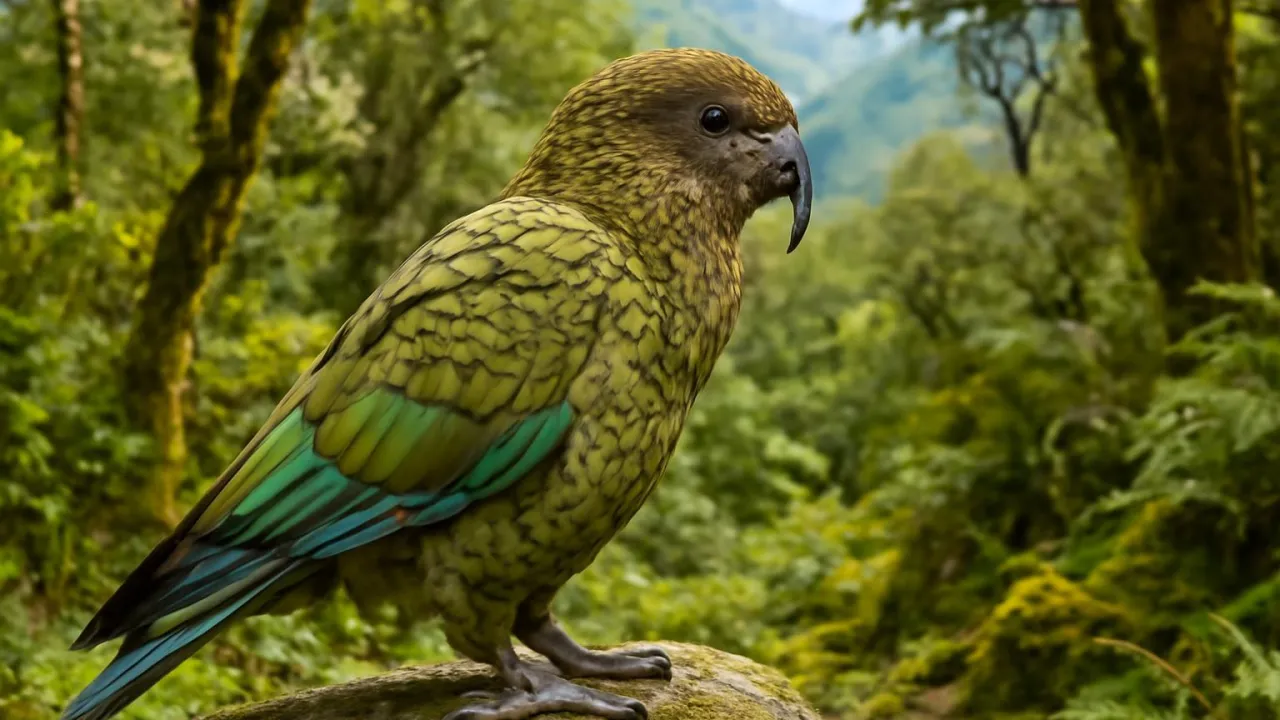
Kea can use tools to help it get food from tricky places!
✨ Word Sparks (Grade 2 Glossary)
Tap 🔊 to hear
puzzle
A problem you solve by thinking carefully.
nest
A safe home birds build for their babies.
tool
An object used to help do a job.
🪝
Have you ever heard of a bird that loves to solve puzzles?
1
Where Kea Lives
Kea lives in the cold mountains of New Zealand. It enjoys forests and rocky places. These areas give it shelter and food. The mountain air is cool and fresh, perfect for kea.
2
Kea’s Food and Life
This bird eats plants, insects, eggs, and small animals. It uses its strong beak to find and open food. Kea chicks grow in high in trees. Parents watch over them carefully until they can fly.
3
A Smart and Playful Bird
Kea is very clever and curious. It can solve and use to get food. It also plays with objects it finds around. These skills help kea survive in the wild.
Kea are one of the few bird species that use tools in the wild!
✨ Word Sparks (Grade 3 Glossary)
Tap 🔊 to hear
camouflage
Colors that help animals hide in their homes.
omnivore
An animal that eats plants and meat.
adaptation
A body change that helps animals survive.
🪝
Did you know the kea uses its clever beak to solve tricky problems?
1
Kea’s Mountain Home
The kea lives in New Zealand’s alpine forests and rocky mountain slopes. These areas provide shelter and food sources for survival. Its green feathers help it blend into the forest environment. This protects it from predators.
2
Diet and Survival Skills
Kea is an that eats plants, insects, eggs, and meat. It uses its strong curved beak to tear food and access hidden nutrients. The bird’s beak is an important for its varied diet. This helps kea survive in tough mountain conditions.
3
Intelligence and Behavior
Kea are known for their high intelligence and problem-solving skills. They use tools and play with objects to explore their environment. This behavior helps them find food and avoid predators. Their curiosity is key to adapting to their ecosystem.
4
Life Cycle and Growth
Kea build nests high in trees or rocky crevices to protect their eggs. The chicks hatch and grow slowly, learning survival skills from their parents. This careful care increases their chances of living in harsh mountain habitats. Their life cycle is well suited to alpine life.
Kea are one of the few wild birds known to use tools to solve problems!
✨ Word Sparks (Grade 4 Glossary)
Tap 🔊 to hear
forage
To search for food in nature.
scavenger
An animal that eats dead plants or animals.
incubation
Keeping eggs warm until babies hatch.
🪝
Why is the kea considered one of the smartest birds in the world?
1
Mountain Habitat and Camouflage
Kea live mainly in New Zealand’s alpine forests and rocky slopes where cold temperatures prevail. Their green and orange feathers provide excellent camouflage among trees and moss. This camouflage helps kea avoid predators like stoats and cats. The mountain environment shapes their survival strategies.
2
Diet, Foraging, and Adaptations
Kea are omnivores that for plants, insects, eggs, and occasionally meat from carcasses. Their strong curved beak is an adaptation that allows them to tear apart tough food and access hidden nutrients. This beak also helps them manipulate objects and use tools. These adaptations increase their chances of survival in harsh alpine conditions.
3
Intelligence, Behavior, and Ecosystem Role
Kea show remarkable intelligence by solving puzzles and using tools to access food. Their playful nature encourages exploration and learning, which helps them adapt to changing environments. As and seed dispersers, they play an important role in their ecosystem’s food web. Their curiosity benefits both themselves and other species.
4
Reproduction and Geographic Distribution
Kea build nests high in trees or rocky crevices to protect their eggs from predators. The chicks hatch after a long and learn survival skills from their parents. These birds are found only in New Zealand’s South Island, mostly in alpine regions above 1,000 meters. Their limited range makes them vulnerable to environmental changes.
Kea are among the few wild birds known to use tools and solve complex problems.
✨ Word Sparks (Grade 5 Glossary)
Tap 🔊 to hear
endangered
At risk of disappearing forever.
cognitive
Relating to thinking and learning skills.
insulation
Something that keeps heat inside.
🪝
What makes the kea one of the most intelligent and adaptable alpine birds worldwide?
1
Taxonomy and Scientific Classification
The kea (Nestor notabilis) belongs to the family Nestoridae, which includes large parrots endemic to New Zealand. It is closely related to the kaka and is one of the few alpine parrots globally. This taxonomic classification highlights its unique evolutionary adaptations to mountainous environments. Understanding its place in the animal kingdom helps scientists study its behaviors and conservation needs.
2
Physiological Adaptations and Mechanics
Kea possess a strong, curved beak measuring about two inches, which enables precise manipulation of objects and tearing of tough food. Their muscular legs and sharp claws assist in climbing steep rocky terrain and gripping branches securely. Their dense feathers provide against cold alpine temperatures, allowing survival in harsh conditions. These physical traits are vital for thriving in their challenging mountain habitat.
3
Behavioral Intelligence and Tool Use
Kea demonstrate advanced abilities, including problem-solving and tool use, such as using sticks to extract insects or pry open containers. Their playful behavior promotes learning and social bonding, which enhances survival skills within their groups. These behaviors are rare among wild bird species, emphasizing their exceptional intelligence and adaptability to changing environments. Their curiosity encourages exploration of new food sources and habitats.
4
Conservation Status and Human Impact
The kea is classified as due to habitat loss, introduced predators, and human persecution. Conservation efforts include predator control programs, habitat restoration, and public education to reduce negative human interactions. Despite these efforts, kea populations remain vulnerable because of their limited alpine range and slow reproductive rates. Protecting this species is critical for maintaining New Zealand’s unique biodiversity.
5
Quantitative Comparisons and Ecological Role
Adult kea weigh approximately 2.2 pounds (1 kilogram) and measure 18 inches (45 centimeters) in length. They can live up to 20 years in the wild, which is long for a wild bird. Their role as scavengers and seed dispersers helps maintain alpine ecosystem health by recycling nutrients and supporting plant regeneration. By breaking down carcasses and spreading seeds, they contribute to the balance of their mountainous environment.