🇺🇸 U.S. HISTORY
🏛️ Civil Rights & Sports Trailblazer • MLB #42 (1947)
VA History & Social Science SOL K.1, 1.2, 2.4, VS.1–VS.10, USI & USII
Jackie Robinson (Civil Rights Trailblazer)
Number 42 Changes Baseball and America Forever
Grade 2 • Developing • 108 words
⏳ Era / StatehoodHistoric Debut: April 15, 1947 (1919–1972)
🗺️ Region / CapitalEbbets Field, Brooklyn, New York
📜 Key MilestoneBroke Major League Baseball's Color Barrier
⚡ Historical SparkShowed quiet courage that opened doors on and off the field
🤯 Mind-Blowing Fact • Grade 1
Every year on April 15, every player on every Major League Baseball team wears number 42 to honor Jackie Robinson!
✨ Word Sparks (Grade 1 Glossary)
Tap 🔊 to hear
trailblazer
A brave person who goes first for others
fairness
Treating all people with equal rules and kindness
courage
Doing what is right even when hard
🪝
How can one brave baseball player help change a whole country?
1
Stepping Up to the Plate
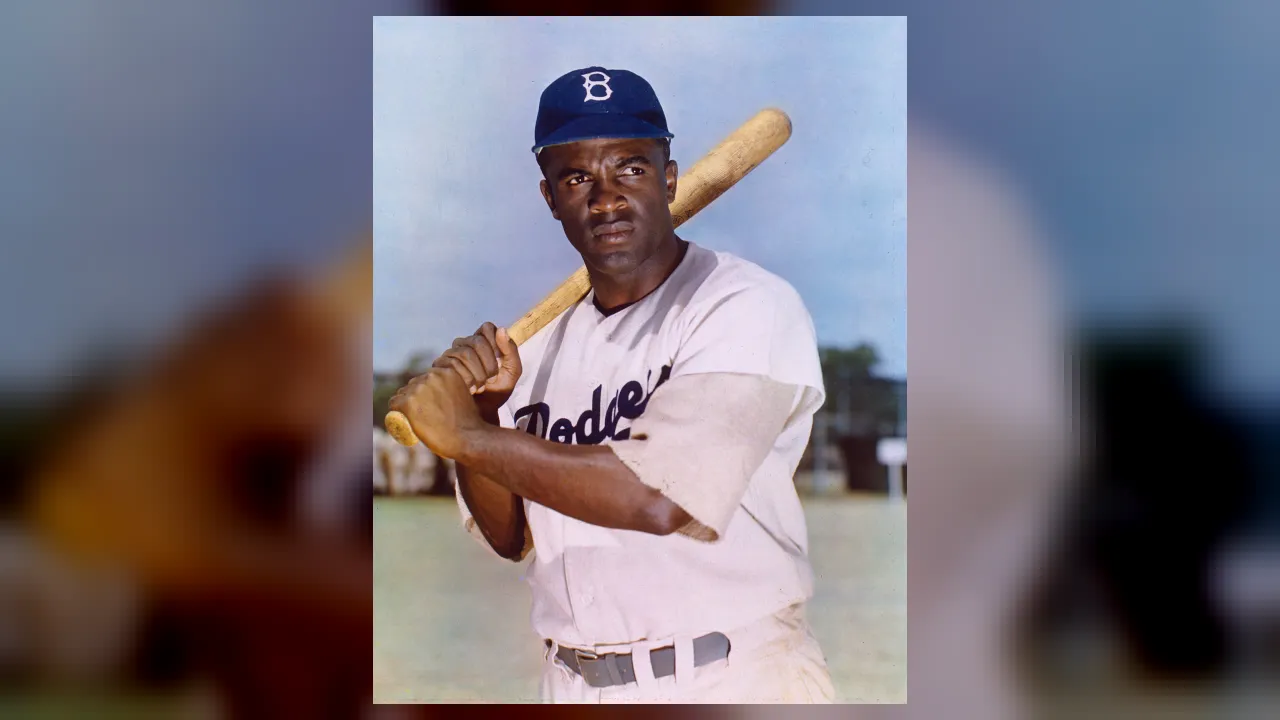
Crack goes the wooden bat! Fans cheer in the big sunny stadium. Number 42 sprints fast toward first base. His name is Jackie Robinson.
2
An Unfair Rule Broken
Long ago, unfair rules kept Black players out of Major League Baseball. In 1947, Jackie joined the Brooklyn Dodgers. He became the first Black player in the modern big leagues.
3
Courage Every Day
Some people were unkind, yet Jackie stayed calm and brave. He let his fast running and great hitting speak for and respect.
1. What jersey number did Jackie Robinson wear for the Brooklyn Dodgers?
2. How did Jackie Robinson respond when people treated him unfairly?
🤯 Mind-Blowing Fact • Grade 2
Before becoming a baseball superstar, Jackie Robinson starred in four different sports at UCLA: baseball, basketball, football, and track!
✨ Word Sparks (Grade 2 Glossary)
Tap 🔊 to hear
segregated
Kept apart in separate groups by unfair rules
character
Inner strength, honesty, and goodness inside a person
rookie
An athlete playing their first big league season
🪝
Why did millions of Americans hold their breath on April 15, 1947?
1
A Historic Opening Day
Imagine walking onto Ebbets Field in Brooklyn while more than twenty-six thousand fans watch every step you take. On April 15, 1947, Jackie Robinson put on his white Brooklyn Dodgers jersey with blue number 42 and trotted out to first base.
2
Breaking the Color Barrier
For decades, Major League Baseball had teams, forcing Black athletes to play in separate Negro Leagues. Dodgers leader Branch Rickey knew this rule was wrong, so he signed Jackie for both his amazing speed and his strong .
3
Winning Hearts Through Excellence
Jackie promised not to fight back when people shouted unkind words. Instead, he stole bases, hit clutch line drives, and won of the Year, proving everyone deserved an equal chance.
1. In what year did Jackie Robinson break Major League Baseball's color barrier?
2. Which award did Jackie Robinson win at the end of his very first MLB season?
🤯 Mind-Blowing Fact • Grade 3
Jackie Robinson stole home plate nineteen times during his career, including once in the 1955 World Series right past the catcher's tag!
✨ Word Sparks (Grade 3 Glossary)
Tap 🔊 to hear
color barrier
Unfair rule blocking people of color from participating
discipline
Calm self-control during tough or stressful moments
integration
Bringing people of all backgrounds together equally
🪝
Why did Branch Rickey tell Jackie Robinson he needed a player with the courage NOT to fight back?
1
Roar at Ebbets Field
Sunlight gleamed off the green grass of Ebbets Field in Brooklyn, New York, on April 15, 1947. When the announcer called Jackie Robinson's name, American sports changed forever as a Black athlete took his position on a modern Major League diamond.
2
Separate Leagues and a Bold Plan
For more than fifty years, an unwritten rule called the barred African American players from Major League Baseball. Talented Black stars like Jackie played in the Negro Leagues, where he shone with the Kansas City Monarchs before Brooklyn Dodgers executive Branch Rickey recruited him.
3
Dignity Under Pressure
Rickey warned Jackie that opponents and crowds might insult him to make him lose his temper. Jackie agreed to show nonviolent , answering hostility with daring base-stealing, sharp defense, and thrilling hits that energized teammates like Pee Wee Reese.
4
Civil Rights Beyond the Diamond
Jackie led the Dodgers to six National League pennants and the 1955 World Series title. After retiring, he marched alongside Dr. Martin Luther King Jr. and worked tirelessly for equal voting, housing, and job opportunities across America.
1. Which Negro Leagues team did Jackie Robinson play for before signing with the Brooklyn Dodgers organization?
2. How did Jackie Robinson continue helping America after his baseball career ended?
🤯 Mind-Blowing Fact • Grade 4
In 1997, Major League Baseball permanently retired number 42 across every single franchise, making Jackie Robinson the first athlete so honored in any major pro sport!
✨ Word Sparks (Grade 4 Glossary)
Tap 🔊 to hear
pastime
An activity enjoyed widely across a whole nation
scrutiny
Close, constant watching and judgment by others
unity
Standing together as one supportive team or group
🪝
How did integrating America's national pastime seven years before Brown v. Board of Education spark the modern Civil Rights Movement?
1
A Turning Point on Opening Day
Picture the tension inside Ebbets Field on April 15, 1947, when twenty-eight-year-old Jack Roosevelt Robinson stepped across the white chalk foul line wearing Brooklyn Dodgers number 42. Seven years before the Supreme Court outlawed school segregation, baseball became a visible nationwide test of whether Americans would embrace integration.
2
From Army Officer to Monarchs Star
Raised in Pasadena, California, Jackie excelled as a four-sport athlete at UCLA before serving as a second lieutenant in the United States Army during World War II. After receiving an honorable discharge, he batted .387 for the Kansas City Monarchs in the Negro Leagues, catching the attention of Dodgers president Branch Rickey.
3
Grace Under Intense Scrutiny
During his minor-league season in Montreal and his 1947 rookie year in Brooklyn, Robinson endured segregated hotels, hostile crowds, and dangerous pitches aimed near his head. Because he channeled every challenge into electrifying play, loyal teammates rallied beside him. Shortstop Pee Wee Reese famously stood next to Jackie in Cincinnati so every fan could see their .
4
Lasting Civic Legacy
Robinson earned the 1947 Rookie of the Year award, captured the 1949 National League Most Valuable Player trophy, and entered the Baseball Hall of Fame on his first ballot in 1962. Even Dr. Martin Luther King Jr. credited Jackie Robinson as a Freedom Rider before Freedom Rides began, proving sports could transform public attitudes toward equality.
1. Why was Jackie Robinson's 1947 debut such an important milestone for the Civil Rights Movement?
2. What gesture did Brooklyn shortstop Pee Wee Reese make to show support for his teammate?
🤯 Mind-Blowing Fact • Grade 5
Jackie Robinson's older brother, Mack Robinson, won the silver medal in the 200-meter dash at the 1936 Berlin Olympics, finishing just four-tenths of a second behind Jesse Owens!
✨ Word Sparks (Grade 5 Glossary)
Tap 🔊 to hear
retaliating
Striking or shouting back after mistreatment
posthumously
Awarded in honor after a person has died
principled
Guided firmly by fairness, honor, and moral values
🪝
Why did Dr. Martin Luther King Jr. say that Jackie Robinson made his own civil rights work possible?
1
Crossing the Chalk Line of History
When Jack Roosevelt Robinson trotted onto the grass of Ebbets Field on April 15, 1947, before 26,623 spectators—more than half of them African American fans who had traveled from across New York—he shattered a sixty-year 'gentlemen's agreement' that had segregated Major League Baseball since the 1880s. At a moment when Jim Crow laws still divided schools, buses, and restaurants across much of the nation, America's national pastime suddenly placed equality at center stage.
2
Preparation Forged in Athletics and Service
Born in Cairo, Georgia, in 1919 and raised in Pasadena, California, by his devoted mother Mallie, Robinson followed his older brother Mack—an Olympic silver medalist behind Jesse Owens in 1936—into elite athletics. At UCLA, Jackie became the university's first athlete to earn varsity letters in four sports. Commissioned as a U.S. Army second lieutenant during World War II, he stood up against segregated military bus seating at Fort Hood, Texas, winning acquittal at court-martial and receiving an honorable discharge in 1944.
3
The Noble Experiment
After excelling for the Negro American League's Kansas City Monarchs in 1945, Robinson met Brooklyn Dodgers general manager Branch Rickey in August of that year. Rickey sought not merely a superstar athlete, but a leader possessing extraordinary moral discipline who could withstand taunts without while public opinion shifted. After dominating the International League with the Montreal Royals in 1946, Robinson advanced to Brooklyn and electrified baseball with bold base-running that rattled pitchers across the league.
4
Championships and Civic Leadership
Over ten seasons from 1947 to 1956, Robinson compiled a .311 career batting average, won the inaugural Rookie of the Year award, captured the 1949 National League batting crown and MVP award, and propelled Brooklyn to six World Series appearances, including the franchise's historic 1955 championship. Inducted into the National Baseball Hall of Fame in 1962, he urged voters to judge him strictly on his playing record.
5
An Enduring American Standard
Retiring rather than accepting a trade in January 1957, Robinson became a corporate executive, co-founded the Freedom National Bank in Harlem to expand Black economic opportunity, raised funds for the NAACP, and marched alongside Dr. Martin Luther King Jr. in Birmingham and Washington, D.C. awarded both the Presidential Medal of Freedom and the Congressional Gold Medal, Robinson proved that one life of courage can elevate an entire democracy.