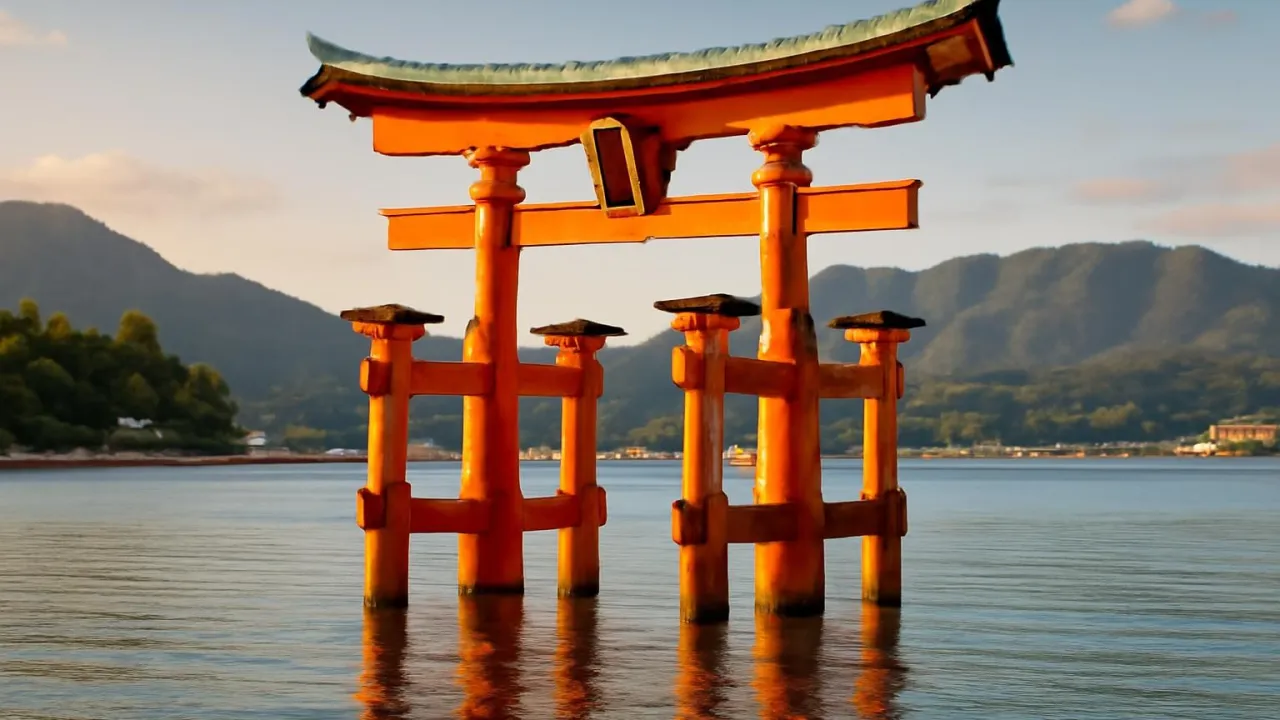
At low tide, you can walk right up to the base of the gate!
✨ Word Sparks (Grade 2 Glossary)
Tap 🔊 to hear
tide
How high or low the sea is
beam
A strong bar that holds things up
pray
To wish or talk to a god
🪝
Have you ever seen a gate that seems to float on water?
1
A Gate in the Sea
The Itsukushima Torii Gate stands right in the shallow sea. When the is high, the red gate looks like it is floating. People come from all over to see this amazing sight.
2
Bright and Tall
The gate is painted bright red and is very tall and wide. Birds perch on its and boats pass quietly underneath. Visitors love to take photos of the beautiful gate.
3
A Place for Prayers
The gate is part of a famous Shinto shrine on Miyajima Island. People visit the shrine to and celebrate special days. The peaceful sea and mountains make it feel magical.
The gate’s main pillars are each made from a single giant tree trunk!
✨ Word Sparks (Grade 3 Glossary)
Tap 🔊 to hear
erosion
Wearing away by wind or water
joinery
How wood pieces fit together
pillar
A tall post that holds things up
🪝
Can you imagine a giant red gate rising from the sparkling sea?
1
The Floating Wonder
The Itsukushima Floating Torii Gate welcomes visitors with its bright red color and towering shape. When the tide rises, the base of the gate is covered with water, making it appear as if it floats. This magical sight attracts travelers, photographers, and families from around the world. Boats sometimes glide through the gate, adding to the wonder.
2
How the Gate Stands
The torii is built from strong camphor and cedar wood, using traditional instead of nails. Its heavy roof and wide base help keep it steady, even when waves crash against it. Engineers designed the gate to balance on the sea floor, using its own weight for support. This clever construction makes the gate stable through storms and tides.
3
A Sacred Symbol
The torii marks the entrance to Itsukushima Shrine, a sacred place for Shinto worship. People believe the gate separates the everyday world from the holy island. Visitors often bow or clap before passing through, showing respect to the spirits. The shrine and its gate have stood for centuries, surviving earthquakes and typhoons.
4
Nature and Tradition
The bright red paint protects the wood from caused by saltwater and wind. The gate’s shape, with its curved roof and tall , is a classic example of Japanese shrine architecture. Festivals and ceremonies are held here throughout the year, celebrating nature and tradition. Itsukushima’s beauty inspires artists, poets, and travelers alike.
The torii’s crossbeams are filled with stones to add weight and keep it balanced in storms.
✨ Word Sparks (Grade 4 Glossary)
Tap 🔊 to hear
vermilion
A bright, reddish-orange color
pilgrim
A person who travels for faith
heritage
Something special from the past
🪝
What secrets keep the famous red torii gate standing strong in the shifting sea?
1
A Marvel in the Water
The Itsukushima Floating Torii Gate greets visitors with its vibrant color and grand, arching roof. At high tide, the entire base is submerged, making the gate appear to float magically above the waves. This illusion draws thousands of travelers and to Miyajima Island each year, eager to witness the breathtaking sight. The gate stands as a symbol of welcome and spiritual purity in Japanese culture.
2
Ingenious Engineering
Built mainly from camphor and cedar, the torii gate uses traditional Japanese joinery, which means the wood is fitted together without metal nails. The structure is held upright by its own immense weight—over 60 tons—resting directly on the sandy sea floor. Its two main pillars, each carved from a single ancient tree, are buried deep for stability. The broad crossbeams and gently curving roof help distribute weight and resist the force of wind and waves.
3
A Sacred Gateway
The torii marks the entrance to the Itsukushima Shrine, a UNESCO World site and one of Japan’s most important Shinto shrines. In Shinto belief, the gate separates the everyday world from the sacred island, where people come to pray for good fortune and health. Ceremonies and festivals are held throughout the year, connecting people with nature and tradition. The gate’s reflection on the water is considered a sign of harmony between humans and the natural world.
4
Enduring Through Time
The current torii was built in 1875, but earlier versions have stood here since the twelfth century. Over the centuries, the gate has survived typhoons, earthquakes, and even wartime damage, thanks to careful repairs and community dedication. Its bright red color is not only beautiful but also protects the wood from erosion and insects. Today, the floating torii remains a beloved symbol of Japan’s and creativity.
1. How does the torii gate stay upright in the sea?
2. Why is Itsukushima Shrine important in Japan?
🤯 Mind-Blowing Fact • Grade 5
During the 2019–2022 restoration, artisans used traditional hand tools and even rebuilt the torii’s roof with bark from local trees.
✨ Word Sparks (Grade 5 Glossary)
Tap 🔊 to hear
kasagi
The curved top beam of a torii gate
resilient
Able to recover from damage or stress
threshold
A boundary or entrance to a new place
🪝
If you stood on the shore at dawn, could you guess how a wooden gate has floated in the sea for centuries?
1
A Vision of Sacred Architecture
As sunlight glimmers on the Seto Inland Sea, the Itsukushima Floating Torii Gate rises in brilliant vermilion, its reflection shimmering across the water. This iconic gateway is not merely decorative—it marks the spiritual to Itsukushima Shrine, a revered Shinto site since the twelfth century. The gate’s placement in the tidal zone was intentional, symbolizing the boundary between the human and divine worlds. Pilgrims and travelers are awed by the illusion of the gate floating, especially during high tide when the base is completely submerged.
2
Engineering Against Nature
The current torii, constructed in 1875, stands 53 feet (16.6 meters) tall and 75 feet (24 meters) wide, crafted primarily from rot-resistant camphor wood. Ingeniously, the structure is not anchored but relies on its own mass—over 60 tons—to remain upright, even as tides rise and fall twice daily. The two main pillars, each hewn from a single ancient tree, are buried deep into the seabed, while the crossbeams are filled with stones to further stabilize the gate. The gently arching (top lintel) and the nuki (horizontal tie beam) distribute mechanical stress, allowing the torii to withstand typhoons, earthquakes, and the constant force of waves.
3
Preserving Through Erosion and Time
Saltwater, wind, and sun constantly threaten the torii’s wooden structure, so it is coated in thick layers of vermilion lacquer. This traditional paint not only deters wood-boring insects but also prevents erosion from the harsh marine environment. Regular restoration, using centuries-old joinery techniques without nails, ensures the gate remains . Over the years, the torii has been rebuilt or repaired several times, each time honoring the original design and materials.
4
Cultural and Historical Significance
Itsukushima Shrine and its floating gate are recognized as a UNESCO World Heritage site, celebrated for their architectural beauty and spiritual meaning. The torii’s striking image is featured in art, poetry, and even Japanese currency, symbolizing harmony between people and nature. Annual festivals, such as the Kangen-sai music festival, draw thousands of visitors who witness sacred boat processions passing beneath the gate. The site has inspired generations to respect both cultural tradition and environmental stewardship.
5
Legacy Across the World
The floating torii’s unique engineering has influenced shrine architecture throughout Japan and fascinated architects worldwide. Its enduring presence, despite centuries of storms and shifting tides, demonstrates the power of thoughtful design and community care. Today, the Itsukushima Torii Gate stands not only as a gateway to the sacred but also as a bridge between history, nature, and the future. Visitors leave with a deeper appreciation for the ingenuity and spirit that keep this wonder standing strong.