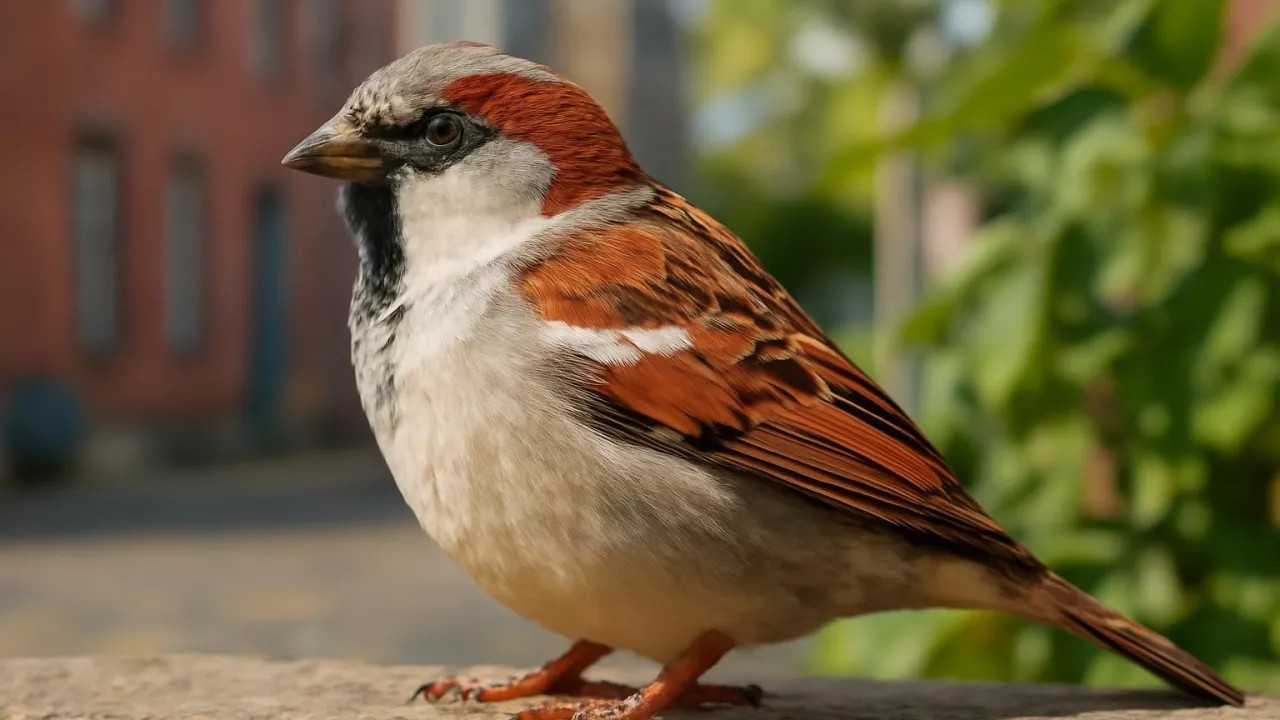
House sparrows have spread to almost every part of the world because they live near people!
✨ Word Sparks (Grade 2 Glossary)
Tap 🔊 to hear
feathers
Soft covers that help birds fly and stay warm
nest
A safe home birds build for their babies
beak
The hard mouth part birds use to eat and build
🪝
Have you ever seen a tiny bird hopping near your house?
1
Small Bird, Big World
House sparrows are small birds that live near people in many places. They have brown and gray that help them blend in. Their short tails help them balance when they hop on branches or the ground.
2
Where They Live
These birds build in holes or ledges on buildings and trees. They like to live in towns, cities, and farms. House sparrows often stay close to humans because food is easy to find.
3
What They Eat
House sparrows eat seeds, small insects, and crumbs left by people. They use their strong to crack open seeds. They also drink water from birdbaths or puddles outside.
1. What helps house sparrows balance when they hop?
2. Why do house sparrows stay near people?
🤯 Mind-Blowing Fact • Grade 3
House sparrows are one of the most widespread birds because they adapt well to human environments.
✨ Word Sparks (Grade 3 Glossary)
Tap 🔊 to hear
camouflage
Colors that help animals hide in their home
predator
An animal that hunts other animals for food
nutrients
Food parts that help animals grow and stay healthy
🪝
Did you know house sparrows use camouflage to hide from predators?
1
Adapted to Survive
House sparrows have brown and gray feathers that act as in cities and parks. This helps them hide from like cats and hawks. Their short tails and strong legs allow them to hop quickly on the ground or fly short distances.
2
Where They Live
These birds are found worldwide in urban and rural areas. They build nests in small cavities on buildings or trees. Their ability to live near humans gives them access to food and shelter, increasing their chances of survival.
3
What They Eat
House sparrows eat seeds, insects, and scraps from humans. Their strong beaks help crack seeds and catch insects. Eating insects provides important , especially when feeding their young during the breeding season.
4
Life Cycle and Behavior
House sparrows lay eggs in nests made of grass and feathers. Both parents help feed the chicks until they can fly. These birds often live in flocks, which helps protect them from and find food more easily.
House sparrows have spread globally because they live well alongside humans in cities and farms.
✨ Word Sparks (Grade 4 Glossary)
Tap 🔊 to hear
ecosystem
All living things and places in one area
symbiosis
When two living things help each other
urbanization
When cities grow and change the land
🪝
How do house sparrows affect the ecosystems in cities and farms?
1
Urban Adaptation and Survival
House sparrows have adapted to live in cities and farms by nesting in building crevices and feeding on human food scraps. Their ability to thrive in human environments shows a strong cause-and-effect relationship between and bird survival. This adaptation helps them avoid many natural predators found in wild areas.
2
Role in the Ecosystem
House sparrows play an important role in food webs by eating seeds and insects, which helps control insect populations. They also serve as prey for larger predators like hawks and cats. Their nesting habits sometimes create symbiotic relationships with humans by controlling pests near homes and farms.
3
Geographic Distribution
Originally from Europe and Asia, house sparrows have spread worldwide due to human travel and settlement. They are now common on every continent except Antarctica. Their wide distribution demonstrates how human activity influences animal habitats and biodiversity.
4
Human Impact and Conservation
While house sparrows benefit from human environments, pollution and habitat changes can threaten their populations. Conservation efforts focus on maintaining green spaces and clean water sources in urban areas to support these birds. Understanding their role helps people appreciate urban wildlife and biodiversity.
2. How have humans helped house sparrows spread worldwide?
🤯 Mind-Blowing Fact • Grade 5
House sparrows can fly up to 30 miles per hour, making them swift and agile city dwellers.
✨ Word Sparks (Grade 5 Glossary)
Tap 🔊 to hear
taxonomic
How scientists group living things by traits
symbiotic
When two species live closely and help each other
incubation
Time eggs are kept warm before hatching
🪝
What makes the house sparrow a successful species in diverse environments worldwide?
1
Scientific Classification and Origins
The house sparrow, Passer domesticus, belongs to the family Passeridae and is native to Europe and Asia. It has been introduced globally, thriving in urban and rural habitats due to its flexible diet and nesting habits. Its classification helps scientists study its evolutionary adaptations and ecological impact in different environments.
2
Physiological Adaptations and Mechanics
House sparrows possess strong, conical beaks ideal for cracking seeds and capturing insects, which provide essential nutrients. Their plumage offers camouflage in urban environments, reducing predation risk. Their flight muscles allow quick, agile movements, enabling escape from predators and efficient foraging in complex habitats.
3
Ecological Role and Human Interaction
These birds influence urban and agricultural ecosystems by controlling insect populations and dispersing seeds. Their nesting in building crevices demonstrates a relationship with humans, providing pest control benefits. However, urban pollution and habitat loss pose challenges, requiring conservation efforts to maintain healthy populations and biodiversity.
4
Conservation Status and Historical Spread
House sparrows have been extensively studied for their rapid spread across continents following human colonization. Although populations have declined in some urban areas due to environmental changes, they remain abundant globally. Conservation focuses on habitat preservation and reducing pollution to support their continued success and ecological balance.
5
Quantitative Comparisons and Interesting Metrics
Adult house sparrows measure about 6.3 inches (16 centimeters) in length and weigh approximately 24 to 39 grams. They can fly at speeds up to 30 miles per hour (48 kilometers per hour) during short bursts. Their nests typically contain 3 to 7 eggs, with lasting around 11 to 14 days, showcasing efficient reproductive strategies and survival adaptations.