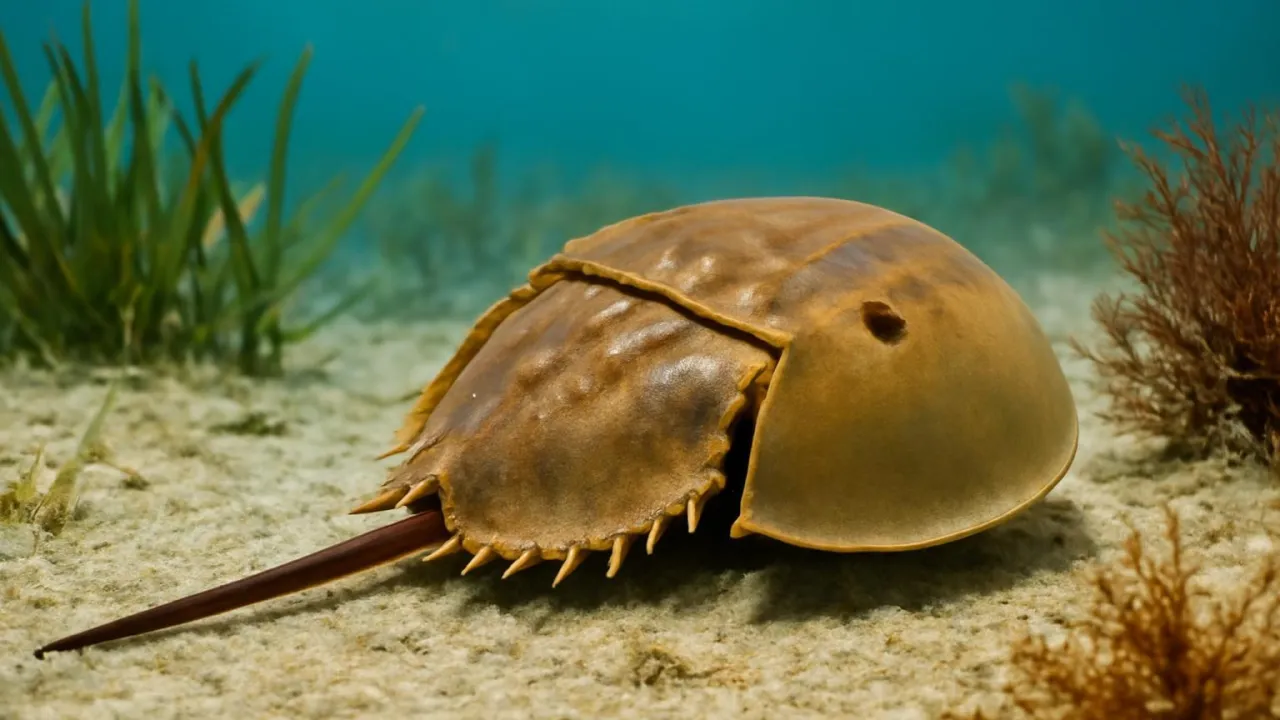
Horseshoe crab blood is blue and helps doctors test for germs in medicine!
✨ Word Sparks (Grade 2 Glossary)
Tap 🔊 to hear
shell
A hard cover that protects the crab
predator
An animal that hunts other animals
shed
To lose old skin or shell to grow
🪝
Have you ever seen a crab with a shell like a helmet?
1
Strong Shell and Body
The horseshoe crab has a strong that looks like a helmet. It uses its tail to help it move and turn. Its legs help it walk on the ocean floor.
2
Where It Lives and Grows
Horseshoe crabs live along the Atlantic coast near sandy beaches and mudflats. They come out at night to find food and lay eggs. Baby crabs grow by shedding their many times.
3
What It Eats and Does
They eat worms, small clams, and algae on the ocean floor. The horseshoe crab uses its legs to crush food. It is mostly active at night to avoid .
Horseshoe crabs have changed very little for over 450 million years, making them living fossils!
✨ Word Sparks (Grade 3 Glossary)
Tap 🔊 to hear
exoskeleton
A hard outer shell that protects animals
molting
Shedding old shell to grow a new one
scavenger
An animal that eats dead or small animals
🪝
Did you know horseshoe crabs have blue blood that fights germs?
1
Ancient Armor and Adaptations
Horseshoe crabs have a hard that acts like armor. This shell protects them from predators and rough ocean floors. Their long tail, called a telson, helps them flip over if they get turned upside down.
2
Habitat and Life Cycle
They live in shallow coastal waters along the Atlantic Ocean, often on sandy or muddy beaches. During spawning, females lay thousands of eggs in the sand. These eggs hatch into larvae that look like tiny adults and grow by their shells.
3
Diet and Feeding
Horseshoe crabs are that eat worms, mollusks, and algae on the ocean floor. Their legs have pincers that help crush and hold food. This feeding helps recycle nutrients in their ecosystem.
4
Blue Blood and Medical Use
Their blood is blue because it contains copper, unlike red human blood with iron. This blue blood clots quickly when it detects bacteria, making it valuable for testing medicines and vaccines for safety.
2. Why is horseshoe crab blood important to medicine?
🤯 Mind-Blowing Fact • Grade 4
Horseshoe crab eggs feed millions of migrating birds each year along the Atlantic coast.
✨ Word Sparks (Grade 4 Glossary)
Tap 🔊 to hear
exoskeleton
Hard outer shell that protects animals
scavenger
Animal that eats dead or small animals
spawn
To lay eggs in water or sand
🪝
How does a horseshoe crab’s armor help it survive in the ocean?
1
Protective Armor and Movement
The horseshoe crab’s hard protects it from predators and harsh ocean environments, allowing it to survive for millions of years. Its spiked tail, or telson, helps it right itself if flipped over by waves or predators. This adaptation is vital for its survival on sandy and muddy ocean floors.
2
Ecological Role and Feeding
As a , the horseshoe crab plays a key role in coastal food webs by consuming worms, mollusks, and algae. Its feeding behavior helps recycle nutrients in the ecosystem, supporting other marine life. Predators like sea turtles and birds rely on horseshoe crab eggs as an important food source during spawning season.
3
Reproduction and Geographic Range
Horseshoe crabs in large numbers on sandy beaches along the Atlantic coast from Maine to the Gulf of Mexico. Females lay thousands of eggs, which provide vital nutrients for migrating shorebirds. This reproductive strategy supports both the crab’s population and coastal ecosystems.
4
Human Impact and Conservation
Horseshoe crabs face threats from habitat loss and overharvesting for bait and biomedical use. Conservation efforts focus on protecting spawning beaches and regulating harvests to maintain healthy populations. Their unique blue blood is crucial for medical testing, making sustainable use important for both humans and crabs.
1. What helps horseshoe crabs flip over if they fall?
2. Why are horseshoe crab eggs important to other animals?
🤯 Mind-Blowing Fact • Grade 5
Horseshoe crab blood is used worldwide to test vaccines because it clots instantly when bacteria are present.
✨ Word Sparks (Grade 5 Glossary)
Tap 🔊 to hear
hemocyanin
Copper-based molecule that carries oxygen in blood
intertidal
Area between high and low ocean tides
endotoxins
Harmful bacteria parts that cause blood to clot
🪝
What makes the horseshoe crab a living fossil with unique medical importance?
1
Taxonomy and Ancient Lineage
Horseshoe crabs belong to the class Merostomata and have existed for over 450 million years, predating most dinosaurs. Despite their name, they are more closely related to spiders and scorpions than to true crabs. Their evolutionary stability makes them valuable for studying ancient marine life and evolutionary biology.
2
Physiology and Blood Chemistry
Horseshoe crabs possess a hard chitinous exoskeleton that provides protection and structural support. Their blue blood contains , a copper-based molecule that efficiently transports oxygen in low-oxygen environments. This blood clots rapidly in the presence of bacterial , a property exploited in biomedical testing for vaccine safety.
3
Reproductive Behavior and Ecological Importance
During spawning, females lay tens of thousands of eggs in sandy beaches, which serve as a crucial food source for migratory shorebirds and other marine animals. The timing of spawning is synchronized with lunar cycles and tides, ensuring maximum survival of offspring and supporting coastal biodiversity.
4
Conservation Challenges and Human Impact
Horseshoe crab populations are threatened by habitat destruction, overharvesting for bait in fisheries, and biomedical blood collection. Sustainable management practices and protected spawning habitats are essential to preserve their populations and the ecological roles they fulfill in coastal ecosystems.
5
Quantitative Comparisons and Unique Traits
Adult horseshoe crabs can reach lengths up to 24 inches (61 cm) and weigh around 4.5 pounds (2 kg). Their blue blood is about 1.5 times more efficient than human blood in oxygen transport under low oxygen conditions. The telson tail can measure up to 10 inches (25 cm) and is vital for locomotion and self-righting. Their blood’s rapid clotting ability has saved countless lives by ensuring safe vaccines and medicines worldwide.