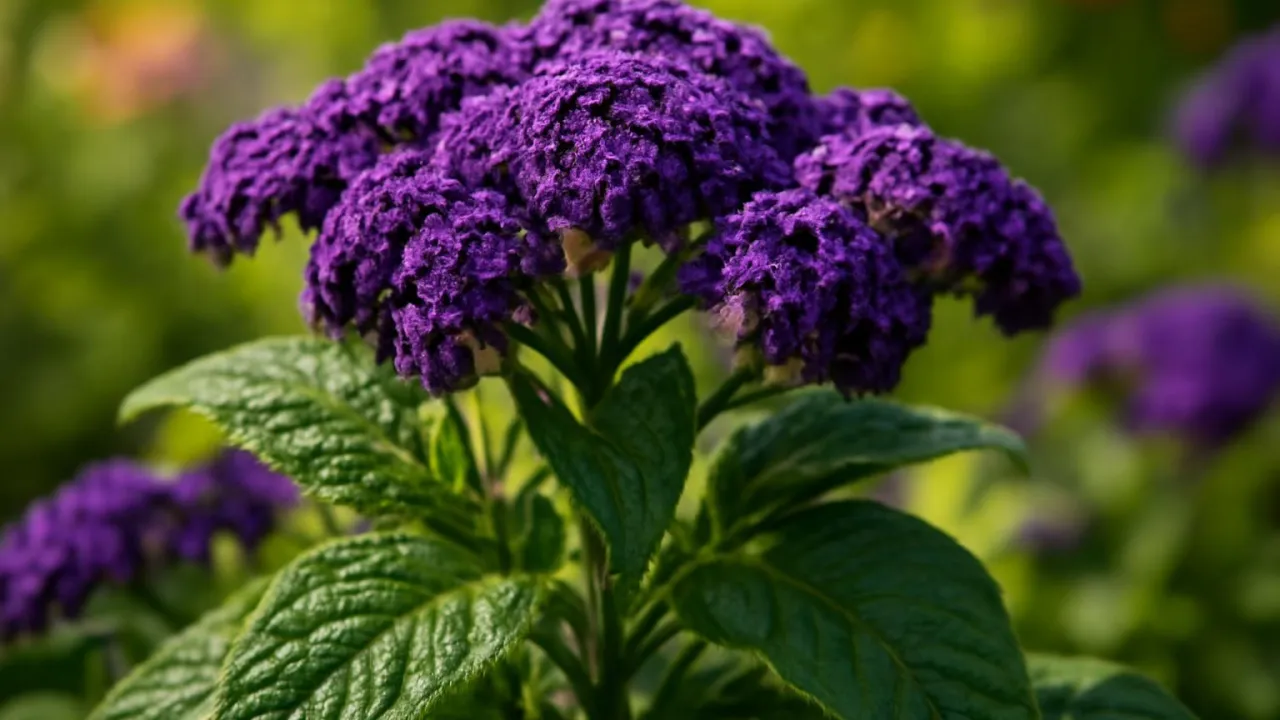
Heliotrope’s name comes from Greek words that mean 'turning toward the sun'!
✨ Word Sparks (Grade 2 Glossary)
Tap 🔊 to hear
scent
A smell you can notice
sunlight
Light that comes from the sun
butterfly
A colorful insect with wings
🪝
Did you know some flowers turn their heads to follow sunlight?
1
A Colorful, Sweet-Smelling Flower
Heliotrope flowers are usually purple, but sometimes they can be white. Their is sweet, almost like fresh vanilla cake, and it attracts bees and butterflies. The plant’s leaves are soft and fuzzy, making it fun to touch. Heliotrope grows in sunny gardens all over the world.
2
Turning Toward the Light
Heliotrope has a special trick: it can turn its flowers to face the sun. This movement helps the plant collect more so it can grow strong. The flower turns slowly during the day as the sun moves across the sky. This is why people call it a 'sun-chaser' flower.
3
Growing and Blooming
People like to plant heliotrope in their gardens because it blooms all summer. The plant needs lots of sunshine and water to grow healthy and tall. When it gets enough care, heliotrope makes gardens smell wonderful and bright. Many gardeners plant it near windows or doors to enjoy its .
1. Why do people call heliotrope a 'sun-chaser' flower?
2. What do heliotrope flowers smell like?
🤯 Mind-Blowing Fact • Grade 3
A single heliotrope cluster can hold over 40 tiny flowers!
✨ Word Sparks (Grade 3 Glossary)
Tap 🔊 to hear
adaptation
A special trait that helps survival
photosynthesis
How plants use sunlight to make food
pollinator
An animal that helps flowers make seeds
🪝
Have you ever smelled a flower that seems to follow the sun as it moves?
1
A Sun-Chasing Scent
Imagine a flower that fills the air with a sweet, vanilla scent and turns its blooms toward the light. Heliotrope’s clusters of deep purple flowers attract bees and butterflies from all around. Its fuzzy green leaves help the plant hold onto water on hot days. Many gardeners plant heliotrope for its beautiful colors and strong fragrance.
2
Amazing Adaptation: Heliotropism
Heliotrope uses a special called heliotropism, which means it turns its flowers to follow the sun. This clever movement helps the plant catch as much sunlight as possible for . As the sun travels across the sky, the flower clusters slowly turn to face it. This helps heliotrope grow healthy and make more energy for blooming.
3
From Seed to Bloom
Heliotrope starts as a tiny seed that grows into a small green plant. As it gets bigger, it makes clusters of purple flowers that bloom in summer. The plant needs full sun, regular water, and soil that drains well to thrive. When the flowers fade, they create seeds for the next generation of heliotropes.
4
A Cluster of Surprises
Did you know each heliotrope flower cluster is made up of many tiny flowers? This special shape helps attract more , like bees and butterflies, to visit. Even though it comes from South America, heliotrope now grows in gardens all over the world. Its sun-following blooms make it a favorite for curious gardeners everywhere.
2. Why are heliotrope flowers grouped in clusters?
🤯 Mind-Blowing Fact • Grade 4
Heliotrope’s sweet scent once made it a popular ingredient in perfumes during the Victorian era!
✨ Word Sparks (Grade 4 Glossary)
Tap 🔊 to hear
heliotropism
Turning to face the sun’s light
mutualistic
Helping each other to survive
annual
A plant that lives for one year
🪝
Imagine a flower that moves its blooms to follow the sun’s journey across the sky!
1
Sun-Tracking Superpower
Heliotrope is famous for its remarkable ability to track the sun, a process called . As the sun rises and sets, the plant’s flower clusters slowly turn to face the light, maximizing their exposure. This adaptation allows heliotrope to gather more sunlight for photosynthesis, which is crucial for making food and growing strong. Its fuzzy green leaves help reduce water loss, letting it thrive in sunny, warm places.
2
Life Cycle and Pollinator Partnerships
The life cycle of heliotrope begins with a tiny seed that sprouts into a leafy seedling. As it matures, it produces clusters of deep purple or white flowers that bloom in summer and fill the air with a sweet, vanilla scent. These flowers attract bees, butterflies, and other pollinators, forming a relationship—pollinators get nectar, while the plant gets help spreading its pollen. After blooming, the plant produces seeds that can start the cycle again.
3
Role in the Garden Ecosystem
Heliotrope plays an important role in garden ecosystems by supporting pollinators and adding vibrant color and fragrance. Its nectar-rich flowers provide food for bees and butterflies, helping pollinator populations thrive. In return, these insects help many other plants reproduce by carrying pollen from flower to flower. Because heliotrope is not native to North America, gardeners must watch for pests and avoid letting it spread too much in wild areas.
4
Where Heliotrope Grows
Originally from South America, heliotrope is now grown in gardens around the world, especially in warm, sunny climates. It prefers well-drained soil, full sunlight, and regular watering, but it cannot survive freezing winters. In Virginia and similar regions, heliotrope is grown as an , replanted each spring. Its sun-following blooms and sweet scent make it a favorite among gardeners everywhere.
1. How does heliotrope help pollinators in a garden?
2. Why do gardeners in Virginia replant heliotrope each year?
🤯 Mind-Blowing Fact • Grade 5
Each heliotrope flower cluster can attract over 30 bees and butterflies in just one sunny afternoon!
✨ Word Sparks (Grade 5 Glossary)
Tap 🔊 to hear
inflorescence
A group of many tiny flowers together
pyrrolizidine alkaloids
Natural plant chemicals that can be poisonous
perennial
A plant that lives for many years
🪝
What if you could design a flower that tilts its face to catch every ray of sunlight?
1
Botanical Identity and Scientific Roots
Heliotrope, scientifically known as Heliotropium arborescens, belongs to the Boraginaceae family, which includes borage and forget-me-nots. The name 'heliotrope' comes from the Greek words 'helios' (sun) and 'tropos' (turn), describing its signature sun-tracking behavior. This plant is native to the highlands of Peru and Colombia but has become a popular ornamental flower worldwide. Heliotrope's clusters of tiny, five-petaled flowers are typically deep violet, though white and lavender varieties exist. Botanically, each cluster is an —a group of many small flowers working together to attract pollinators.
2
How Heliotropism Works
Heliotropism is the physiological phenomenon where the plant’s stems and flower heads bend toward sunlight throughout the day. Specialized cells in the stem elongate on the shaded side, causing the flower cluster to turn toward the light. This movement maximizes photosynthesis, allowing the plant to convert more sunlight into chemical energy for growth and reproduction. At night, the flowers may return to face east, ready to greet the morning sun. This adaptation is most noticeable in young, actively growing plants, while older stems become more fixed in position.
3
Ecological Role and Human Connections
Heliotrope plays a vital ecological role by providing nectar and pollen for bees, butterflies, and other pollinators, supporting biodiversity in gardens and naturalized areas. Its sweet, vanilla-almond fragrance made it a prized ingredient in Victorian-era perfumes, though modern perfumes use synthetic versions due to safety concerns. While beautiful, all parts of the heliotrope plant contain , which are toxic if ingested by humans or pets. Responsible gardeners enjoy its beauty while ensuring it is not consumed by children or animals.
4
Cultivation, Distribution, and Environmental Impact
Heliotrope thrives in full sun, rich well-drained soil, and moderate moisture, growing 12–24 inches (30–60 cm) tall. It is grown as a in frost-free regions but as an annual in places like Virginia, where cold winters kill the plant. Heliotrope is cultivated globally for its ornamental value, but it can become invasive in some subtropical areas if not managed. Gardeners should deadhead spent blooms to encourage more flowering and prevent unwanted seed spread, supporting both beauty and ecological balance.
5
Fascinating Numbers and Conservation Notes
A mature heliotrope cluster can contain over 50 tiny flowers and attract dozens of pollinators in a single day. Its leaves are covered in fine hairs, reducing water loss and allowing the plant to tolerate brief droughts. Heliotrope prefers temperatures between 60–75°F (16–24°C) and will stop blooming if exposed to prolonged heat above 90°F (32°C). While not currently endangered, wild heliotrope habitats face threats from habitat loss and pesticide use, which also harm pollinator populations. Sustainable gardening practices help protect both heliotrope and the insects that depend on it.