1. Why was Hatzegopteryx the top hunter on prehistoric Hațeg Island?
2. In which modern European country were Hatzegopteryx's fossils discovered?
🤯 Mind-Blowing Fact • Grade 2
Inside Hatzegopteryx's skull bones was a lightweight foam-like honeycomb texture similar to stiff polystyrene bicycle-helmet foam!
✨ Word Sparks (Grade 2 Glossary)
Tap 🔊 to hear
Honeycomb
Pattern of tiny air pockets giving strength
Channel
Stretch of sea water between two islands
Stocky
Broad, sturdy, and heavily built
🪝
Why did long-necked dinosaurs shrink to pony size on Hațeg Island while Hatzegopteryx stayed gigantic?
1
A Strange Prehistoric Island
Picture a tropical island in Romania sixty-six million years ago! Because islands have less food and space than big continents, plant-eating dinosaurs on Hațeg Island shrank over thousands of years into pony-sized mini-giants like Magyarosaurus.
2
Flying Over Island Borders
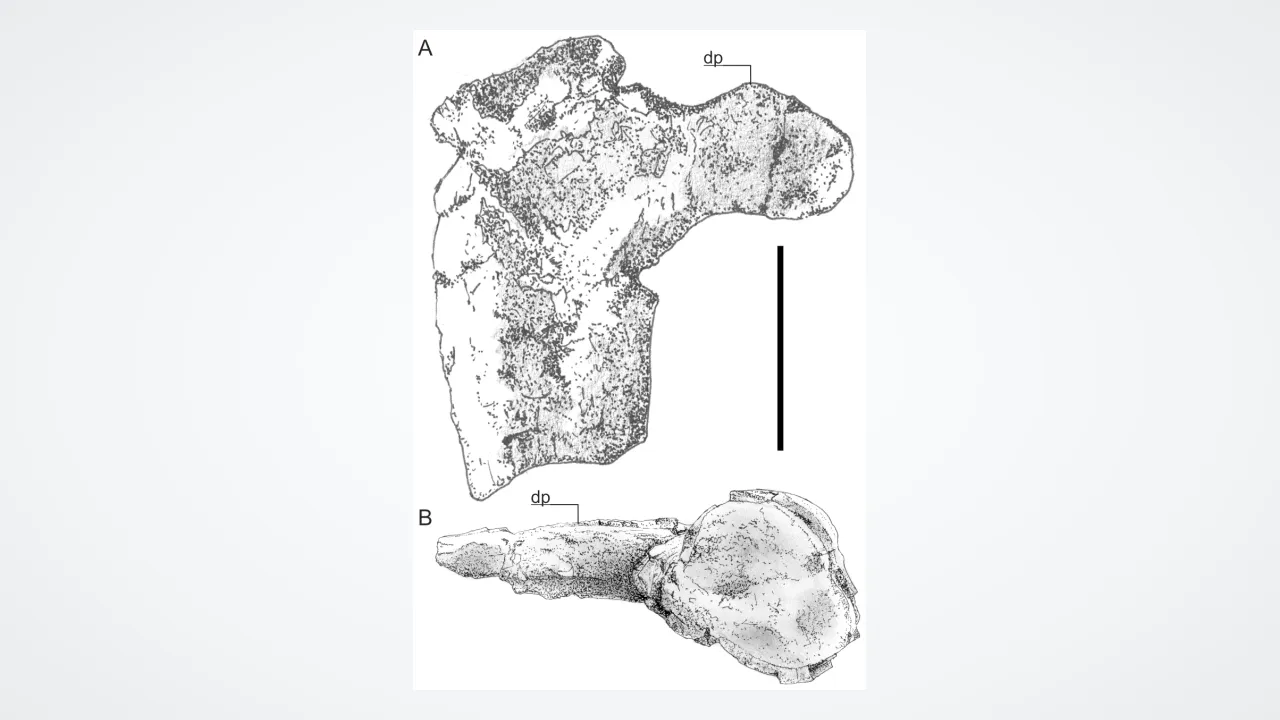
Why didn't Hatzegopteryx shrink too? With thirty-five-foot wings, it could soar right across open sea from island to island! When paleontologist Dan Grigorescu found its huge skull and arm bones, they first looked almost too big to belong to a flyer.
3
Built Like a Tank
Compared with slender Texas cousin Quetzalcoatlus, Hatzegopteryx had a shorter, much thicker neck and a wide, powerful beak.
1. Why didn't Hatzegopteryx evolve into a tiny island dwarf like its dinosaur neighbors?
2. How did Hatzegopteryx's neck compare to Quetzalcoatlus's neck?
🤯 Mind-Blowing Fact • Grade 3
The walls of Hatzegopteryx's neck vertebra were up to a quarter-inch (4 to 6 mm) thick—three times thicker than the paper-thin bones of most giant pterosaurs!
✨ Word Sparks (Grade 3 Glossary)
Tap 🔊 to hear
Island Dwarfism
Large species evolving smaller sizes on islands
Vertebra
Single interlocking bone inside a backbone
Titanosaur
Group of long-necked plant-eating dinosaurs
🪝
Why did scientists initially wonder if Hatzegopteryx's massive jaw bone belonged to a meat-eating dinosaur?
1
Upside-Down Food Web
On almost every continent during the Late Cretaceous Period, giant two-legged theropod dinosaurs ruled the food chain while pterosaurs hunted smaller animals. Yet on isolated Hațeg Island in ancient Romania sixty-six million years ago, the biggest predators didn't stomp—they dropped right out of the sky!
2
Foam-Core Super Skull
Named Hatzegopteryx thambema in 2002 by Eric Buffetaut, Dan Grigorescu, and Zoltan Csiki, its skull measured roughly half a meter wide at the back and nearly nine feet long! Even so, internal bone walls filled with tiny air bubbles kept that colossal head light enough for flight.
3
Discovery of the Stocky Neck
In 2017, paleontologists Darren Naish and Mark Witton examined a massive neck from Romania. Unlike giraffe-necked Quetzalcoatlus, Hatzegopteryx had a thick-walled, muscular neck just five feet long—strong enough to absorb heavy impacts while lunging at dog-to-pony-sized young dinosaurs!
4
Island Dwarfism All Around
Sharing Hațeg Island were miniature like Magyarosaurus and tiny duck-billed Telmatosaurus, creating one of prehistory's most unusual ecosystems.
1. What surprised paleontologists Darren Naish and Mark Witton in 2017 when they studied a Hatzegopteryx neck bone?
2. What does the Greek species name thambema mean?
🤯 Mind-Blowing Fact • Grade 4
Biomechanical calculations show Hatzegopteryx's reinforced neck could withstand bending forces up to ten times its entire 500-pound body weight!
✨ Word Sparks (Grade 4 Glossary)
Tap 🔊 to hear
Insular
Relating to isolated island ecosystems
Tethys Ocean
Ancient warm ocean separating northern and southern continents
Cortical Bone
Dense, tough outer layer of bone
🪝
How did biomechanical engineering turn a hollow-boned flying reptile into an apex predator strong enough to hunt island dinosaurs?
1
Transylvania's Prehistoric Lost Island
Sixty-six million years ago during the Maastrichtian stage of the Late Cretaceous, tectonic uplift pushed Hațeg Island above the —covering roughly 80,000 square kilometers, about the size of Hispaniola today. Isolated by deep marine straits, mainland titanosaurs and hadrosauroids underwent dwarfism, shrinking to horse-sized adults, while giant theropods never reached its shores. Filling that vacant apex predator throne was Hatzegopteryx thambema!
2
Polystyrene-Style Cranial Engineering
Described in 2002 from a massive posterior skull, jaw articulation, and damaged humerus collected near Vălioara, Romania, Hatzegopteryx matched Quetzalcoatlus in 10-to-11-meter wingspan yet looked dramatically stockier. Instead of open air cavities, its massive 50-centimeter-wide skull rear held a dense, closed-cell trabecular matrix resembling expanded polystyrene foam—delivering immense bite stiffness without grounding the flyer.
3
The 2017 Neck-Bone Revelation
When Darren Naish and Mark Witton analyzed a seventh cervical vertebra from the Hațeg Basin in 2017, they overturned assumptions that all giant azhdarchids shared slender, crane-like necks. Hatzegopteryx's neck measured only ~1.5 meters long—half the length expected—yet featured 4-to-6-millimeter cortical walls and tall neural spines for anchoring powerful neck muscles!
4
Stork-of-Prey Mechanics
Armed with a broad, reinforced beak and bending-resistant neck capable of withstanding multiples of its own body weight, Hatzegopteryx stalked woodland clearings on all fours, seizing juvenile dwarf titanosaurs and cursorial ornithopods too large for slender-necked cousins.
1. How did the internal structure of Hatzegopteryx's huge skull bones stay both super strong and flight-light?
2. Why did Hațeg Island have pony-sized titanosaurs like Magyarosaurus alongside giant Hatzegopteryx?
🤯 Mind-Blowing Fact • Grade 5
Pioneer Transylvanian paleontologist Baron Franz Nopcsa first realized over a century ago that Hațeg's miniature dinosaurs were island dwarfs—setting the stage for discovering their giant winged predator decades later!
✨ Word Sparks (Grade 5 Glossary)
Tap 🔊 to hear
Ecomorphology
How body shape matches an ecological role
Torsional
Relating to twisting forces on a structure
Cancellous
Spongy, porous latticework inside lightweight bone
🪝
How did Hatzegopteryx reveal unexpected ecomorphological diversity among giant azhdarchid pterosaurs at the close of the Cretaceous?
1
Insular Ecology of the Hațeg Basin
During the late Maastrichtian (~66 million years ago), Alpine-Carpathian tectonics elevated Hațeg Island within the western Tethyan archipelago of modern Transylvania, Romania. Famous since Franz Nopcsa's pioneering early-20th-century studies on insular dwarfism, the Densuș-Ciula and Sânpetru formations preserve diminutive sauropods (Magyarosaurus dacus), basal hadrosauroids (Telmatosaurus), and small paravians like Balaur—yet completely lack large-bodied theropod dinosaurs. Occupying the vacant macro-predatory guild was Hatzegopteryx thambema, described in 2002 by Eric Buffetaut, Dan Grigorescu, and Zoltan Csiki.
2
Cranial Robustness and Sandwich-Core Bone
Whereas North America's Quetzalcoatlus northropi evolved narrow, chopstick-like jaws, Hatzegopteryx possessed a massive, posteriorly expanded skull (~50 centimeters wide across the quadrates and ~2.5 to 2.8 meters long) with heavy jaw articulations. Histological inspection revealed a unique structural architecture: paper-thin outer bone laminae sandwiching a dense foam of closed-cell alveoli—maximizing rigidity while holding total body mass near 220 to 250 kilograms across a 10-to-11-meter wingspan.
3
Short-Necked Azhdarchid Biomechanics
In 2017, Darren Naish and Mark P. Witton re-identified an enormous Romanian seventh cervical vertebra (specimen EME 315), demonstrating that giant azhdarchids split into distinct slender-necked and robust-necked morphotypes! Despite measuring 24 centimeters wide, Hatzegopteryx's entire neck spanned roughly 1.5 meters—50 to 60 percent shorter than expected for an isometric Quetzalcoatlus—fortified by 4-to-6-millimeter cortical walls and prominent neural spines.
4
Apex Predation on an Island Ecosystem
Beam-mechanics calculations indicate EME 315 withstood bending stresses equivalent to five to ten body weights, shielding the neck against violent buckling while subduing thrashing prey. Prowling floodplains quadrupedally like a gigantic, reinforced ground hornbill or stork, Hatzegopteryx dispatched juvenile dwarf titanosaurs and cursorial ornithopods up to several tens of kilograms.
5
Continental Cousins
Subsequent finds of robust azhdarchid neck vertebrae in France and North Africa suggest heavy-necked giants represented a widespread Late Cretaceous lineage rather than an isolated quirk.