2. What movement happens when your hamstrings pull your lower leg while you stand?
🤯 Mind-Blowing Fact • Grade 2
Your hamstrings cross TWO big joints—both your hip and your knee—which is why warming them up before soccer or track is so helpful!
✨ Word Sparks (Grade 2 Glossary)
Tap 🔊 to hear
Stride
One long step while walking or running
Warm-Up
Gentle exercises preparing muscles for fast play
Propulsion
Pushing force that drives your body forward
🪝
Why does a muscle group in your legs have the funny word 'ham' right inside its name?
1
A Name From Market History
Hundreds of years ago, country butchers hung cured pork thighs—hams—from hooks using the tough, string-like tendons behind the knee! Doctors noticed people had those exact same strong cords behind their knees, so the name 'hamstrings' stuck forever.
2
Partners With Your Quads
Just like your biceps and triceps take turns moving your elbow, your hamstrings and quadriceps take turns moving your knee. While front quads kick your shin forward, back hamstrings pull your shin backward.
3
Two Jobs in Every Stride
Hamstrings also pull your whole thigh backward at the hip—giving sprinters rocket off the starting line!
Did you know you actually have a 'biceps' muscle hiding in the back of each leg too?
1
Meet the Posterior Thigh Trio
Sit on a bench with your knee bent at a right angle and feel the two distinct cable edges framing the hollow behind your knee! Three long muscles form your hamstrings: two inner muscles (semitendinosus and semimembranosus) anchor on the inside of your shin, while a third muscle anchors on the outside.
2
Surprise: A Biceps in Your Leg!
What is that outer hamstring muscle called? The —meaning 'two-headed muscle of the thigh'! Just like your arm's biceps brachii has two starting heads, your leg's biceps femoris blends a long head from your pelvis with a short head from your femur.
3
Horizontal Rocket Thrusters
While quadriceps push you upward, hamstrings are the kings of speed. Anchored to your sturdy , they whip your whole leg backward against the track to propel sprinters past twenty-five miles per hour!
4
Built-In Speed Brakes
Milliseconds before your swinging foot hits the grass, your hamstrings fire like smart brakes so your shin doesn't snap forward too fast!
1. Why is the outer hamstring muscle in your leg named the 'biceps femoris'?
2. What critical safety job do your hamstrings perform right before your foot hits the ground during a fast sprint?
🤯 Mind-Blowing Fact • Grade 4
Doctors frequently borrow a small strip of your spare 'semitendinosus' hamstring tendon to rebuild a torn knee ligament—and the hamstring heals back strong enough for pro sports!
✨ Word Sparks (Grade 4 Glossary)
Tap 🔊 to hear
Ischial Tuberosity
Sturdy lower pelvic bone where hamstrings start
Semitendinosus
Inner hamstring famous for its ultra-long cord
Fibula
Slender outer bone of your lower leg
🪝
How do your hamstrings team up with knee ligaments to shield athletes' joints during sharp cuts and landings?
1
Spanning From Ischial Tuberosity to Tibia
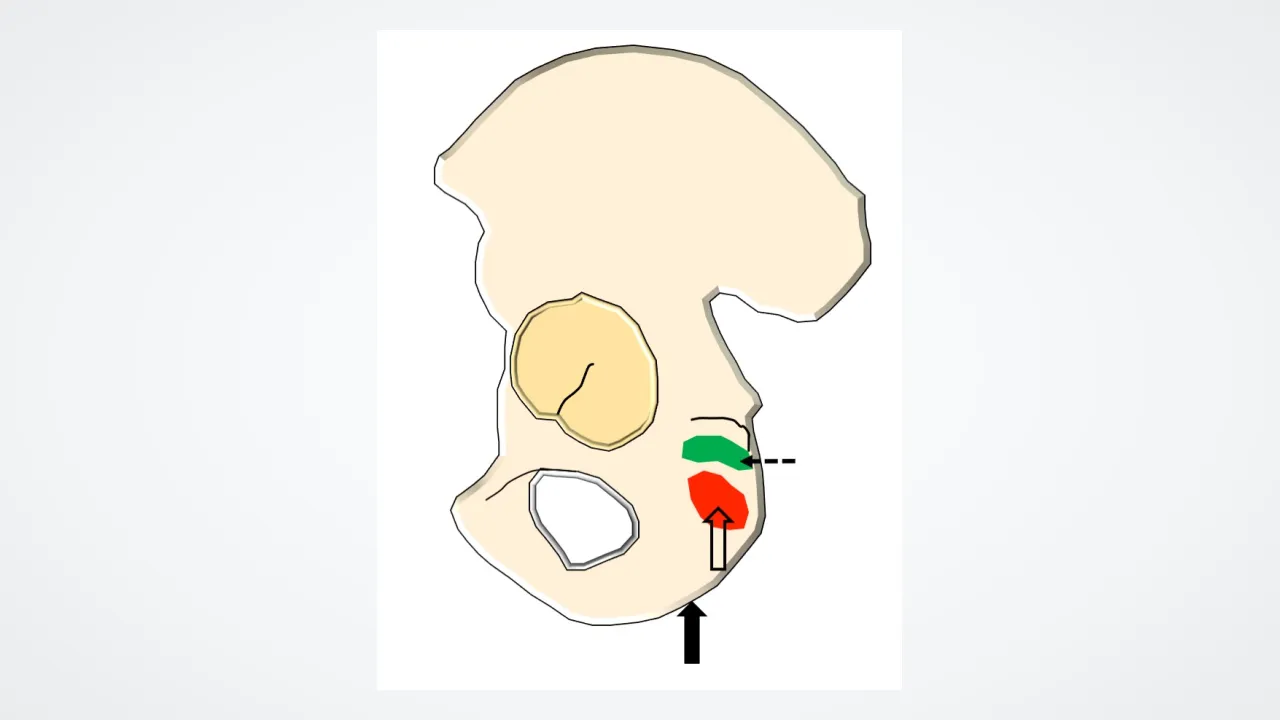
Feel the sturdy bones underneath you when you sit upright on a hard wooden chair: those are your ischial tuberosities ('sit bones'), the rugged launchpad where your three hamstring muscles originate! Stretching all the way down the posterior thigh, the medial and semimembranosus attach to the upper inner tibia, while the lateral biceps femoris anchors onto the head of the bone on the outer shin.
2
Why Biarticular Muscles Stretch Tight
Because true hamstrings cross behind the hip AND behind the knee, they extend the hip while flexing the knee. Try bending forward at the waist with locked straight knees: you are stretching the hamstrings from both ends simultaneously! That biarticular stretch limit—called passive insufficiency—is why bending your knees slightly makes picking up heavy boxes much safer for your lower back.
3
Bodyguards for the Knee's ACL
Inside every athlete's knee sits the anterior cruciate ligament (ACL), which stops the shinbone from sliding too far forward under the femur. When soccer or basketball players land from a leap, firing the hamstrings pulls backward on the top of the shin—acting as a powerful muscular bodyguard that takes huge stress off the ACL!
4
Dynamic Warm-Ups Beat Cold Tugs
During all-out sprints, hamstrings endure peak stretch and peak tension at the exact same instant, which is why athletes warm them up with high-knee skips and leg swings before racing.
1. How do strong hamstrings help protect an athlete's ACL ligament inside the knee?
2. Why do hamstrings feel tight so quickly when you bend at the hips with straight knees?
🤯 Mind-Blowing Fact • Grade 5
In 1903, scientist Warren Lombard solved 'Lombard's Paradox'—explaining how uneven bone lever lengths let your quads and hamstrings fire at the exact same time to stand up or pedal a bike without fighting each other!
✨ Word Sparks (Grade 5 Glossary)
Tap 🔊 to hear
Popliteal Fossa
Diamond-shaped hollow behind your knee joint
Lombard's Paradox
Clever lever physics letting quads and hamstrings cooperate
Pes Anserinus
Three-tendon 'goose foot' anchor on inner shin
🪝
How does Lombard's Paradox allow your quadriceps and hamstrings to fire together when rising from a chair without canceling each other out?
1
Anatomy of the Ischiocrural Compartment
Known formally in anatomical Latin as the musculi ischiocrurales, the posterior thigh compartment houses three biarticular muscles—the semitendinosus, the broad membrane-like semimembranosus, and the long head of the biceps femoris—alongside the monoarticular short head of the biceps femoris, which originates on the linea aspera of the femur. Diverging distally above the knee to frame the diamond-shaped , they govern hip extension, knee flexion, and tibial rotation.
2
Solving Lombard's 1903 Biomechanical Paradox
In 1903, physiologist Warren Plumb Lombard noticed a baffling puzzle during squats and cycling: humans contract BOTH their quadriceps and hamstrings simultaneously to stand up, even though they oppose each other at both hip and knee! Lombard proved the answer lies in unequal moment arms: the hamstrings hold a much longer lever arm at the hip than at the knee, while the quadriceps hold a longer lever arm at the knee (via the patella) than at the hip. Firing together, their net torques sum cleanly into simultaneous hip AND knee extension!
3
Late-Swing Eccentric Sprint Demands
High-speed motion capture of elite 100-meter sprinters shows the hamstrings experience their greatest mechanical load during the terminal swing phase—mere milliseconds before foot-strike. Lengthening rapidly while firing at peak intensity, they decelerate the forward-whipping shank and transition instantaneously into concentric hip extension exceeding ten meters per second.
4
Dynamic ACL Agonism and Pes Anserinus
Medially, the semitendinosus tendon joins the gracilis and sartorius to form the ('goose's foot') insertion on the proximal tibia, stabilizing rotational shear while functioning as the primary dynamic agonist protecting the anterior cruciate ligament.
5
Autograft Marvels in Orthopedic Surgery
Because the cord-like semitendinosus tendon possesses exceptional tensile strength exceeding 4,000 newtons when quadrupled—and can often regenerate functional myofascial continuity—orthopedic surgeons worldwide prize it as a premier autograft for minimally invasive ligament reconstructions.