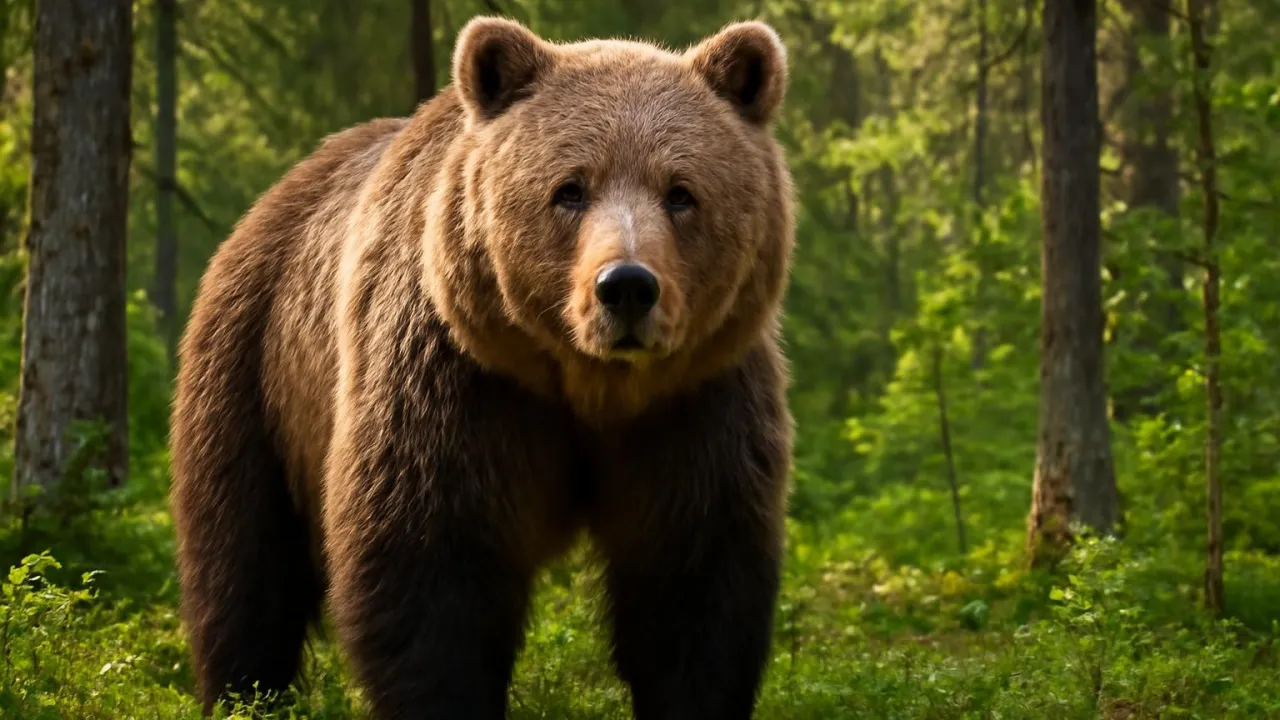
Grizzly bears can run up to 35 miles per hour, faster than many cars in cities!
✨ Word Sparks (Grade 2 Glossary)
Tap 🔊 to hear
omnivore
An animal that eats plants and animals
habitat
The natural home of an animal or plant
salmon
A fish that grizzly bears like to eat
🪝
Have you ever wondered how fast a grizzly bear can run?
1
Strong and Big
Grizzly bears are very large and strong animals that live in forests and mountains. They have thick brown fur and sharp claws for digging and catching food. These bears can stand up tall on their hind legs to look around. Their strength helps them survive in the wild.
2
Where They Live
Grizzly bears live mainly in North America, especially in forests and mountain areas. They like places near rivers where fish swim. These bears need cool, shaded places to stay comfortable during warm days. Their provides food and shelter for them.
3
What They Eat
Grizzly bears are , which means they eat plants and animals. They catch fish like from rivers and eat berries and nuts from plants. Sometimes, they hunt small animals or eat insects. Their diet helps them get energy and nutrients to stay healthy.
A grizzly bear’s sense of smell is seven times stronger than a bloodhound’s!
✨ Word Sparks (Grade 3 Glossary)
Tap 🔊 to hear
camouflage
Colors that help animals hide in nature
pollination
Plants making seeds with help from animals
hibernation
A long winter sleep to save energy
🪝
Did you know grizzly bears use their sharp claws to catch slippery fish?
1
Physical Features
Grizzly bears have thick brown fur that helps keep them warm in cold weather. Their strong muscles and sharp claws allow them to dig and catch prey easily. They can stand on two legs to see far around them. This adaptation helps them find food and stay safe.
2
Habitat and Range
Grizzly bears live mostly in North American forests and mountainous regions. They prefer areas near rivers where salmon swim upstream to spawn. These bears use to blend into the forest environment and avoid predators or humans. Their habitat provides nutrients and shelter for survival.
3
Diet and Survival
Grizzly bears are omnivores and eat a variety of foods including berries, nuts, fish, and small mammals. They rely on of plants to produce fruits like berries that feed them. Their diet helps them build fat for during winter months. This food variety is key to their survival.
4
Behavior and Adaptations
Grizzly bears have excellent senses of smell and hearing to detect danger or food from far away. They use their claws to dig for roots or insects hidden underground. Their powerful bodies allow them to defend themselves from predators. These adaptations help them live successfully in the wild.
Grizzly bears can carry over 500 pounds of food in one feeding session to prepare for hibernation.
✨ Word Sparks (Grade 4 Glossary)
Tap 🔊 to hear
symbiotic
Animals helping each other to live well
alpine
High mountain areas with cold weather
conservation
Protecting animals and their homes
🪝
How do grizzly bears shape the forests and rivers where they live?
1
Physical Strength and Survival
Grizzly bears have powerful muscles and sharp claws that let them hunt and dig for food efficiently in their environment. Their thick fur protects them from cold temperatures and insect bites during summer months in forests and mountains. These physical traits allow them to survive harsh and changing conditions.
2
Ecosystem Role
Grizzly bears play a key role in their ecosystem by controlling prey populations and spreading seeds from the fruits they consume. Their fishing activities transfer nutrients from rivers to forest soil, which supports many plants and animals. This relationship helps maintain a balanced and healthy environment.
3
Habitat and Distribution
Grizzly bears mainly live in western Canada and the northwestern United States, including Alaska’s vast wilderness areas. They prefer dense forests and meadows near rivers and streams where food is plentiful. Human activities like logging and urban growth have reduced their habitat, making efforts essential for their survival.
4
Behavior and Adaptations
These bears hibernate during winter to conserve energy when food is scarce by lowering their body temperature and heart rate significantly. Their keen sense of smell helps them find food from miles away, and their large paws allow them to swim and dig efficiently. These adaptations enable them to thrive in diverse and challenging environments.
1. What role do grizzly bears play in their ecosystem?
2. Why do grizzly bears hibernate in winter?
🤯 Mind-Blowing Fact • Grade 5
Grizzly bears have a sense of smell seven times stronger than bloodhounds, helping them locate food over miles.
✨ Word Sparks (Grade 5 Glossary)
Tap 🔊 to hear
apex predator
Top animal that hunts others in nature
genetic diversity
Variety of genes in a group of animals
metabolic rate
Speed your body uses energy to live
🪝
What scientific adaptations make the grizzly bear a dominant species in North American forests?
1
Taxonomy and Scientific Context
The grizzly bear, scientifically named Ursus arctos horribilis, is a subspecies of the brown bear native to North America. It belongs to the family Ursidae, which includes all bears. This subspecies evolved specific traits to survive in diverse habitats ranging from dense forests to alpine tundra. Its classification helps scientists study its behavior and conservation needs.
2
Physiological Mechanics and Adaptations
Grizzly bears possess extraordinary muscular strength and large claws that enable them to dig for roots and catch fast-moving prey like salmon. Their fur insulates against cold temperatures, while a thick layer of fat provides energy reserves for hibernation. Their advanced olfactory system allows them to detect food sources from several miles away, critical for survival.
3
Conservation and Human Impact
Human expansion, habitat fragmentation, and climate change have threatened grizzly bear populations, prompting conservation efforts including protected reserves and wildlife corridors. These measures aim to maintain and reduce human-bear conflicts. Understanding their ecological role is essential for creating effective management strategies.
4
Ecological Role and Quantitative Comparisons
Grizzly bears serve as and keystone species, influencing prey populations and vegetation through seed dispersal. They can run up to 35 miles per hour and weigh between 400 and 790 pounds, making them one of the largest North American carnivores. Their ability to swim long distances and climb trees adds to their ecological versatility.
5
Behavioral Ecology and Life Cycle
Grizzly bears hibernate for up to seven months, during which their slows dramatically to conserve energy. Females give birth during hibernation, nurturing cubs in dens. Cubs stay with their mothers for up to two years, learning survival skills. These life cycle traits ensure population stability despite environmental challenges.