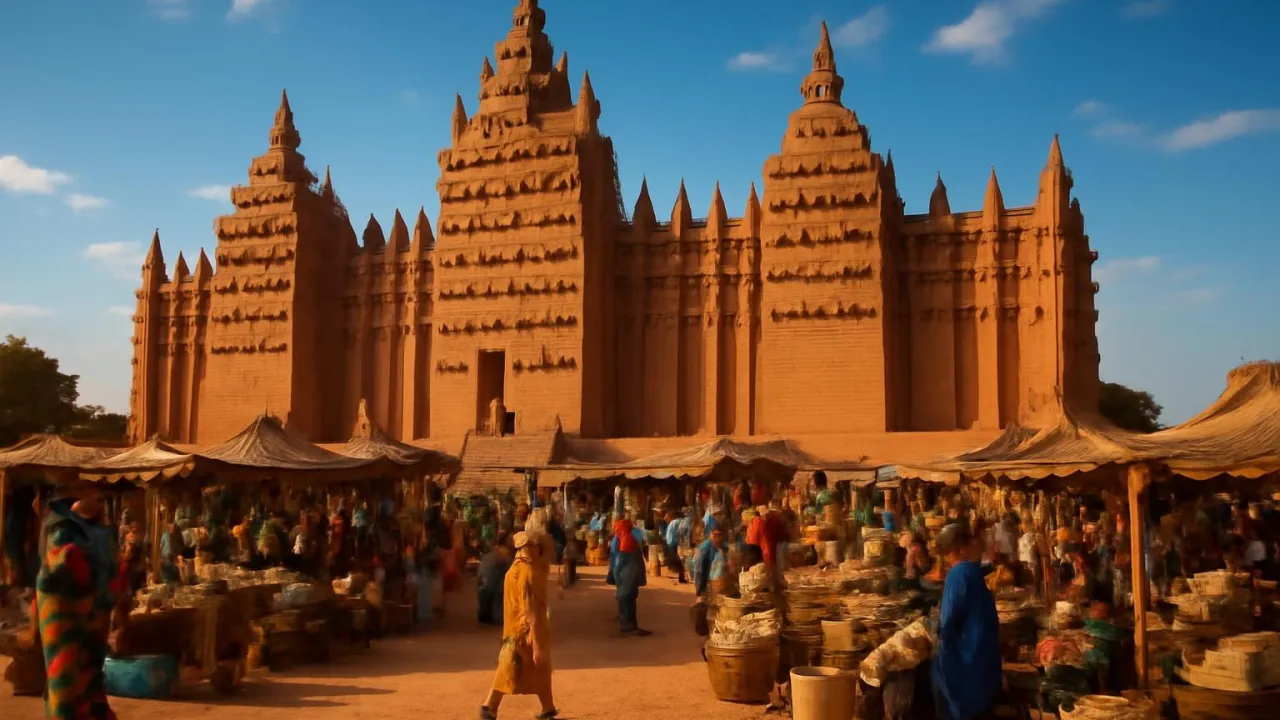
Every year, the whole city helps repair the mosque with fresh mud!
✨ Word Sparks (Grade 2 Glossary)
Tap 🔊 to hear
repair
To fix something broken
straw
Dry grass mixed in mud
market
A place where people sell things
🪝
Can you imagine a building taller than a tree, made from mud?
1
A Giant Mud Wonder
The Great Mosque of Djenné stands tall like a castle. Its smooth, brown walls glow in the hot sun. People from all over come to see its towers. The mosque is a special place for the city.
2
How It’s Built
Builders use mud mixed with to make the walls strong. Each year, the people of Djenné gather to fix cracks and smooth the walls. They use their hands and simple tools to shape the mosque. Working together keeps the building safe.
3
A Place for All
Inside, people pray and find peace in cool, quiet rooms. Outside, the town square is full of lively and music. The mosque is the heart of Djenné life. It brings everyone together in celebration.
The mosque’s wooden beams stick out so workers can climb up to repair the walls!
✨ Word Sparks (Grade 3 Glossary)
Tap 🔊 to hear
adobe
Sun-dried mud brick
erosion
Wearing away by wind or water
ventilation
Letting fresh air flow inside
🪝
What secrets help a giant mud building stand for hundreds of years?
1
A Towering Mud Masterpiece
The Great Mosque of Djenné rises above the city like a sandy fortress. Its tall towers and thick walls shine under the bright African sun. The mosque is made from sun-dried mud bricks called . People travel from far away to see its unique shape and beauty.
2
Built by Many Hands
Every year, the whole community gathers for a festival called the crepissage. During this event, people patch cracks and smooth the walls with fresh mud. The mixture of mud, water, and straw helps prevent from rain. This teamwork keeps the mosque strong and beautiful.
3
Cool and Calm Inside
Inside, thick walls keep the air cool even on hot days. Rows of columns support the roof, creating a peaceful space for prayer. The mosque’s design uses natural to let fresh air flow. The quiet inside feels different from the busy market outside.
4
A Living Monument
The mosque is more than a building; it is a symbol of Djenné’s history. It shows the power of community and traditional engineering. The annual repairs are a tradition passed down through generations. The Great Mosque is a world-famous monument and a UNESCO World Heritage Site.
1. What is the festival for fixing the mosque called?
2. How do the mosque’s thick walls help inside?
🤯 Mind-Blowing Fact • Grade 4
The mosque’s palm wood beams have lasted over a century and make climbing repairs possible!
✨ Word Sparks (Grade 4 Glossary)
Tap 🔊 to hear
minaret
A tall tower on a mosque
toron
Wood beams sticking out of walls
sanctuary
A peaceful, safe place inside
🪝
What if your whole town worked together to protect a giant mud monument from the rain?
1
A Sunbaked Wonder of West Africa
The Great Mosque of Djenné towers over the city’s market square, its mud-brick walls glowing gold at sunset. Built in the Sudano-Sahelian style, its three tall and rows of wooden beams create a dramatic skyline. The mosque’s massive adobe walls are designed to withstand both the heat and the heavy rains of Mali’s climate. For centuries, people have marveled at its size and unique beauty.
2
Engineering with Earth and Tradition
The mosque is constructed from sun-dried mud bricks called adobe, held together with a mud and straw mortar. Bundles of palm wood, called , jut from the walls and serve as scaffolding for repairs. Each spring, the entire community joins in the crepissage festival, mixing fresh mud to patch cracks caused by erosion. This annual teamwork is essential for protecting the mosque from rain and keeping it strong.
3
Cool Spaces and Natural Design
Inside, the mosque’s thick walls and high ceilings create a cool, shaded even during the hottest days. Rows of columns support the roof, allowing natural ventilation and soft light to fill the prayer hall. The design uses local materials and clever engineering to manage temperature and airflow. The mosque’s peaceful interior contrasts with the lively market just outside its doors.
4
A Symbol of Culture and Heritage
The Great Mosque is not only a place of worship but also a symbol of Djenné’s history and community spirit. Its annual repairs bring together people of all ages, passing down building skills and traditions. As a UNESCO World Heritage Site, it draws visitors from around the globe to learn about Mali’s culture. The mosque stands as a living monument to teamwork, resilience, and the power of traditional engineering.
2. What does the crepissage festival teach the community?
🤯 Mind-Blowing Fact • Grade 5
The mosque’s annual repairs use over 90 tons of mud, mixed and applied by hand in one day!
✨ Word Sparks (Grade 5 Glossary)
Tap 🔊 to hear
thermal mass
Material that stores and releases heat
banco
A thick, clay-rich mud plaster
sustainable
Good for people and nature long-term
🪝
How does a monumental mud structure survive Mali’s fierce rains and blazing sun for over a century?
1
Architectural Marvel of the Sahel
At the heart of Djenné, the Great Mosque rises from the floodplain, its sunbaked adobe walls and soaring minarets forming the world’s largest mud-brick structure. Built in 1907 atop earlier mosque foundations dating back to the 13th century, it exemplifies Sudano-Sahelian architecture, a style shaped by the climate and culture of West Africa. The mosque’s three minarets, capped with ostrich eggs, and its rhythmic rows of toron beams create a striking silhouette against the Malian sky. Its design blends religious function with ingenious adaptation to local environmental challenges.
2
Engineering Resilience with Earth and Wood
The mosque’s walls are constructed from adobe bricks—mud mixed with rice husks and straw—stacked and plastered with a thick layer of , a clay-rich mud. Palm wood toron beams jut from the walls, serving both as permanent scaffolding and as anchors for the mud plaster. This structure is highly susceptible to erosion during Mali’s intense rainy season, so the annual crepissage festival is vital. During this event, hundreds of townspeople mix and apply new mud, reinforcing the mosque’s surface and repairing cracks caused by water and temperature changes.
3
Climate Control and Environmental Design
The mosque’s thick walls, sometimes over half a meter wide, act as , absorbing heat during the day and releasing it at night to maintain a stable interior temperature. The high ceilings and strategically placed windows promote natural ventilation, allowing hot air to escape and cooler air to circulate within the prayer hall. This passive climate control system is an outstanding example of architecture adapted to the Sahel’s harsh environment. The interior’s forest of columns not only supports the roof but also creates a serene, diffused light ideal for prayer.
4
Cultural Legacy and Global Impact
The Great Mosque is a symbol of Djenné’s enduring Islamic scholarship and communal identity. Its annual maintenance ritual is a living tradition that unites the city’s residents, from children to elders, in a shared act of preservation. As a UNESCO World Heritage Site, the mosque attracts scholars, architects, and tourists worldwide, inspiring interest in earthen architecture and building practices. Its survival depends on community cooperation, local knowledge, and respect for both tradition and innovation.
5
From Ancient Roots to Modern Recognition
The mosque’s history stretches back to Djenné’s golden age as a center of trade and learning along the Niger River. Though rebuilt in 1907, its foundations and design reflect centuries of adaptation to social, religious, and environmental change. Today, the Great Mosque stands as a testament to the ingenuity of West African builders and the resilience of communal traditions. Its continued existence challenges modern engineers to learn from ancient, techniques that harmonize with nature.