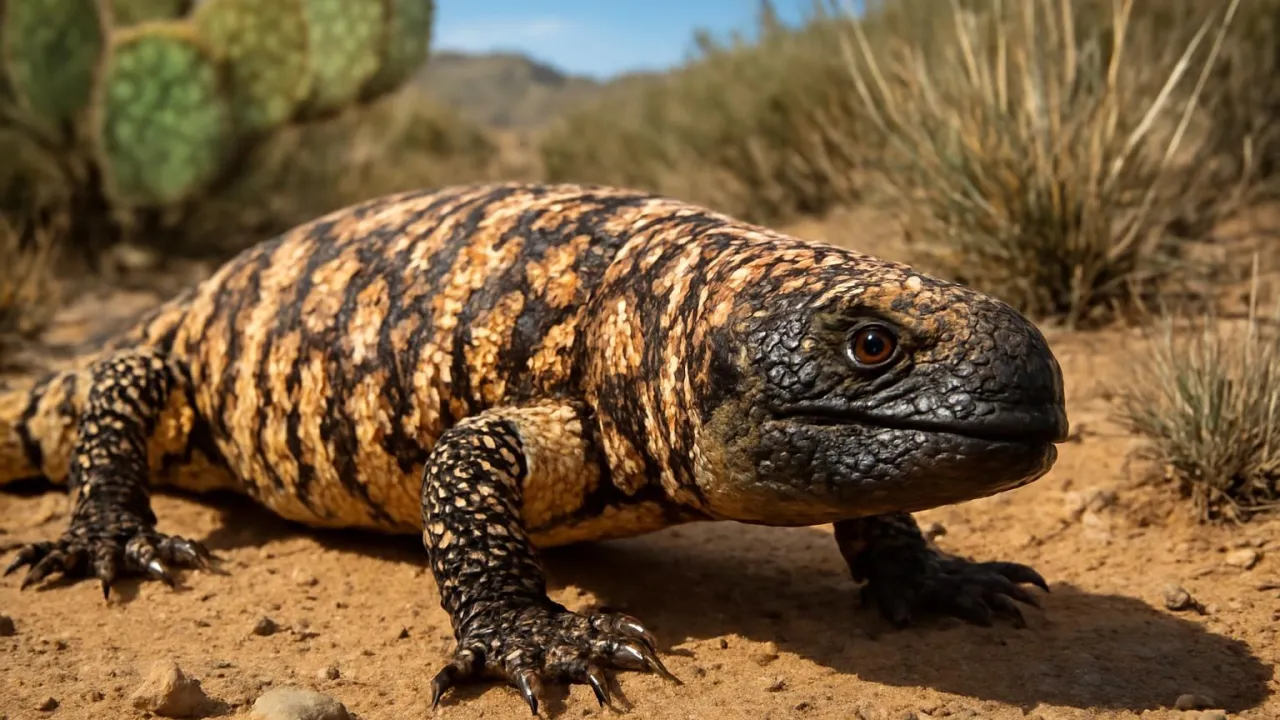
Gila Monsters can survive months without food by using fat stored in their tails!
✨ Word Sparks (Grade 2 Glossary)
Tap 🔊 to hear
venom
A poison used by some animals to protect themselves
desert
A dry, hot place with very little water
burrow
A hole or tunnel animals dig to live in
🪝
Have you ever seen a lizard that can bite with venom?
1
Colorful Skin
The Gila Monster has bright orange and black skin that helps it hide in the . It moves slowly but looks very strong. Its skin feels bumpy and rough to the touch.
2
Where It Lives
This lizard lives in hot in the southwestern United States and Mexico. It hides under rocks and in during the hottest parts of the day. It comes out mostly at night to hunt for food.
3
Venom and Food
The Gila Monster uses in its bite to protect itself from predators. It eats eggs, small mammals, birds, and insects. It stores fat in its tail to survive when food is hard to find.
2. Why does the Gila Monster store fat in its tail?
🤯 Mind-Blowing Fact • Grade 3
Scientists study Gila Monster venom to create new medicines for humans.
✨ Word Sparks (Grade 3 Glossary)
Tap 🔊 to hear
camouflage
Colors or patterns that help animals hide
venom
A poison some animals use to protect themselves
nocturnal
Active at night and resting during the day
🪝
Did you know the Gila Monster’s venom helps it stay safe in the wild?
1
Camouflage and Skin
The Gila Monster’s bright orange and black skin helps it blend into desert rocks and soil. This keeps it safe from predators. Its skin is bumpy and thick, which protects it from the hot sun and rough terrain. The lizard’s slow movements make it less noticeable in its habitat.
2
Habitat and Behavior
This lizard lives in deserts of the southwestern United States and northwestern Mexico. It spends most of the day hiding in burrows or under rocks to avoid heat. The Gila Monster is mostly , coming out at night to hunt and search for water. It is well adapted to survive in dry, hot environments.
3
Venom and Defense
Unlike many lizards, the Gila Monster has glands in its lower jaw. When it bites, venom flows into the wound to defend against predators. The venom is not usually deadly to humans but causes pain and swelling. This venomous bite is a key adaptation for survival in the wild.
4
Diet and Energy Storage
The Gila Monster feeds on eggs, small mammals, birds, and insects. It uses its strong jaws to crush eggs and catch prey. To survive long dry periods, it stores fat in its thick tail. This fat reserve provides energy when food and water are scarce.
1. What helps the Gila Monster hide from predators?
2. What does the Gila Monster do during the hottest part of the day?
🤯 Mind-Blowing Fact • Grade 4
Gila Monster venom inspired the development of diabetes medicine that helps millions worldwide.
✨ Word Sparks (Grade 4 Glossary)
Tap 🔊 to hear
ecosystem
A community of plants and animals living together
venomous
An animal that has venom to protect itself
conservation
Protecting animals and their homes from harm
🪝
What makes the Gila Monster’s venom an important survival tool in the desert?
1
Adaptations for Desert Life
The Gila Monster’s thick, bumpy skin helps reduce water loss in the dry desert heat, allowing it to stay hydrated longer. Its slow movements conserve energy and help it avoid attracting predators. By hiding in burrows during the hottest hours, it prevents overheating and dehydration. These adaptations allow it to thrive in harsh desert .
2
Venom and Defense Mechanisms
The venom glands located in the Gila Monster’s lower jaw produce a toxic saliva used for defense against predators. When threatened, it bites and holds on to deliver venom, which causes pain and swelling but rarely kills. This bite deters many animals from attacking, giving the lizard a key advantage in survival.
3
Role in the Ecosystem
As a predator, the Gila Monster helps control populations of small mammals, birds, and insects, maintaining balance in the desert food web. It also consumes eggs, which affects the reproductive success of some desert animals. Humans impact its habitat through land development, but efforts help protect this unique species.
4
Geographic Range and Habitat
The Gila Monster is found in the Sonoran and Mojave deserts across southwestern United States and northwestern Mexico. It prefers rocky, scrubby areas with plenty of hiding places like burrows and crevices. Its range overlaps with many other desert species, making it an important part of this diverse .
1. How does the Gila Monster’s venom help it survive?
2. Why is the Gila Monster important in its ecosystem?
🤯 Mind-Blowing Fact • Grade 5
The Gila Monster’s venom led to a diabetes drug called exenatide, helping millions manage blood sugar.
✨ Word Sparks (Grade 5 Glossary)
Tap 🔊 to hear
venomous
An animal with venom to protect or catch prey
metabolism
How an animal uses energy to live and grow
thermoregulation
How animals control their body temperature
🪝
How does the Gila Monster’s venom and physiology make it a unique reptile in North America?
1
Scientific Classification and Unique Traits
The Gila Monster, scientifically named Heloderma suspectum, belongs to the Helodermatidae family, which includes only a few lizard species. It is one of the only two venomous lizards native to North America. Its stout body, thick skin, and bead-like scales help protect it from predators and harsh desert conditions. This lizard’s slow allows it to survive long periods without food.
2
Venom Physiology and Mechanism
The Gila Monster’s venom is produced in glands located in its lower jaw and delivered through grooved teeth during a prolonged bite. The venom contains proteins that affect blood pressure and pain receptors, which immobilize prey and deter predators. Unlike snake venom, Gila Monster venom is less toxic but causes intense pain and swelling. Scientists study this venom to develop new medicines.
3
Ecological Role and Conservation Status
As a carnivorous predator, the Gila Monster regulates populations of small mammals, birds, reptiles, and insects in desert ecosystems. It also consumes reptile and bird eggs, influencing reproductive cycles in its habitat. Habitat loss and illegal collection threaten its populations, but it is currently protected under U.S. law. Conservation efforts focus on habitat preservation and public education.
4
Behavioral Adaptations and Survival Strategies
This lizard is primarily nocturnal and crepuscular, being most active during dawn and dusk when temperatures are cooler. It uses burrows and rocky crevices for shelter and . The Gila Monster’s ability to store fat in its tail allows it to endure months without food or water, adapting well to desert droughts and food scarcity.
5
Quantitative Comparisons and Interesting Facts
Adult Gila Monsters measure between 18 and 24 inches long and weigh about 2 to 5 pounds. They can survive desert temperatures ranging from near freezing at night to over 110 degrees Fahrenheit during the day. Their venom delivery is slower than snakes, requiring a firm bite lasting up to several minutes. The Gila Monster’s fat tail can store up to 30% of its body weight in energy reserves.