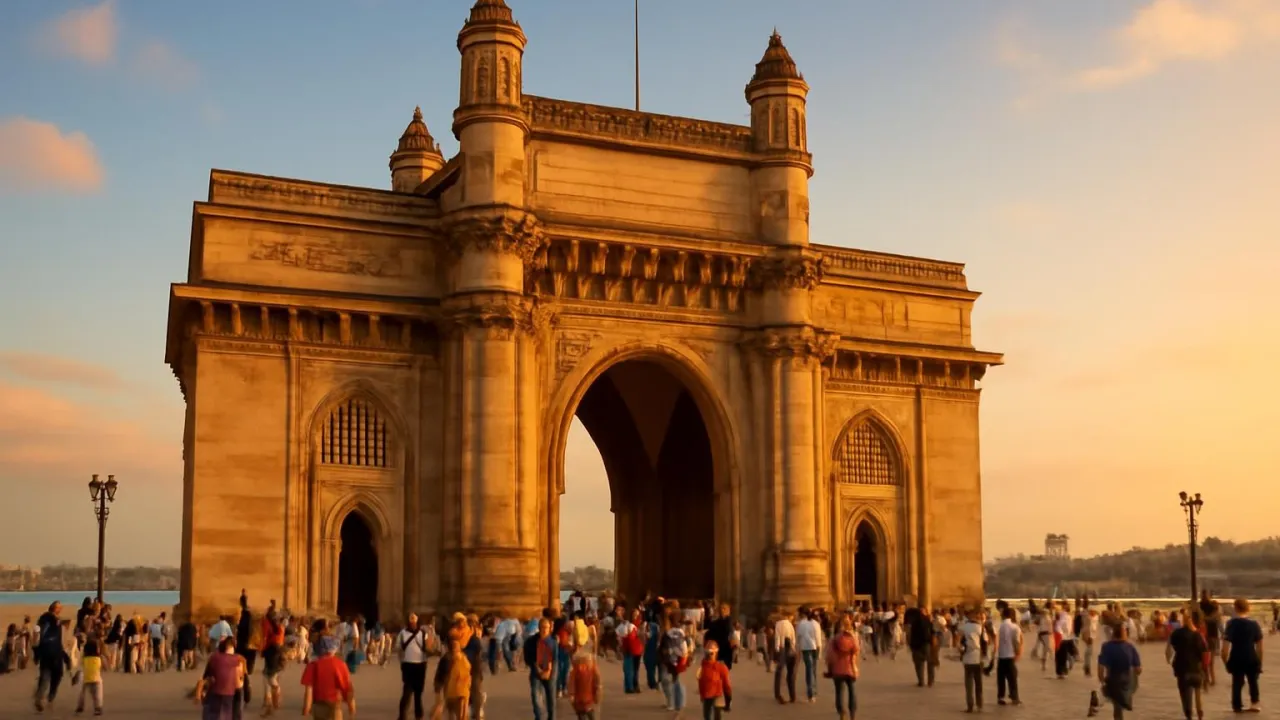
The Gateway of India was built to welcome a king and queen!
✨ Word Sparks (Grade 2 Glossary)
Tap 🔊 to hear
tourist
A person who visits new places.
arch
A curved building shape.
stone
A hard, gray rock.
🪝
Have you ever seen a giant arch by the water?
1
A Welcome by the Sea
The Gateway of India stands right beside the blue sea. Its tall greets people who visit Mumbai. Boats and ships sail past it every day. The arch is a special place for families and .
2
How Was It Built?
Workers used strong to build the Gateway long ago. They stacked the stones carefully to make the stand tall. The arch shape helps keep it strong, even in wind and rain. Many people helped to finish the Gateway.
3
Fun at the Gateway
Visitors love to walk under the and see the water. Some people take boat rides from the Gateway’s steps. Bright birds and busy crowds fill the area with sound. It is a favorite spot for photos and fun.
The Gateway’s arch shape is so strong, it can support the weight of hundreds of people!
✨ Word Sparks (Grade 3 Glossary)
Tap 🔊 to hear
basalt
A hard, dark volcanic rock.
archway
A curved opening in a building.
monument
A special building made to remember something.
🪝
Can you imagine standing under a giant stone arch by the sea?
1
A Grand Entrance
The Gateway of India rises high above Mumbai’s busy waterfront. Its tall arch faces the Arabian Sea, where boats and ferries come and go. The structure is built from yellow , a strong volcanic rock. People from all over the world visit to see its beauty.
2
How the Arch Stands
The Gateway’s arch is a clever design called an ‘.’ The curved shape lets weight push down and out, making the structure stable. Builders used scaffolding and careful planning to set each stone in place. The arch’s strength helps it resist wind, rain, and even salty sea air.
3
History by the Water
The Gateway was built over a hundred years ago, during British rule in India. It was made to welcome King George V and Queen Mary in 1911. The style is called Indo-Saracenic, which mixes Indian and European designs. Today, it is a to Mumbai’s history and spirit.
4
A Place for Everyone
Crowds gather at the Gateway to watch the waves and feed the pigeons. Musicians play, and families take photos under the giant arch. The sound of boat horns and sea breezes fills the air. The Gateway is a symbol of welcome for all who come to Mumbai.
The Gateway of India has survived powerful monsoon storms for nearly a century without major repairs.
✨ Word Sparks (Grade 4 Glossary)
Tap 🔊 to hear
Indo-Saracenic
A style mixing Indian and European designs.
turret
A small tower on a building.
promenade
A walkway where people stroll.
🪝
What secrets might a stone arch by the sea hold if it could speak?
1
A Symbol by the Arabian Sea
Standing proudly on Mumbai’s waterfront, the Gateway of India greets visitors with its massive arch. This style blends Indian, Islamic, and European design, making the monument truly unique. The structure faces the Arabian Sea, where ships once brought travelers from distant lands. Today, it remains one of India’s most recognized and visited landmarks.
2
Engineering Strength and Style
Engineers used yellow basalt and reinforced concrete to build the Gateway between 1911 and 1924. The arch shape is not just beautiful—it distributes weight evenly, allowing the structure to withstand storms and sea winds. Builders used scaffolding and precise measurements to set each stone perfectly. The four and latticework add both strength and decorative beauty.
3
A Monument with History
The Gateway was constructed to honor the visit of British King George V and Queen Mary. Over time, it became a symbol of both colonial history and Indian independence. In 1948, the last British troops left India through this arch, marking a new chapter for the country. Today, the monument stands as a reminder of Mumbai’s changing story.
4
A Gathering Place for All
Each day, crowds gather to stroll along the , watch boats, and enjoy the sea breeze. Vendors sell snacks, while musicians and artists perform nearby, filling the air with lively sounds. The Gateway’s open arch welcomes people from every background and country. It stands as a symbol of hospitality and Mumbai’s vibrant spirit.
2. What important event happened at the Gateway in 1948?
🤯 Mind-Blowing Fact • Grade 5
The Gateway of India’s central arch can withstand forces from both earthquakes and cyclonic winds due to its ingenious engineering.
✨ Word Sparks (Grade 5 Glossary)
Tap 🔊 to hear
compression
A force that squeezes materials together.
keystone
The top stone that locks an arch in place.
conservation
Protecting and caring for important places or things.
🪝
If you stood beneath the Gateway of India at sunrise, what stories would its stones whisper about Mumbai’s past and future?
1
Architectural Marvel on the Waterfront
As dawn breaks over Mumbai’s harbor, the Gateway of India’s intricate arch glows with golden light, casting long shadows on the bustling promenade. Designed in the Indo-Saracenic Revival style by architect George Wittet, the monument combines elements from Hindu, Muslim, and European architecture. Its imposing central arch, 85 feet (26 meters) high and 48 feet (15 meters) wide, is flanked by four turrets and detailed latticework. The structure’s orientation facing the Arabian Sea made it the ceremonial entry point for British viceroys and governors arriving by ship.
2
Engineering the Unyielding Arch
The Gateway’s arch is a triumph of physics and engineering, utilizing the principle of to distribute weight efficiently through its curved form. Builders used yellow basalt quarried locally, reinforced with concrete to resist erosion from salty sea air and monsoon rains. The arch’s , precisely placed at the top, locks the structure together, allowing it to withstand both vertical and lateral forces. Scaffolding and manual hoists were used to position each stone with exacting accuracy, ensuring stability for generations.
3
Historical Layers and Symbolism
Construction began in 1911 to commemorate the visit of King George V and Queen Mary, but the Gateway was not completed until 1924 due to engineering challenges and World War I delays. Over the decades, the monument has witnessed pivotal moments in Indian history, including the departure of the last British troops in 1948, symbolizing the end of colonial rule. Its presence reflects the complex relationship between India’s colonial past and its independent identity, making it a site of both celebration and reflection.
4
Cultural Impact and Global Recognition
Today, the Gateway of India is a vibrant gathering place, attracting millions of visitors each year from across the globe. The surrounding plaza is alive with street vendors, musicians, and artists, reflecting Mumbai’s diverse culture and cosmopolitan spirit. The monument has inspired countless works of art, literature, and film, and stands as a symbol of hospitality and resilience. Its silhouette is instantly recognizable, representing Mumbai’s role as a gateway to India’s rich traditions and modern ambitions.
5
Preservation and the Future
Despite facing threats from pollution, heavy tourism, and harsh coastal weather, the Gateway has remained structurally sound for nearly a century. efforts focus on cleaning, repairing stonework, and protecting the monument from environmental damage. As Mumbai grows and changes, the Gateway continues to serve as a powerful reminder of the city’s layered history and its enduring connection to the world beyond the sea. With ongoing care, its arch will welcome generations to come.