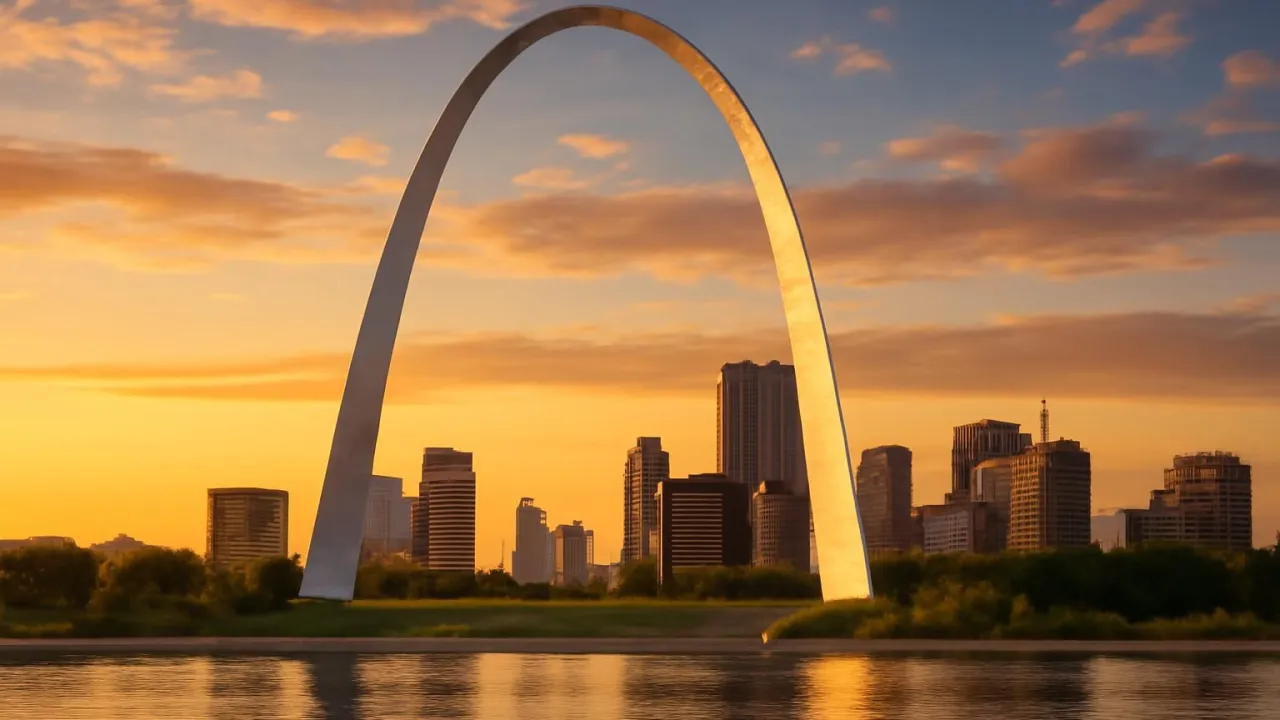
The Gateway Arch is taller than a 60-story building!
✨ Word Sparks (Grade 2 Glossary)
Tap 🔊 to hear
steel
A very strong, shiny metal
puzzle
Pieces that fit together to make something
Mississippi River
A huge river in the United States
🪝
Have you ever seen a giant silver arch by a river?
1
A Silver Rainbow in St. Louis
The Gateway Arch shines in the sunlight, curving over the city. It stands next to the wide , making it easy to spot. People come from many places to see its tall, shiny shape.
2
Riding to the Top
Inside the Arch, a special tram takes visitors up, up, up. The tram climbs all the way to the top, where you can look out windows. You see the river, the city, and even far-off hills.
3
Building Something Amazing
Workers built the Arch from strong pieces, fitting them together like a . It took many years and careful planning to finish. Now, it stands as the tallest arch in the world.
The Arch can sway up to 18 inches in strong winds, but it is perfectly safe!
✨ Word Sparks (Grade 3 Glossary)
Tap 🔊 to hear
catenary
A special curved arch shape
foundation
The strong base under a building
pioneer
A person who explores new places
🪝
What would it feel like to stand inside a giant steel rainbow?
1
The Tallest Arch in the World
The Gateway Arch rises high above St. Louis, shining in the sun. Its curved shape is called a arch, which is strong and beautiful. The Arch stands 630 feet tall and 630 feet wide, making it the tallest arch anywhere. It is covered in stainless steel, so it gleams in every kind of weather.
2
How Does the Arch Stand?
Engineers designed the Arch using special math to make it stable. Each side was built separately, then joined at the very top. The arch's shape spreads weight evenly, so it does not fall. Strong keep it steady, even when strong winds blow.
3
A Ride to the Sky
Inside, a unique tram system carries visitors up through the Arch. The tram is made of small pods that gently rotate as they climb. At the top, windows let you see the Mississippi River and the city below. People love the view and the feeling of being so high.
4
A Monument to History
The Gateway Arch honors the who traveled west long ago. It is part of the Jefferson National Expansion Memorial, celebrating new journeys and big dreams. The Arch is a symbol of hope and adventure for many people. Visitors from around the world come to learn about its history and design.
1. What is the Gateway Arch made of on the outside?
2. Why is the Arch shaped like a catenary?
🤯 Mind-Blowing Fact • Grade 4
The Arch’s stainless steel skin weighs nearly 900 tons—about as much as 150 elephants!
✨ Word Sparks (Grade 4 Glossary)
Tap 🔊 to hear
catenary
A curve made by a hanging chain
observation
Looking out from a high place
revitalize
To bring new life to something
🪝
Imagine hearing the clang of steel as a 630-foot arch rises above a mighty river—how did it get there?
1
Engineering a Modern Marvel
The Gateway Arch towers over St. Louis, gleaming with stainless steel panels that reflect sunlight and clouds. Its unique arch shape, modeled after the curve a chain makes when hanging, allows it to distribute weight evenly and withstand powerful winds. Engineers used precise mathematical calculations to design the structure, ensuring it would remain stable and safe for generations. The Arch’s two legs were built separately and carefully joined at the top, a moment that required perfect timing and teamwork.
2
Inside the Arch: A Journey Upward
Visitors enter the Arch and board a tram made of small, rotating capsules that travel inside the curved legs. As the tram rises, passengers feel the gentle vibration of the machinery and watch the city shrink below. At the top, windows offer breathtaking views of the Mississippi River, downtown St. Louis, and distant landscapes. The entire ride is an adventure in engineering, blending creativity and science.
3
A Symbol of Expansion and Hope
The Gateway Arch was built to honor the pioneers who journeyed west during America’s age of exploration. It stands as the centerpiece of the Jefferson National Expansion Memorial, reminding visitors of courage, discovery, and new beginnings. The Arch’s construction began in 1963 and finished in 1965, marking a new era of modern design. Today, it welcomes millions of visitors from around the world, inspiring curiosity and pride.
4
Lasting Impact on City and Country
The Arch has become a powerful symbol for St. Louis, drawing tourists and sparking interest in science, architecture, and history. Its innovative design influenced future monuments and showed how math and engineering can create lasting wonders. The Arch’s presence has helped the riverfront, turning it into a lively gathering place. As both an engineering achievement and a cultural icon, the Gateway Arch continues to shape the story of America.
1. How did engineers make sure the Arch would be stable?
2. What does the Gateway Arch symbolize?
🤯 Mind-Blowing Fact • Grade 5
The Gateway Arch contains over 900 tons of stainless steel—the most used in any building on Earth!
✨ Word Sparks (Grade 5 Glossary)
Tap 🔊 to hear
catenary curve
The strongest arch shape, like a hanging chain
apex
The very highest point of something
corrosion
When metal slowly breaks down from water or air
🪝
If you stood beneath a 630-foot shimmering arc, could you guess the secrets of its strength and design?
1
A Monumental Feat of Modern Engineering
The Gateway Arch, completed in 1965, soars 630 feet above the banks of the Mississippi River, making it the tallest arch and the tallest manmade monument in the United States. Its design, a weighted , was chosen for both its elegant appearance and its superior structural strength. Architect Eero Saarinen and structural engineer Hannskarl Bandel used advanced mathematical modeling and wind tunnel testing to ensure the Arch could withstand earthquakes and gusts up to 150 miles per hour. The two legs were constructed simultaneously using cranes and temporary supports, meeting precisely at the in a dramatic engineering milestone. The stainless steel exterior, supported by a carbon steel skeleton and filled with reinforced concrete, allows the Arch to flex as much as 18 inches in high winds without risk.
2
Inside the Arch: Mechanics and Experience
The innovative tram system inside the Arch consists of eight egg-shaped capsules per leg, each seating five passengers. As the tram ascends the curve, a series of gears and motors gently rotate each capsule to keep riders upright, creating a unique sensation of movement and vibration. The ride to the observation deck takes about four minutes, culminating in panoramic views through sixteen narrow windows. The observation space itself is only seven feet wide, yet it allows visitors to see up to thirty miles on a clear day. The entire experience demonstrates the interplay between mechanical engineering and user comfort in a confined, curved space.
3
Historical Origins and National Significance
The Gateway Arch was conceived as the centerpiece of the Jefferson National Expansion Memorial to commemorate St. Louis’s role as the 'Gateway to the West.' Its construction required the demolition of forty blocks of old riverfront buildings and the relocation of railroad tracks, reflecting the city’s transformation. The project was funded by a combination of federal grants and city bonds, and it provided thousands of jobs during the postwar era. The Arch’s completion marked a turning point in American monument design, embracing modernism and engineering innovation over traditional stonework.
4
Architectural Influence and Cultural Impact
The Arch’s bold form and gleaming surface have inspired architects and engineers worldwide, serving as a symbol of progress and possibility. It has become an iconic image for St. Louis, appearing on everything from postage stamps to sports team logos. The monument’s presence has revitalized the downtown riverfront, attracting millions of visitors annually and supporting local businesses. Its construction techniques influenced later large-scale projects, demonstrating the practical use of computer modeling and prefabricated steel sections.
5
Preservation, Science, and the Future
Ongoing preservation efforts ensure the Arch remains structurally sound and visually stunning for future generations. Engineers regularly inspect the stainless steel panels for signs of and monitor the foundation for shifts caused by river erosion. The Arch is also a site for scientific study, including research on wind dynamics, urban planning, and visitor experience. As both a national park and an engineering marvel, the Gateway Arch continues to inspire curiosity about science, history, and the possibilities of human achievement.