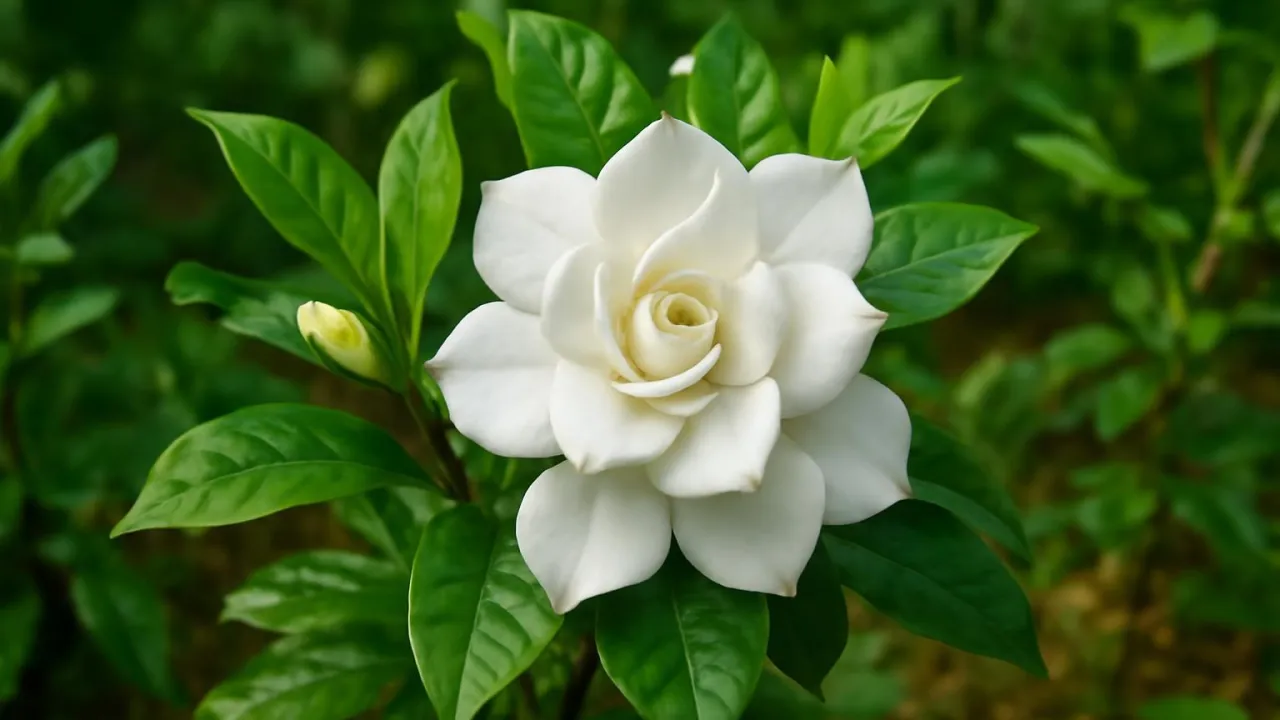
Gardenia flowers can fill a whole garden with their sweet scent!
✨ Word Sparks (Grade 2 Glossary)
Tap 🔊 to hear
petals
Soft parts that make up a flower's bloom
fragrance
A strong, nice smell from plants or flowers
bloom
When a flower opens up and shows petals
🪝
Have you ever smelled a flower that smells like sweet candy?
1
Gardenia’s Lovely White Flowers
Gardenias have white that are soft and shiny in the sunlight. Their flowers open wide and look very pretty. Many people grow gardenias because of their beauty and scent.
2
Sweet Fragrance Fills the Air
Gardenias give off a strong, sweet smell that spreads around the garden. This lovely scent attracts bees and butterflies that help the flowers grow. The smell is often used in perfumes and soaps.
3
Where Gardenias Like to Live
Gardenias grow best in warm places with some shade and plenty of water. They usually grow near trees or bushes that protect them from too much sun. Gardenias in spring and summer seasons.
1. What helps gardenias grow by protecting them from too much sun?
2. What do bees like about gardenias?
🤯 Mind-Blowing Fact • Grade 3
Gardenias produce a waxy coating on petals to reduce water loss in hot climates.
✨ Word Sparks (Grade 3 Glossary)
Tap 🔊 to hear
pollination
When insects move pollen to help plants grow seeds
adaptation
A change that helps a plant or animal survive
nectar
Sweet liquid flowers make to attract insects
🪝
Did you know gardenias use their fragrance to attract helpful insects?
1
Gardenia’s Appearance and Adaptations
Gardenias have shiny, dark green leaves that help protect them from drying out. Their white petals are thick and waxy, which helps keep water inside the flower. This helps gardenias survive in warm climates. The flower’s bright white color also helps attract pollinators.
2
How Gardenias Use Fragrance
The strong fragrance of gardenias is a special to attract pollinators like bees and butterflies. These insects help with by moving pollen from one flower to another. This process helps gardenias reproduce and grow new plants. The scent also helps gardenias stand out among other flowers.
3
Gardenia’s Habitat and Growth
Gardenias grow in warm, humid environments such as Southeast Asia and parts of Africa. They prefer shady areas under trees where they get filtered sunlight. Gardenias need rich soil with good nutrients and regular watering to thrive. Their growth cycle includes blooming mostly in spring and summer.
4
Gardenia’s Role in Nature
Gardenias provide that feeds pollinators, which are important for many plants’ survival. They also add beauty and fragrance to gardens, attracting humans and insects alike. Gardenias can be part of a larger food web, supporting birds and insects. Their presence helps maintain a healthy ecosystem.
Gardenia fragrance can travel over long distances, attracting pollinators far away.
✨ Word Sparks (Grade 4 Glossary)
Tap 🔊 to hear
symbiosis
When two living things help each other
pollinators
Animals that carry pollen between flowers
ecosystem
All living and nonliving things in one place
🪝
How does the gardenia’s sweet fragrance affect its ecosystem?
1
Gardenia’s Physical Features and Survival
Gardenias have thick, waxy petals and shiny leaves that reduce water loss in warm climates, which helps them survive droughts. Their bright white flowers stand out in shaded areas, attracting many such as bees and butterflies. This adaptation increases their chances of successful pollination and reproduction. The plant’s ability to thrive in filtered sunlight allows it to live under tree canopies.
2
The Role of Fragrance in Gardenia’s Life Cycle
The strong, sweet fragrance of gardenia flowers plays a key role in attracting from a distance, which ensures effective pollination. This process helps the plant produce seeds and continue its life cycle. The scent also discourages some herbivores, protecting the flowers from being eaten. Gardenias bloom mostly during spring and summer, when pollinators are most active.
3
Gardenia in Food Webs and Symbiosis
Gardenias provide nectar that feeds , which are essential for many plants in the . These pollinators help other flowers reproduce, creating a web of interdependence. Gardenias also benefit from symbiotic relationships with soil fungi that help roots absorb nutrients. However, human activities like deforestation can threaten gardenia habitats.
4
Where Gardenias Grow and Human Impact
Native to Southeast Asia and parts of Africa, gardenias thrive in warm, humid forests with filtered sunlight. Gardenias are popular in gardens worldwide because of their beauty and fragrance. However, habitat loss from urbanization and logging reduces their natural growing areas. Conservation efforts help protect gardenia plants and their .
1. Why do gardenias have waxy petals and shiny leaves?
2. How do gardenias help other plants in their ecosystem?
🤯 Mind-Blowing Fact • Grade 5
Gardenia jasminoides releases fragrance compounds mostly at night to attract moth pollinators.
✨ Word Sparks (Grade 5 Glossary)
Tap 🔊 to hear
volatile
Easily evaporates to make smells
mycorrhizal
Fungi that help plant roots get nutrients
taxonomy
Science of naming and classifying living things
🪝
What makes gardenias scientifically fascinating beyond their beauty and scent?
1
Taxonomy and Scientific Classification
Gardenia jasminoides belongs to the Rubiaceae family, which includes coffee plants and other flowering shrubs. This species is native to Southeast Asia and has been cultivated worldwide for its ornamental value. The genus Gardenia was named after Alexander Garden, an 18th-century naturalist. Its classification helps scientists understand its evolutionary relationships with other plants.
2
Physiological Mechanics of Fragrance Production
Gardenias produce a complex mixture of organic compounds that create their strong, sweet fragrance. These compounds are released mostly during warm evenings to attract nocturnal pollinators like moths. The flower’s thick, waxy petals help retain moisture and protect delicate scent glands. This physiological adaptation optimizes pollination efficiency in their native humid environments.
3
Conservation and Botanical History
While gardenias are widely cultivated, wild populations face threats from habitat destruction and climate change. Conservation efforts focus on protecting native forest habitats and promoting sustainable cultivation. Historically, gardenias have been used in traditional medicine and perfumery, highlighting their cultural significance. Botanical gardens play a key role in preserving genetic diversity of gardenia species.
4
Quantitative Comparisons in Growth and Environment
Gardenia shrubs typically grow between 3 and 6 feet tall, with leaves measuring 2 to 4 inches long. They thrive in temperatures ranging from 65 to 75 degrees Fahrenheit and require moderate humidity. Their fragrance molecules can disperse several meters, effectively attracting pollinators across distances. Compared to other fragrant flowers, gardenias have a longer blooming period lasting up to eight weeks.
5
Ecological and Human Impact
Gardenias contribute to ecosystem health by supporting pollinators and forming symbiotic relationships with fungi that enhance nutrient uptake. Human cultivation has spread gardenias globally, but urban development threatens wild habitats. Sustainable gardening practices and habitat restoration are vital to preserving gardenia populations. Their ecological role and cultural importance make them a focus of botanical research.