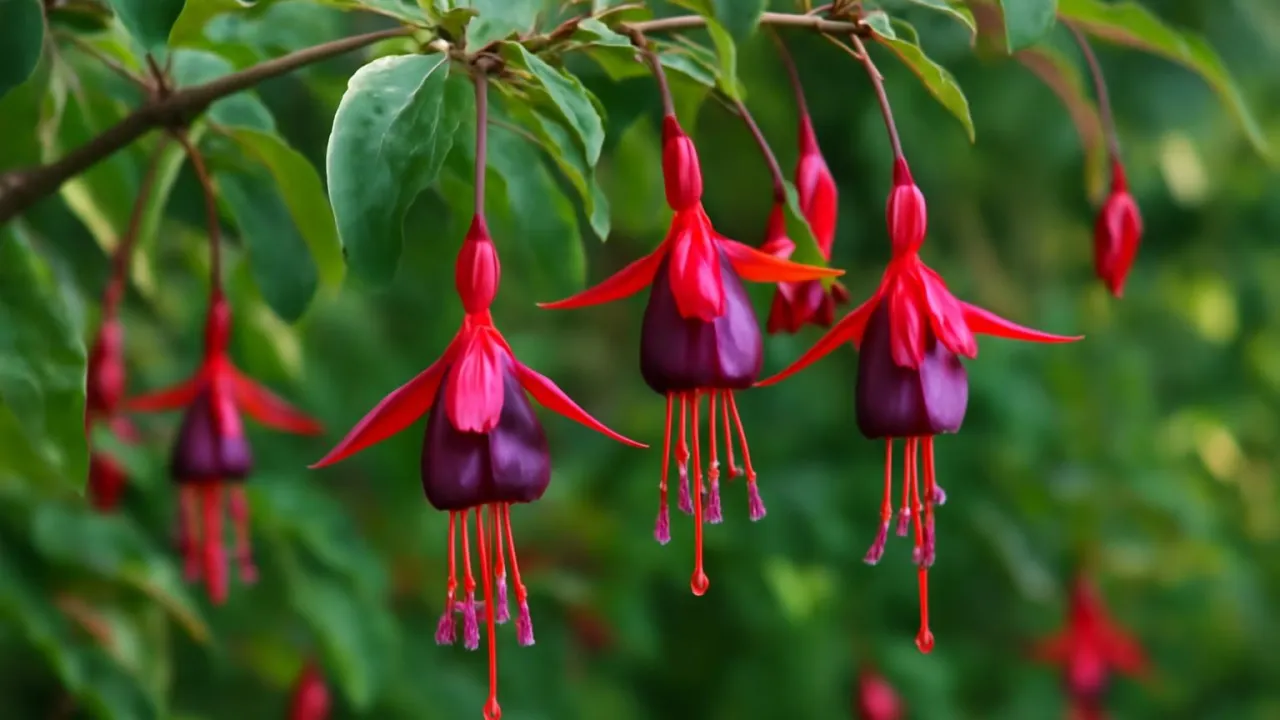
Fuchsia flowers attract hummingbirds with their bright colors and sweet nectar!
✨ Word Sparks (Grade 2 Glossary)
Tap 🔊 to hear
nectar
Sweet juice flowers make to attract animals
hummingbird
A tiny bird that drinks flower nectar fast
shade
A cool place where the sun does not shine bright
🪝
Have you ever seen a flower that dangles like a little bell?
1
Colorful Dangling Flowers
Fuchsia flowers hang down from thin stems and show bright red and purple colors. They attract and bees that help the flowers grow. The flowers look like tiny bells that swing gently in the wind.
2
Leaves and Growth
The plant has soft green leaves that catch sunlight for food. It can grow between one and eight feet tall in cool, shady places. Fuchsias need water often to stay healthy and strong.
3
Where Fuchsias Live
Fuchsias come from Central and South America where the climate is mild and moist. People like to grow them in gardens and pots because they are pretty and easy to care for. They do best in places with some and regular watering.
2. What kind of place do fuchsias like to grow in?
🤯 Mind-Blowing Fact • Grade 3
Fuchsia flowers use bright colors and shapes to trick hummingbirds into pollinating them!
✨ Word Sparks (Grade 3 Glossary)
Tap 🔊 to hear
pollination
When pollen moves to help make new seeds
adaptation
A change that helps a plant or animal survive
symbiosis
When two living things help each other
🪝
Did you know fuchsia flowers use bright colors to trick animals into helping them?
1
Amazing Flower Shape and Color
Fuchsia flowers dangle downward like tiny bells, showing bright red and purple colors. Their shape helps attract hummingbirds and bees, which are important pollinators. helps the plant make seeds so it can grow new flowers. This colorful display is a clever for survival.
2
Leaves and Plant Structure
The plant has soft green leaves that catch sunlight to make food through photosynthesis. Its thin stems bend easily, allowing flowers to sway in the wind without breaking. This flexibility helps protect the plant from strong weather. The leaves also help the plant get nutrients from the air.
3
Where Fuchsias Grow
Fuchsias are native to Central and South America, thriving in cool, moist mountain forests. They prefer shady spots to avoid too much sun, which can dry their leaves. Their habitat provides the right temperature and humidity for healthy growth. These plants play a role in their ecosystem by feeding pollinators.
4
How Fuchsias Help Nature
Fuchsias provide nectar for hummingbirds and bees, which helps these animals survive. In return, these pollinators spread pollen that fertilizes flowers, allowing fruit and seeds to form. This mutual relationship is called . Fuchsias also add color and beauty to gardens and wild areas.
Fuchsia flowers’ dangling shape protects pollen from rain, helping the plant reproduce better!
✨ Word Sparks (Grade 4 Glossary)
Tap 🔊 to hear
ecosystem
A community of plants and animals living together
pollinator
An animal that helps flowers make seeds
conservation
Saving plants and animals from harm
🪝
How do fuchsia flowers use their colors and shape to survive in their environment?
1
Flower Structure and Survival
Fuchsia flowers dangle like tiny bells, showing bright red and purple colors that attract hummingbirds and bees. This flower shape and color combination is an adaptation that increases pollination success, which helps the plant reproduce. The dangling flowers also protect pollen from rain, ensuring fertilization continues. This cause-and-effect relationship helps fuchsias thrive in their habitats.
2
Role in Ecosystems
Fuchsias are important in their because they provide nectar for like hummingbirds and bees. These animals rely on fuchsias for food, and in return, they spread pollen that fertilizes the flowers. This symbiotic relationship supports biodiversity and helps maintain healthy food webs. People also grow fuchsias in gardens, which adds beauty and supports local wildlife.
3
Geographic Distribution and Habitat
Fuchsias naturally grow in the cool, moist mountain forests of Central and South America, where temperatures are mild and humidity is high. They prefer shaded areas to avoid direct sunlight, which can damage their delicate leaves. Human cultivation has spread fuchsias worldwide, especially in temperate gardens. Their ability to adapt to different environments shows their ecological importance.
4
Human Impact and Conservation
While fuchsias are popular garden plants, habitat loss in their native regions threatens wild populations. efforts focus on protecting mountain forests and promoting sustainable gardening practices. Growing fuchsias in home gardens can help conserve the species by reducing wild harvesting. Understanding their ecological role encourages people to care for these beautiful plants.
Fuchsia flowers evolved bright colors and dangling shapes perfectly suited for hummingbird pollination!
✨ Word Sparks (Grade 5 Glossary)
Tap 🔊 to hear
pendulous
Hanging down like a bell or drop
mutualism
A helpful relationship between two species
photosynthesis
How plants make food from sunlight
🪝
What makes fuchsia flowers uniquely adapted to attract pollinators and survive in mountain forests?
1
Scientific Classification and Origin
Fuchsia belongs to the Onagraceae family and includes over 100 species native to Central and South America. The species Fuchsia magellanica is well-known for its vibrant, flowers. These plants thrive in temperate mountain forests where moisture and mild temperatures prevail. Their botanical classification helps scientists understand their evolutionary relationships.
2
Physiological Adaptations and Mechanics
Fuchsia flowers have tubular, shapes that facilitate pollination by hummingbirds, whose long beaks fit perfectly inside. Their bright red and purple colors are visible to pollinators, while dangling flowers protect reproductive parts from rain. The plant’s flexible stems allow movement in wind, reducing breakage and increasing flower longevity. Leaves perform efficiently under shaded conditions.
3
Ecological Role and Symbiotic Relationships
Fuchsias play a crucial role in mountain forest ecosystems by providing nectar to hummingbirds and bees, which are essential pollinators. This mutualistic symbiosis ensures successful reproduction and supports biodiversity. Fuchsias also contribute to food webs by serving as food sources for various insects. Their presence enhances ecosystem stability and resilience.
4
Conservation and Human Influence
Habitat destruction threatens wild fuchsia populations, especially in native mountain forests. Conservation efforts include habitat protection and promoting sustainable cultivation in gardens worldwide. Botanical gardens preserve genetic diversity, while gardeners help reduce wild harvesting pressure. Public awareness about fuchsias’ ecological importance supports conservation initiatives.
5
Quantitative Comparisons and Growth
Fuchsia plants typically grow between one and eight feet tall, with flowers measuring about one inch long. Hummingbirds can hover at speeds up to 30 miles per hour while feeding on nectar. These flowers bloom mainly in spring and summer, requiring moderate temperatures between 50 and 75 degrees Fahrenheit. Their flexible stems bend easily, allowing survival in windy mountain environments.