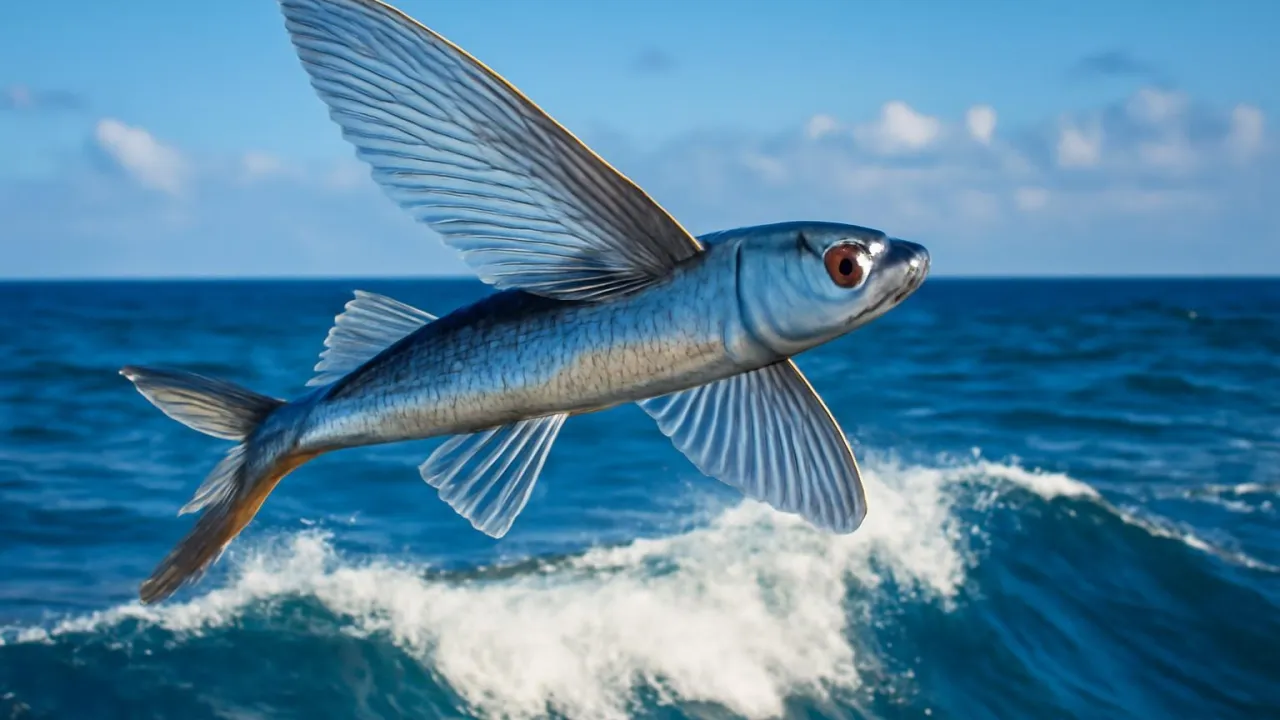
Flying fish can glide for up to 45 seconds, covering about 200 feet (60 meters) in one leap.
✨ Word Sparks (Grade 3 Glossary)
Tap 🔊 to hear
adaptation
A change that helps animals survive better
plankton
Tiny ocean animals and plants that fish eat
predator
An animal that hunts other animals for food
🪝
How do flying fish use their wing-like fins to survive in the ocean?
1
Wing-Like Fins for Gliding
Flying fish have large pectoral fins that act like wings to glide above water. This helps them escape quickly. They can glide for long distances over the ocean surface. Their fins spread wide to catch air and stay aloft.
2
Habitat in Warm Oceans
These fish live in warm, tropical oceans worldwide, especially near the surface. They prefer sunny waters where is abundant. The warm surface water provides nutrients for their food chain. Flying fish often leap out to glide over waves and avoid danger.
3
Diet and Feeding
Flying fish feed on and small fish, which provide essential nutrients. They swim near the ocean surface to catch their prey. Their diet supports fast growth and energy for gliding. Feeding near the surface also exposes them to .
4
Survival Through Adaptation
Gliding helps flying fish avoid like larger fish and birds. Their streamlined bodies reduce water resistance during jumps. This increases their chances of survival in the ocean food web. Camouflage coloring helps them blend with the water surface.
2. Why do flying fish live near the ocean surface?
🤯 Mind-Blowing Fact • Grade 4
Flying fish can leap out of water at speeds up to 37 miles per hour to glide far.
✨ Word Sparks (Grade 4 Glossary)
Tap 🔊 to hear
ecosystem
A community of plants and animals living together
symbiosis
A close relationship between different living things
camouflage
Colors or patterns that help animals hide
🪝
What causes flying fish to leap and glide above the ocean waves?
1
Gliding to Escape Predators
Flying fish leap out of the water to escape predators like larger fish and seabirds. Their large pectoral fins spread wide, allowing them to glide for long distances above waves. This cause-and-effect behavior increases their survival chances in dangerous ocean environments. The ability to glide also helps them avoid underwater threats quickly.
2
Role in the Ocean Food Web
Flying fish serve as both predators and prey in the ocean food web. They feed on plankton and small fish, which supports their growth and energy needs. At the same time, they are food for larger fish, seabirds, and marine mammals. This symbiotic relationship keeps the ocean balanced and healthy.
3
Warm Ocean Habitats Worldwide
Flying fish are found in warm tropical and subtropical oceans around the world. They prefer surface waters where sunlight promotes plankton growth. Their distribution includes the Atlantic, Pacific, and Indian Oceans. Human activities like fishing and pollution can impact their habitats and populations.
4
Physical Adaptations for Survival
Their streamlined bodies reduce drag when jumping out of water, making gliding easier. coloring helps them blend with the ocean surface to avoid predators. Their large fins act like wings, allowing controlled flight above water. These physical traits evolved to improve their chances of survival in ocean .
Flying fish can reach speeds of 37 mph underwater and glide 200 feet above waves for 45 seconds.
✨ Word Sparks (Grade 5 Glossary)
Tap 🔊 to hear
biomechanics
How living things move and use their bodies
convergent evolution
Different animals develop similar traits separately
sustainable
Using resources without harming the environment
🪝
How do flying fish use their unique physiology to glide above ocean surfaces for survival?
1
Scientific Classification and Distribution
Flying fish belong to the family Exocoetidae and inhabit warm tropical and subtropical oceans worldwide. They are especially common near the surface where sunlight supports abundant plankton growth. Their widespread distribution includes the Atlantic, Pacific, and Indian Oceans. This broad habitat range exposes them to diverse marine ecosystems and environmental conditions.
2
Physiological Mechanics of Gliding
Flying fish have enlarged pectoral fins that function like wings, enabling them to glide above the water surface. Rapid tail beats propel them out of the water at speeds up to 37 miles per hour (60 kilometers per hour). Once airborne, their fins spread wide to catch air and maintain lift for up to 45 seconds. This gliding covers distances up to 200 feet (60 meters), allowing escape from aquatic predators.
3
Ecological Role and Conservation
Flying fish occupy an important ecological niche as both prey and predator within marine food webs. They consume plankton and small fish, transferring energy up the food chain to larger fish, seabirds, and marine mammals. Overfishing and habitat pollution threaten their populations in some regions. Conservation efforts focus on fishing practices and protecting ocean habitats to maintain balanced ecosystems.
4
Botanical Surprises and Evolutionary Adaptations
Unlike plants, flying fish are animals but exhibit evolutionary adaptations similar to birds for gliding. Their streamlined bodies reduce drag, and their fin morphology evolved to maximize lift and control during flight. These adaptations demonstrate , where unrelated species develop similar traits to solve environmental challenges. Studying flying fish helps scientists understand and evolutionary biology.
5
Quantitative Comparisons and Records
Flying fish can reach speeds of 37 miles per hour (60 kilometers per hour) underwater before launch. They glide distances of up to 200 feet (60 meters) and remain airborne for as long as 45 seconds. Their body length ranges from 7 to 12 inches (18 to 30 centimeters), with fin spans nearly half their body length. These impressive measurements highlight their unique adaptations among marine species.