Dogwood berries are bright red and help feed hungry birds in autumn!
✨ Word Sparks (Grade 2 Glossary)
Tap 🔊 to hear
bloom
A flower opening on a plant
nectar
Sweet liquid inside flowers
forest
A place with lots of trees
🪝
Did you know some trees have flowers that look like stars?
1
A Tree Full of Blooms
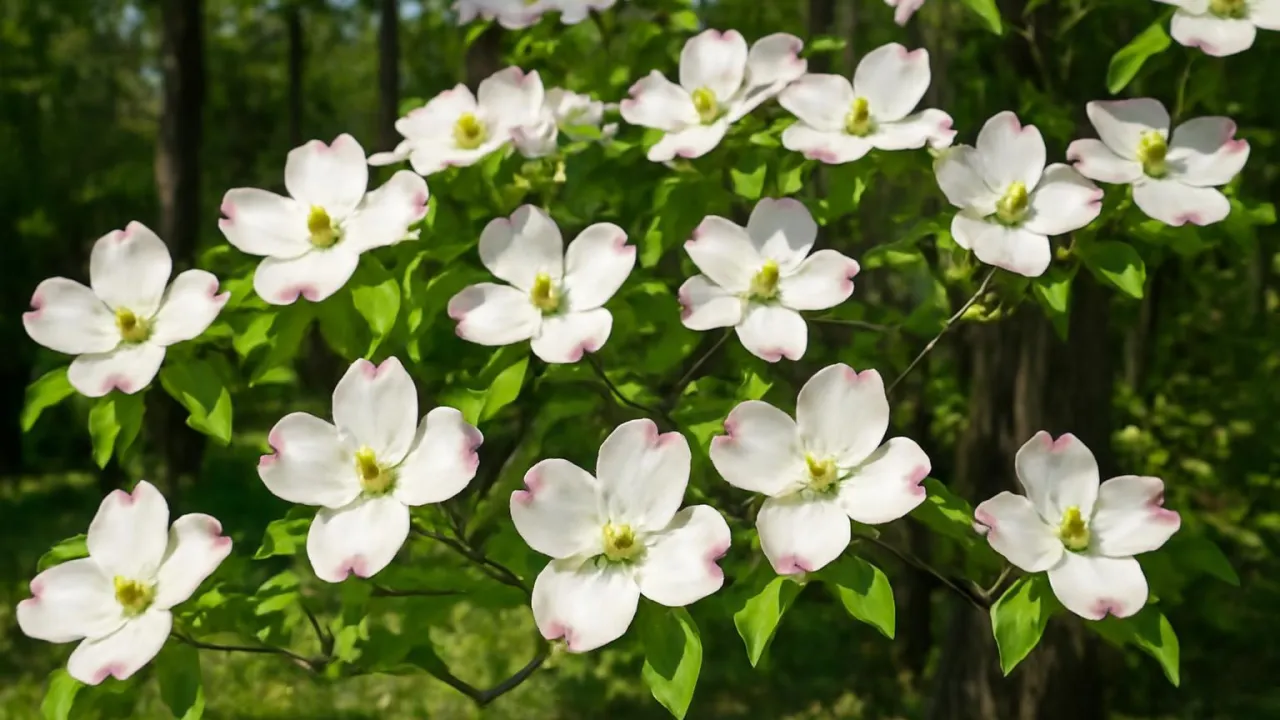
In spring, dogwood trees burst with pink or white , and each flower looks like a star. The blooms cover the tree, making it stand out in the . These flowers attract many buzzing bees and fluttering butterflies.
2
Where Dogwoods Live
Dogwoods grow in and along woodland edges where there is a mix of sun and shade. They like soil that is moist but not too wet. In the wild, you can find them in many parts of the eastern United States.
3
A Home for Wildlife
Dogwood trees help many animals. Bees and butterflies drink from the flowers, while birds eat the bright red berries in fall. Even deer sometimes nibble on the tree’s leaves and twigs.
Dogwood ‘petals’ are really bracts—special leaves that protect tiny flowers!
✨ Word Sparks (Grade 3 Glossary)
Tap 🔊 to hear
bract
A leaf that looks like a petal
pollination
Moving pollen to help plants make seeds
mammal
An animal with fur or hair
🪝
What if flowers on a tree weren’t really flowers at all?
1
Star-Shaped Blossoms
In spring, flowering dogwood trees explode with beautiful pink or white blooms. These blooms look like giant stars perched on the branches. But the ‘petals’ you see are actually special leaves called . The real flowers are tiny and sit in the center of each bract cluster.
2
Where Dogwoods Grow
Flowering dogwoods are found in forests, parks, and even yards across the eastern United States. They like moist, well-drained soil and grow under taller trees that give some shade. Their ability to thrive in both wild and planted spaces makes them popular in many communities.
3
A Wildlife Favorite
Dogwood trees are important for wildlife. Bees and butterflies visit the blooms for nectar, helping with . In autumn, the bright red berries feed songbirds and small . Deer sometimes munch on the leaves and twigs, especially in the winter months.
4
How Dogwoods Survive
The dogwood’s protect its tiny flowers from rain and insects. Its shallow roots help it soak up rainwater quickly. By blooming early, dogwoods attract pollinators before other trees flower, giving them a survival advantage.
1. What is the real purpose of a dogwood’s bracts?
2. Why do dogwoods bloom early in spring?
🤯 Mind-Blowing Fact • Grade 4
Dogwood trees can live up to 80 years if kept healthy and disease-free!
✨ Word Sparks (Grade 4 Glossary)
Tap 🔊 to hear
ecosystem
A place where living things interact
bract
A leaf that looks like a flower petal
fungal
Related to fungi, like mushrooms or mold
🪝
Can you spot the secret behind the dogwood’s “petals” in springtime?
1
A Springtime Showstopper
When spring arrives, flowering dogwoods light up forests and gardens with clouds of pink or white blooms. These eye-catching displays are not true petals, but —modified leaves that surround clusters of tiny yellow-green flowers. The bracts’ bright colors attract pollinators from far away, ensuring the dogwood’s real flowers get noticed and pollinated.
2
Habitat and Range
Flowering dogwoods are native to the eastern United States, thriving from Maine to Florida and west to Texas. They prefer the dappled light of woodland edges, where the soil is moist and rich but drains well. Dogwoods are also popular in parks and yards because they can handle both wild and cultivated environments.
3
Nature’s Helpers
Dogwoods play a vital role in their by supporting many species. Bees and butterflies gather nectar from the blooms, while birds like robins and cardinals feast on the bright red berries in fall. Even deer and rabbits will nibble on young shoots, making the dogwood important in local food webs.
4
Survival Strategies and Human Impact
The dogwood’s shallow roots allow it to quickly absorb rainwater, helping it survive dry spells. Its early blooms give it a head start attracting pollinators before other trees flower. However, dogwoods face threats from diseases and habitat loss, so planting and caring for them helps protect this beautiful tree for future generations.
One dogwood tree can feed over 35 bird species with its berries each autumn!
✨ Word Sparks (Grade 5 Glossary)
Tap 🔊 to hear
anthracnose
A disease caused by fungus harming trees
deciduous
A tree that loses its leaves every fall
keystone species
A species very important to its ecosystem
🪝
How did the dogwood’s clever ‘petals’ help it become a springtime legend?
1
Botanical Identity and Classification
The flowering dogwood, Cornus florida, is a tree native to eastern North America and belongs to the Cornaceae family. Unlike many flowering plants, its showy ‘petals’ are actually bracts—modified leaves that surround clusters of tiny, true flowers. These bracts can be white, pink, or even reddish, and their main function is to attract pollinators from a distance. Botanically, the dogwood is related to other species in the Cornus genus, including the kousa dogwood and Pacific dogwood.
2
Physiology: Adaptations for Survival
Dogwood trees typically reach heights of 15 to 30 feet (4.5–9 meters) and have a broad, layered branching pattern. Their shallow root systems allow them to absorb rainwater quickly but also make them sensitive to drought. The bracts protect the tiny central flowers from rain and some insect pests, while early spring blooming ensures pollinators like bees and butterflies visit before competition from other trees increases. Dogwood leaves are oval and turn brilliant red or purple in autumn, aiding in photosynthesis during the growing season.
3
Role in Ecosystems and Food Webs
Flowering dogwoods are a in many eastern U.S. forests, supporting a diverse array of wildlife. Their nectar-rich flowers provide early food for pollinators, while the bright red berries—measuring about half an inch (1.3 cm) across—are a vital food source for over 35 bird species, including robins and cedar waxwings. Small mammals and even deer rely on dogwood twigs and leaves, especially in winter. The tree’s presence helps stabilize soil and supports complex food webs.
4
Conservation, Threats, and Human Connections
Dogwood populations have declined in some regions due to dogwood , a fungal disease that can kill entire trees. Habitat loss from development and changes in forest structure also threaten wild dogwoods. Conservation efforts include planting disease-resistant varieties, monitoring wild populations, and educating the public about their ecological value. Historically, dogwood wood was used for tool handles and weaving shuttles due to its hardness, and the tree remains a beloved symbol in many states.
5
Quantitative Comparisons and Botanical Surprises
A mature dogwood tree can produce up to 4,000 berries in a single season, each weighing about 0.02 ounces (0.6 grams). Its bracts can measure up to 3 inches (7.6 cm) across, much larger than the true flowers, which are less than a quarter inch (0.6 cm) wide. Dogwoods bloom when average temperatures reach about 55°F (13°C), often weeks before most other trees flower. In comparison, their shallow roots rarely extend more than 18 inches (46 cm) deep, making them vulnerable to drought but excellent at quickly absorbing surface water.