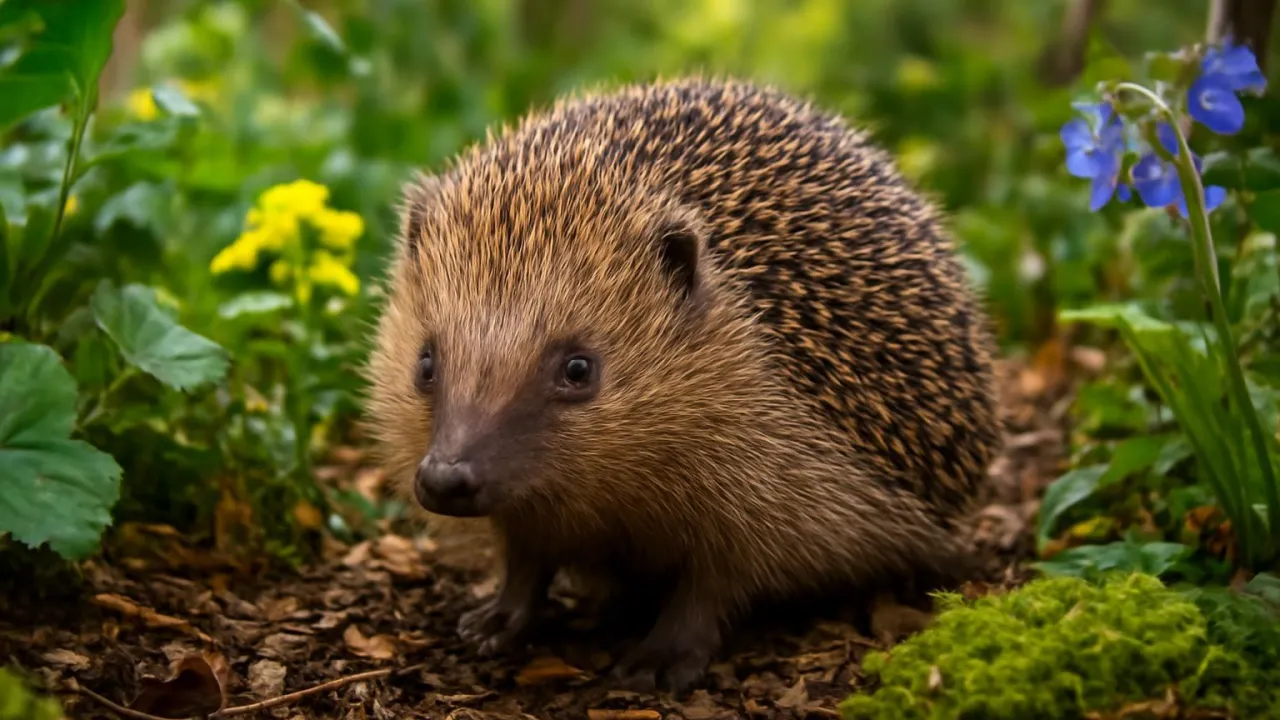
European hedgehogs can roll into a tight spiky ball to protect themselves from predators!
✨ Word Sparks (Grade 2 Glossary)
Tap 🔊 to hear
predator
An animal that hunts other animals for food
nest
A cozy home made from leaves or grass
insects
Small animals with six legs and wings
🪝
Have you ever seen an animal that curls up like a ball?
1
Spiky Body and Size
The European hedgehog has many sharp spikes covering its back and sides. It is about the size of a small loaf of bread. Its body is round, and it walks on short legs that help it move quietly.
2
Where It Lives
This hedgehog lives in gardens, parks, and woodlands all across Europe. It likes places with lots of plants and bushes where it can hide safely. During the day, it sleeps in made from leaves and grass.
3
What It Eats
European hedgehogs eat , worms, snails, and other small creatures. They use their sharp nose to sniff out food at night. Their diet helps keep gardens healthy by eating pests.
1. Where do European hedgehogs like to sleep during the day?
2. What helps hedgehogs find food at night?
🤯 Mind-Blowing Fact • Grade 3
European hedgehogs can curl into a ball so tight that even foxes cannot bite them!
✨ Word Sparks (Grade 3 Glossary)
Tap 🔊 to hear
camouflage
Colors that help animals hide from others
nocturnal
Active during the night, asleep in daytime
invertebrates
Animals without bones, like worms and snails
🪝
Did you know hedgehogs use their spines to stay safe from predators?
1
Spines and Camouflage
The European hedgehog has thousands of sharp spines that cover its back and sides. These spines help protect it by making it hard for predators to bite or grab. Its brown and cream coloring also helps it blend into leaves and bushes, a form of .
2
Nocturnal Life and Habitat
Hedgehogs are animals, meaning they are active at night and sleep during the day. They live in woodlands, gardens, and parks across Europe. They build nests from leaves and grass to stay warm and safe during the day.
3
Diet and Role in Ecosystem
European hedgehogs eat insects, worms, snails, and other small . This diet helps control pests in gardens and farms, making hedgehogs important for the ecosystem. Their sharp nose helps them find food hidden under leaves and soil.
4
Adaptations for Survival
When threatened, a hedgehog rolls into a tight ball, using its spines as a shield. This adaptation keeps predators from harming it. Hedgehogs also have strong legs for digging and a keen sense of smell to find food in the dark.
European hedgehogs can eat up to 50 grams of insects in one night, helping control garden pests!
✨ Word Sparks (Grade 4 Glossary)
Tap 🔊 to hear
ecosystem
A community of plants and animals living together
pesticides
Chemicals that kill insects and pests
conservation
Protecting animals and nature from harm
🪝
How do European hedgehogs help keep gardens and farms healthy?
1
Spines and Defense Mechanisms
European hedgehogs have thousands of sharp spines that cover their backs and sides, which act as a strong defense against predators like foxes and badgers. When threatened, they curl into a tight ball, hiding their soft belly and exposing only their spines, making it nearly impossible for predators to attack.
2
Habitat and Geographic Range
These hedgehogs live throughout much of Europe, including woodlands, parks, gardens, and farmland. They prefer areas with dense vegetation where they can hide and find food easily. Human gardens provide food and shelter, but roads and urban areas can also be dangerous for them.
3
Role in Ecosystems and Food Webs
European hedgehogs play an important role in by eating insects, slugs, snails, and other invertebrates, which helps control pest populations. This makes them beneficial for agriculture and gardens. They are prey for larger animals, so they are part of the food web, balancing nature.
4
Human Impact and Conservation
Hedgehog populations have declined in some areas due to habitat loss, road accidents, and reducing their food supply. efforts include creating hedgehog-friendly gardens and safe passageways. Educating people about their role helps protect these spiky creatures for future generations.
1. Why do hedgehogs curl into a ball when they feel threatened?
2. How do hedgehogs help gardens and farms?
🤯 Mind-Blowing Fact • Grade 5
European hedgehogs can hibernate up to six months, dropping their body temperature to just 2°C!
✨ Word Sparks (Grade 5 Glossary)
Tap 🔊 to hear
keratin
A strong protein that makes up hair and spines
hibernation
A deep sleep animals use to save energy in winter
fragmentation
When habitats are broken into smaller pieces by humans
🪝
What fascinating adaptations make the European hedgehog a master of survival?
1
Scientific Classification and Physical Traits
The European hedgehog, scientifically known as Erinaceus europaeus, belongs to the family Erinaceidae. It measures between 5 and 12 inches long and weighs about 1 to 2 pounds. Its body is covered with approximately 5,000 to 7,000 sharp spines, which are modified hairs made of , providing excellent protection from predators.
2
Physiological Adaptations and Behavior
Hedgehogs have powerful muscles that allow them to curl into a tight ball, exposing only their spines to danger. They are nocturnal and rely on a keen sense of smell and hearing to locate insects and other invertebrates. During colder months, they enter , slowing their metabolism to conserve energy when food is scarce.
3
Ecological Role and Conservation Challenges
European hedgehogs are vital in controlling insect populations, consuming up to 50 grams of invertebrates nightly. However, their numbers have declined due to habitat , road mortality, and pesticide use. Conservation programs focus on habitat restoration and creating hedgehog corridors to connect fragmented populations.
4
Historical and Cultural Significance
Hedgehogs have been part of European folklore and culture for centuries, symbolizing protection and cleverness. Historically, they were welcomed in gardens to control pests naturally. Modern urbanization threatens their habitats, but increased awareness has led to citizen science projects monitoring their populations.
5
Comparative Facts and Quantitative Data
European hedgehogs can run up to 2 miles per hour and weigh between 0.5 and 1 kilogram. Their spines grow about 1 centimeter per month and are replaced regularly. They hibernate for up to six months, during which their body temperature can drop from 37°C to as low as 2°C to conserve energy.