Empire State Building
Sky-High Marvel in the Heart of New York
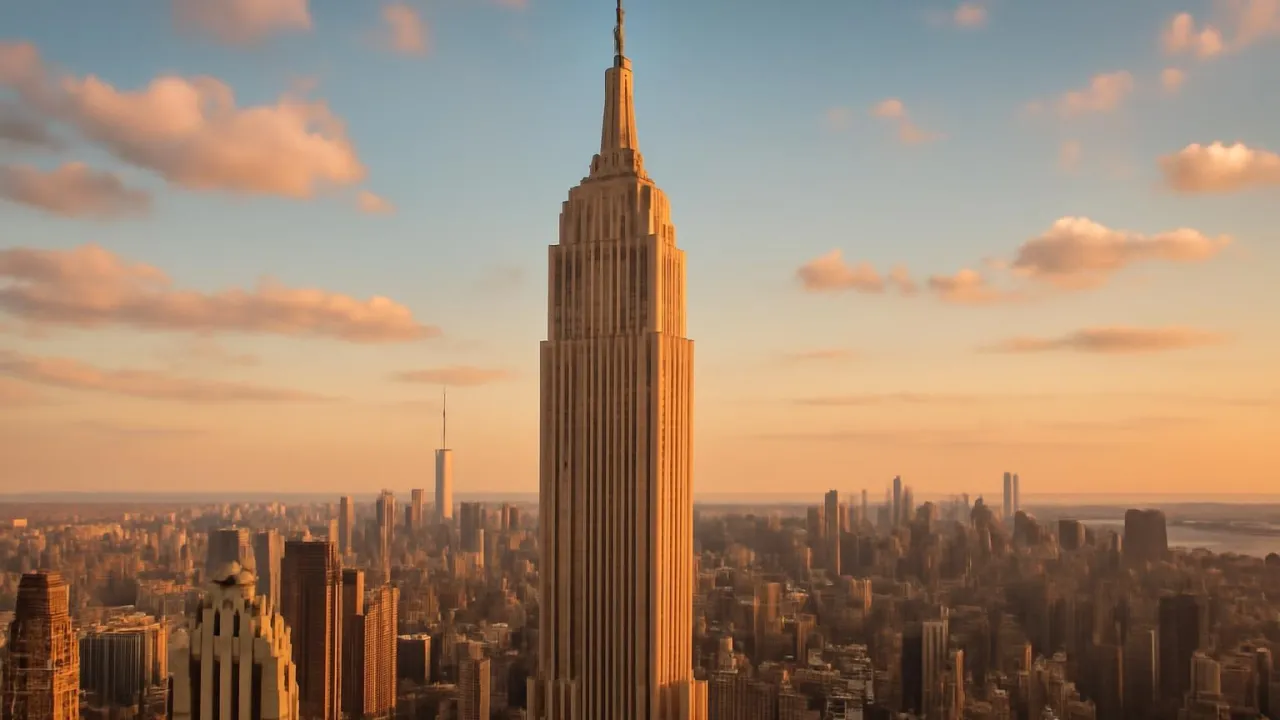
The Empire State Building’s spire is struck by lightning more than 40 times every year, but its advanced lightning protection keeps everyone inside perfectly safe.
1 Ambition in the Skies
In the heart of Manhattan, the Empire State Building rises 1,454 feet (443.2 meters) from street level to the tip of its spire, dominating the skyline since 1931. Designed by Shreve, Lamb & Harmon in the style, its elegant setbacks and geometric patterns symbolize the optimism of early twentieth-century America. Construction began in March 1930, at the height of the Great Depression, providing thousands of jobs and hope during economic hardship. Amazingly, the building was completed in just 410 days, with workers sometimes finishing as many as four and a half floors per week. The Empire State Building’s record-breaking height made it the tallest building in the world for nearly 40 years, until the World Trade Center surpassed it in 1970.
2 Engineering and Structural Brilliance
The building’s steel skeleton, constructed from 60,000 tons of steel, provides both strength and flexibility, allowing it to withstand high winds and vibration. Deep anchor the structure securely into Manhattan’s bedrock, while the steel frame supports the weight of 10 million bricks and 200,000 cubic feet of Indiana limestone and granite. The iconic spire, originally designed as a mooring mast for dirigibles, now functions as a broadcast antenna and a lightning rod, safely channeling electrical energy from frequent strikes to the ground. The building’s 73 elevators, powered by advanced electric motors, efficiently transport thousands of visitors and workers each day to its 102 floors.
3 Cultural Significance and Global Impact
The Empire State Building quickly became a symbol of American resilience, innovation, and architectural achievement, appearing in countless films, artworks, and stories worldwide. Its construction during the Great Depression represented not just technological progress, but also the determination to overcome adversity. The building’s , located on the 86th and 102nd floors, attract more than four million visitors annually, offering panoramic views that stretch for 80 miles on a clear day. The Empire State Building’s ever-changing spire lights mark important holidays, global events, and moments of solidarity, making it a beacon for New Yorkers and visitors alike.
4 Architectural and Scientific Features
The style of the Empire State Building features strong vertical lines, stylized geometric shapes, and gleaming aluminum panels that reflect sunlight. Its structure is engineered to sway safely in strong winds, with the steel frame absorbing and dissipating vibration energy. The spire’s lightning protection system uses copper rods and conductors to direct electrical charges harmlessly to the ground, demonstrating an advanced understanding of electricity and safety. The building’s efficient elevator system was a marvel for its time, reducing travel time and increasing accessibility to the upper floors. Its robust design has allowed the building to withstand storms, earthquakes, and even an airplane collision in 1945, remaining structurally sound.
5 Legacy and Ongoing Innovation
Today, the Empire State Building is not only a National Historic Landmark but also a leader in sustainability, having undergone major energy efficiency upgrades in the twenty-first century. Its innovative heating, cooling, and lighting systems have reduced energy use by millions of kilowatt-hours each year. The building continues to inspire engineers, architects, and dreamers around the globe with its blend of beauty, strength, and adaptability. As a living symbol of New York City, it stands as a testament to human creativity and the enduring power of ambitious ideas. Each year, the Empire State Building Run-Up challenges athletes to race up its 1,576 steps, proving that the sky is never the limit for those who dare to climb.
1. How does the Empire State Building’s steel skeleton help it survive storms and wind?
2. What modern changes have made the Empire State Building more environmentally friendly?