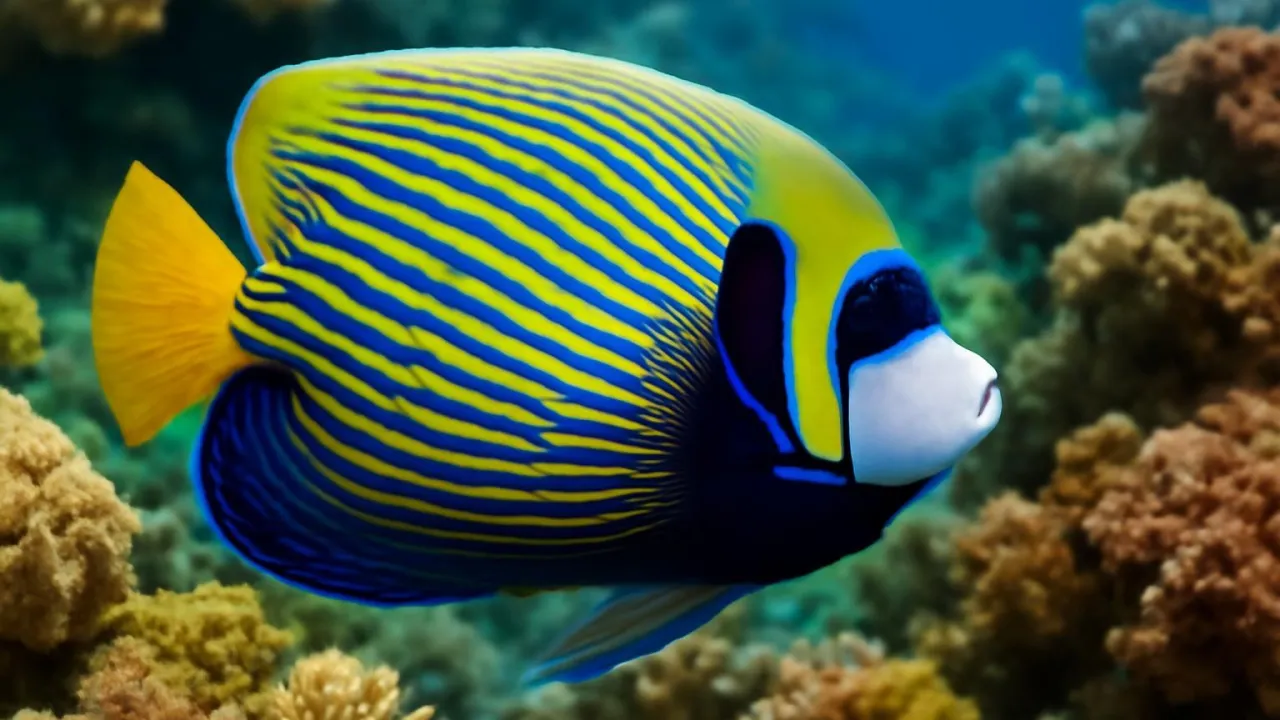
Young emperor angelfish look very different from adults because of their color changes.
✨ Word Sparks (Grade 2 Glossary)
Tap 🔊 to hear
invertebrates
Animals without backbones like tiny sea bugs
coral reefs
Underwater homes made by tiny animals called coral
camouflage
Colors that help animals hide from others
🪝
Have you ever seen a fish that looks like it wears a royal crown?
1
Colorful Fish
The emperor angelfish has bright blue and yellow stripes that cover its body. It looks like a royal fish with a crown. Young fish have different colors than adults. This color change helps them stay safe.
2
Home in the Ocean
These fish live in in warm ocean water. Coral reefs are full of many animals and plants. The emperor angelfish hides among the coral to stay safe. It swims near rocks and coral branches.
3
What It Eats
The emperor angelfish eats sponges and small animals called . It uses its mouth to pick food from coral. Eating helps it grow and stay healthy. It needs clean water to live well.
1. Why do young emperor angelfish have different colors?
2. What does the emperor angelfish eat?
🤯 Mind-Blowing Fact • Grade 3
Emperor angelfish use color changes as camouflage and warning signals in coral reefs.
✨ Word Sparks (Grade 3 Glossary)
Tap 🔊 to hear
camouflage
Colors that help animals hide in their homes
invertebrates
Animals without backbones like sea bugs and worms
adaptation
A special body trait that helps animals survive
🪝
Did you know the emperor angelfish changes colors to survive in coral reefs?
1
Amazing Color Change
The emperor angelfish shows bright blue and yellow stripes as an adult fish. Juveniles have dark blue bodies with white and light blue curved lines. This color change helps with in the coral reef environment. It protects them from predators by blending in.
2
Coral Reef Home
This fish lives in coral reefs found in the Indo-Pacific region’s warm waters. Coral reefs provide shelter and food for many animals including the emperor angelfish. The fish uses the reef’s nooks and crannies to hide from predators. It also helps keep the reef ecosystem balanced.
3
What It Eats
The emperor angelfish feeds mainly on sponges and small found on coral surfaces. Its strong jaws allow it to pick food from hard-to-reach places. Eating sponges helps control sponge growth on reefs, which benefits coral health. This feeding behavior is an important .
4
Survival Adaptations
Its bright colors and patterns serve as warning signals to predators about its tough skin. The fish’s body shape allows it to swim quickly through coral branches. These help the emperor angelfish avoid danger and find food efficiently. It plays an important role in reef survival.
1. How does the emperor angelfish’s color help it survive?
2. Why does the emperor angelfish eat sponges?
🤯 Mind-Blowing Fact • Grade 4
Emperor angelfish help keep coral reefs healthy by eating sponges that could harm corals.
✨ Word Sparks (Grade 4 Glossary)
Tap 🔊 to hear
ecosystem
A community of animals and plants living together
polyps
Tiny animals that build coral reefs
conservation
Protecting nature and animals from harm
🪝
How do emperor angelfish colors help them survive in busy coral reef ecosystems?
1
Color and Survival
The emperor angelfish undergoes a dramatic color change from juvenile to adult, which helps it blend into different coral reef zones. Juveniles display dark blue with curved white stripes, allowing camouflage among shadows. Adults show bright blue and yellow stripes as a warning to predators about their tough skin. This color shift reduces attacks and increases survival chances.
2
Role in the Ecosystem
As a sponge eater, the emperor angelfish plays a key role in maintaining coral reef health by controlling sponge populations. This helps prevent sponges from overgrowing and harming coral , which are vital reef builders. The fish also serves as prey for larger predators, fitting into the reef’s food web. Its presence supports biodiversity and balance.
3
Habitat and Distribution
Emperor angelfish are found throughout the Indo-Pacific region, from the Red Sea to the Great Barrier Reef. They prefer clear, warm waters with abundant coral formations. Their habitat choice is influenced by water temperature, coral availability, and predator presence. These factors shape where the fish live and how they interact with other reef species.
4
Human Impact and Conservation
Coral reef degradation caused by pollution and climate change threatens emperor angelfish habitats worldwide. Overfishing and aquarium trade also impact their populations. efforts focus on protecting coral reefs and regulating fish collection. Healthy reefs ensure the survival of emperor angelfish and the many species that depend on them.
1. Why do emperor angelfish eat sponges in coral reefs?
2. What threatens emperor angelfish habitats today?
🤯 Mind-Blowing Fact • Grade 5
Emperor angelfish can live up to 20 years while helping coral reefs stay healthy by eating sponges.
✨ Word Sparks (Grade 5 Glossary)
Tap 🔊 to hear
trophic
Relating to feeding levels in a food chain
pigment
Color parts in skin that change fish color
acidification
Ocean water becoming more acidic and harmful
🪝
How do emperor angelfish’s unique colors and behaviors support coral reef ecosystems worldwide?
1
Scientific Classification and Description
The emperor angelfish, scientifically named Pomacanthus imperator, belongs to the family Pomacanthidae. This species is notable for its striking coloration and size, reaching up to 15 inches (38 centimeters) in length. Juveniles and adults exhibit distinct color patterns that serve different ecological functions. Its taxonomy places it among marine ray-finned fishes common in tropical reef environments.
2
Physiological Adaptations and Mechanics
The emperor angelfish’s body is laterally compressed, allowing it to maneuver skillfully through complex coral structures. Its strong jaws and specialized teeth enable it to scrape sponges and small invertebrates from coral surfaces efficiently. Color changes from juvenile to adult stages involve cell adjustments that provide camouflage and warning signals. These physiological traits enhance survival and feeding success.
3
Ecological Role and Conservation Status
By feeding primarily on sponges, emperor angelfish regulate sponge populations that could otherwise outcompete coral polyps, maintaining reef biodiversity. They occupy a mid-level position, serving as both predator and prey within the coral reef food web. Habitat degradation from climate change, ocean , and human activities threatens their populations. Conservation programs emphasize reef protection and sustainable aquarium trade.
4
Botanical and Zoological Connections
Though called angelfish, they are true fish and not related to birds or insects. Their bright coloration is a biological adaptation similar to how some plants use color to attract pollinators. The coral reefs they inhabit are built by tiny animals called polyps, which form calcium carbonate structures. This interconnectedness highlights the complexity of marine ecosystems.
5
Quantitative Comparisons and Interesting Metrics
Emperor angelfish can swim at speeds up to 5 miles per hour (8 kilometers per hour) when escaping predators. Their lifespan in the wild is typically around 20 years. They consume sponges that grow on reefs, which can weigh several pounds per year per fish. Water temperatures of 72 to 82 degrees Fahrenheit (22 to 28 degrees Celsius) are optimal for their survival and reproduction.