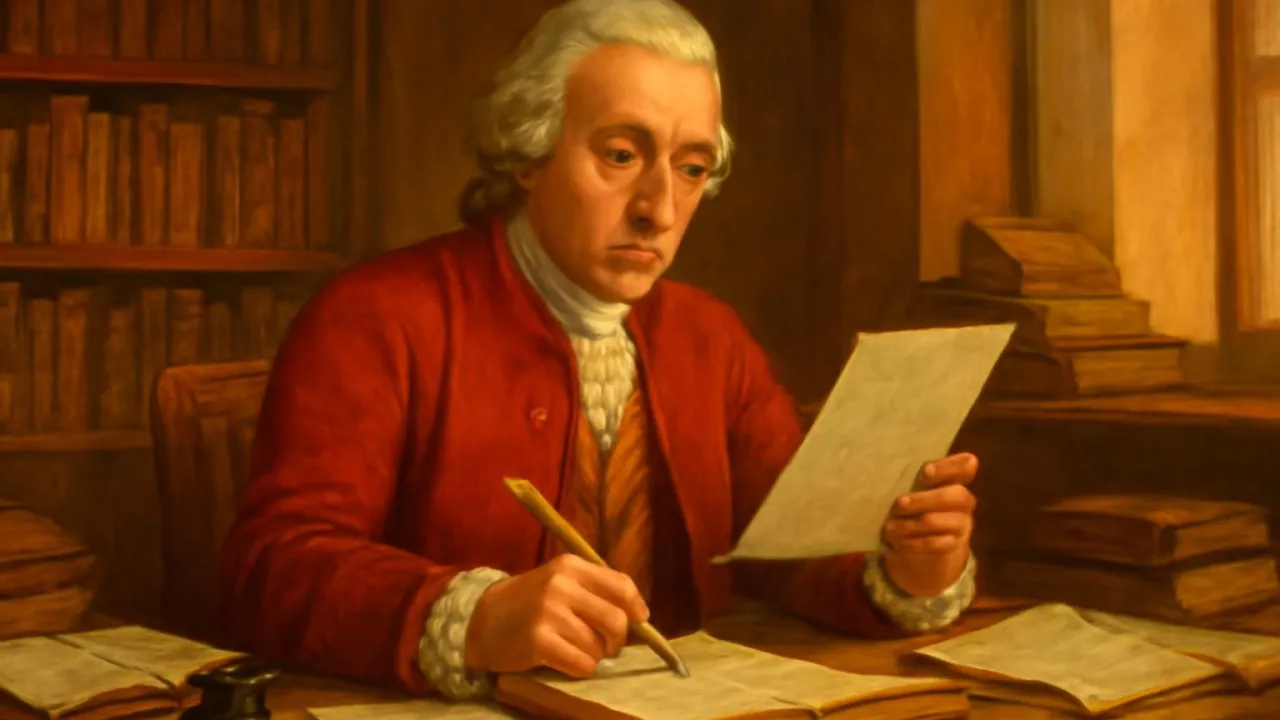
David Hume’s ideas helped people understand how we learn and think.
✨ Word Sparks (Grade 2 Glossary)
Tap 🔊 to hear
curious
Wanting to learn or know more
philosophy
Thinking about life and ideas
achievement
Something great you do with hard work
🪝
Have you ever wondered how we can really know what is true?
1
Curious About the World
David Hume was about how people think and learn new things. He read many books to find answers. He practiced thinking carefully every day. His curiosity helped him ask important questions.
2
Working Hard to Understand
David spent hours writing about ideas and knowledge. He believed we should only trust what we can see or feel. He worked hard to explain how our minds work. His ideas helped people think in new ways.
3
A Big Achievement
David wrote a famous book called A Treatise of Human Nature. In it, he shared his thoughts about how people learn. His work changed how many people think about knowledge. He became one of the most important philosophers.
David Hume helped people understand that knowledge comes from experience, not just thinking.
✨ Word Sparks (Grade 3 Glossary)
Tap 🔊 to hear
empiricism
Learning by using your senses and experience
skepticism
Doubting and asking for proof before believing
perseverance
Trying hard even when things are difficult
🪝
How can we be sure that what we believe is really true?
1
A Young Thinker’s Curiosity
David Hume was fascinated by the way humans learn and understand the world around them. He believed that knowledge comes from experience, not just from reason alone. This idea is called , which means learning through the senses. David’s curiosity led him to question many common beliefs.
2
The Power of Perseverance
David worked hard to write about his ideas even when others disagreed with him. He used careful reasoning and examples to explain his philosophy. His helped him complete his famous work, A Treatise of Human Nature. This book introduced new ways to think about human understanding.
3
Changing Philosophy Forever
David’s ideas about taught people to question what they think they know. Skepticism means doubting or asking for proof before believing. His work influenced many other philosophers and scientists. He showed that knowledge is not always certain but based on evidence and experience.
4
A Legacy of Thought
David Hume’s philosophy helped shape modern ideas about science and human nature. His thoughts on cause and effect changed how people understand the world. Today, many still study his ideas to learn about knowledge and reasoning. David’s work reminds us to keep asking questions.
David Hume’s ideas helped start a new way of thinking called skepticism.
✨ Word Sparks (Grade 4 Glossary)
Tap 🔊 to hear
Enlightenment
A time when people used reason and science
skepticism
Questioning and doubting what you hear
cause and effect
One thing making another thing happen
🪝
What if all the things we believe are based on what we experience, not just what we think?
1
The Age of Enlightenment
David Hume lived during the , a time when many people wanted to understand the world through reason and science. He believed that human knowledge should be based on experience and evidence, not just tradition or faith. This was a new way of thinking that challenged old ideas.
2
A Major Turning Point
Hume’s book, A Treatise of Human Nature, was a turning point in philosophy because it argued that all ideas come from impressions we get through our senses. He explained that our minds connect these impressions to form beliefs. This challenged the way people thought about knowledge and truth.
3
Innovations in Philosophy
David introduced the idea of , encouraging people to doubt and question what they think they know. He also explored , showing that we cannot always be sure that one event causes another. His methods influenced both philosophers and scientists in their search for truth.
4
A Global Impact
Hume’s ideas spread beyond Scotland and influenced thinkers around the world. His work helped shape modern science, psychology, and philosophy. Today, his legacy continues as people study his writings to better understand human nature and knowledge. David Hume’s questions still inspire curiosity.
David Hume’s ideas about experience and doubt changed how science and philosophy work today.
✨ Word Sparks (Grade 5 Glossary)
Tap 🔊 to hear
empiricism
Learning from experience and senses
skepticism
Doubting and asking for proof
cause and effect
One event causing another event
🪝
What happens when you question everything you think you know about the world?
1
A Mind That Questioned Everything
David Hume loved to ask deep questions about how people understand the world around them. He believed that our senses give us the first ideas, and then our minds connect those ideas to form knowledge. This way of thinking is called , which changed how people studied knowledge and science.
2
How Experience Shapes Knowledge
Hume explained that all human knowledge begins with experience, not with ideas we are born with. He studied , showing that we cannot be absolutely sure one thing causes another, only that we expect it to. This idea made people think differently about science and learning methods.
3
A Career of Big Ideas
His major work, A Treatise of Human Nature, was written when he was young but became very important later. Hume’s clear writing and careful thinking influenced many philosophers and scientists, including those who developed modern psychology and economics. His ideas helped build the scientific method still used today.
4
Lasting Legacy Around the World
Hume’s thoughts on encouraged people to question beliefs and seek evidence. His influence spread across Europe and America, shaping modern philosophy and social science. Scholars continue to study his work to understand human thought and knowledge better. His ideas remain important in many fields today.
5
Why David Hume Inspires Us
David Hume teaches us that asking questions and trusting experience helps us learn. His perseverance shows that big ideas take time to grow. His work reminds students to stay curious and think carefully about what they believe and why. His legacy encourages lifelong learning and open minds.