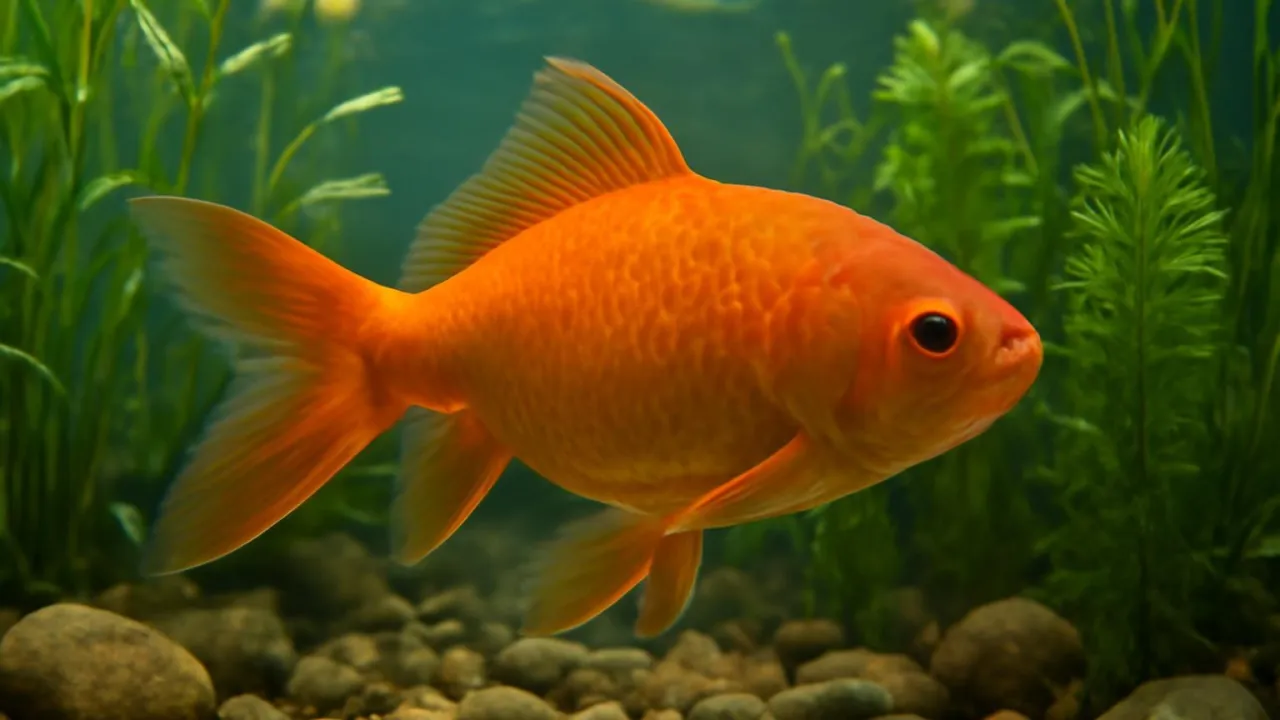
Goldfish can learn to recognize their feeding times and routines!
✨ Word Sparks (Grade 2 Glossary)
Tap 🔊 to hear
scales
Small plates covering a fish's body
freshwater
Water without salt, like ponds or lakes
omnivore
An animal that eats plants and animals
🪝
Have you ever seen a goldfish with shiny orange scales swimming quickly?
1
Goldfish Colors and Fins
Goldfish have shiny orange and red that sparkle in sunlight. Their fins help them swim quickly through water. They can see many colors around them.
2
Where Goldfish Live
Goldfish live in ponds and lakes where the water is clean. They swim in groups and hide among plants for safety. They need fresh water to stay healthy.
3
What Goldfish Eat
Goldfish eat tiny plants, bugs, and leftover food in the water. They use their mouths to nibble on food. Eating well helps them grow bigger and stronger.
Goldfish can recognize their owners and remember simple tasks for months!
✨ Word Sparks (Grade 3 Glossary)
Tap 🔊 to hear
camouflage
Colors that help animals hide
predator
An animal that hunts others
adaptation
A body change that helps survival
🪝
Did you know goldfish use their colorful scales to hide from predators?
1
Colorful Scales and Camouflage
Goldfish have shiny scales that reflect light and help them blend into water plants. This protects them from like bigger fish. Their scales also help keep their bodies safe and healthy. Bright colors can also attract other goldfish.
2
Freshwater Habitat and Safety
Goldfish live in freshwater ponds and lakes where plants provide shelter. They swim in groups to stay safe from . Clean water gives them the nutrients they need to survive. Their gills help them breathe underwater.
3
Diet and Growth
Goldfish are omnivores that eat plants, insects, and tiny animals. Their mouths are adapted to nibble on different foods easily. Eating a balanced diet helps them grow strong and healthy. They can store nutrients to survive when food is scarce.
4
Adaptations for Survival
Goldfish have a lateral line system that senses water movement and helps avoid danger. Their eyes can see colors, which helps find food and mates. Their fins provide balance and quick turns to escape threats. These improve their chances to live longer.
Goldfish have been bred for over a thousand years, creating many colorful varieties worldwide!
✨ Word Sparks (Grade 4 Glossary)
Tap 🔊 to hear
ecosystem
A community of living things and their home
invasive
An animal that harms new habitats
pollution
Harmful waste that hurts nature
🪝
How do goldfish survive and thrive in ponds around the world?
1
Physical Traits and Survival
Goldfish have shiny, reflective scales that provide camouflage in their freshwater habitats, helping them avoid predators. Their fins allow precise movements and quick escapes from danger. Their eyes detect a wide range of colors, aiding in finding food and mates. These physical features are essential for their survival in ponds and lakes.
2
Ecosystem Role and Food Web
Goldfish play an important role in pond by eating algae, insects, and detritus, which helps keep the water clean. They are prey for larger fish and birds, making them a key part of the food web. Their feeding habits can influence plant growth and water quality. Humans sometimes introduce goldfish to control pests, affecting local ecosystems.
3
Geographic Distribution and Habitat
Originally from East Asia, goldfish have been introduced worldwide to freshwater ponds, lakes, and slow rivers. They thrive in temperate climates with clean, oxygen-rich water. Goldfish adapt well to different environments but require stable conditions to avoid stress and disease. Their presence can sometimes disrupt native species.
4
Cause and Effect of Human Impact
Goldfish released into wild habitats can become , competing with native fish for food and space. This can cause declines in local species and alter aquatic plant life. and habitat changes affect goldfish health and reproduction. Responsible care and habitat protection help maintain balanced .
2. How can goldfish affect native species when released?
🤯 Mind-Blowing Fact • Grade 5
Goldfish can see ultraviolet light, a color invisible to humans, enhancing their environment perception!
✨ Word Sparks (Grade 5 Glossary)
Tap 🔊 to hear
lateral line
A fish’s water movement sensor
invasive species
Animals harming new environments
physiology
How a living thing’s body works
🪝
What scientific secrets help common goldfish thrive in diverse freshwater environments?
1
Taxonomy and Scientific Classification
The common goldfish, scientifically named Carassius auratus, belongs to the Cyprinidae family. This family includes carps and minnows, freshwater fish known for their adaptability. Goldfish were first domesticated in China over a thousand years ago, leading to many ornamental varieties. Their classification helps scientists understand their evolutionary relationships and biology.
2
Physiological Adaptations and Mechanics
Goldfish possess a system that detects subtle water vibrations, aiding navigation and predator avoidance. Their gills efficiently extract oxygen from water, supporting survival in various oxygen levels. Their muscular fins provide propulsion and maneuverability, enabling quick directional changes. Their colorful scales reflect light, offering camouflage and social signaling.
3
Conservation and Botanical History
While common goldfish are abundant in captivity, feral populations can disrupt native ecosystems when released. Their introduction worldwide has led to concerns in some regions. Conservation efforts focus on preventing releases and educating owners. Historically, goldfish breeding influenced aquatic horticulture and ornamental fishkeeping practices globally.
4
Quantitative Comparisons and Measurements
Adult common goldfish can grow up to 12 inches (30 cm) and weigh about 2 pounds (0.9 kg). They can survive in water temperatures ranging from 34°F to 85°F (1°C to 29°C). Their swimming speed can reach up to 3 miles per hour (4.8 km/h) during escape responses. These measurements highlight their adaptability to diverse freshwater habitats.
5
Ecological Impact and Human Interaction
Goldfish influence freshwater ecosystems by consuming algae and invertebrates, affecting nutrient cycling. Their invasive populations can reduce biodiversity by outcompeting native fish species. Humans have bred goldfish for ornamental purposes, impacting aquatic trade and culture. Responsible pet ownership and habitat management are vital to minimizing ecological harm.