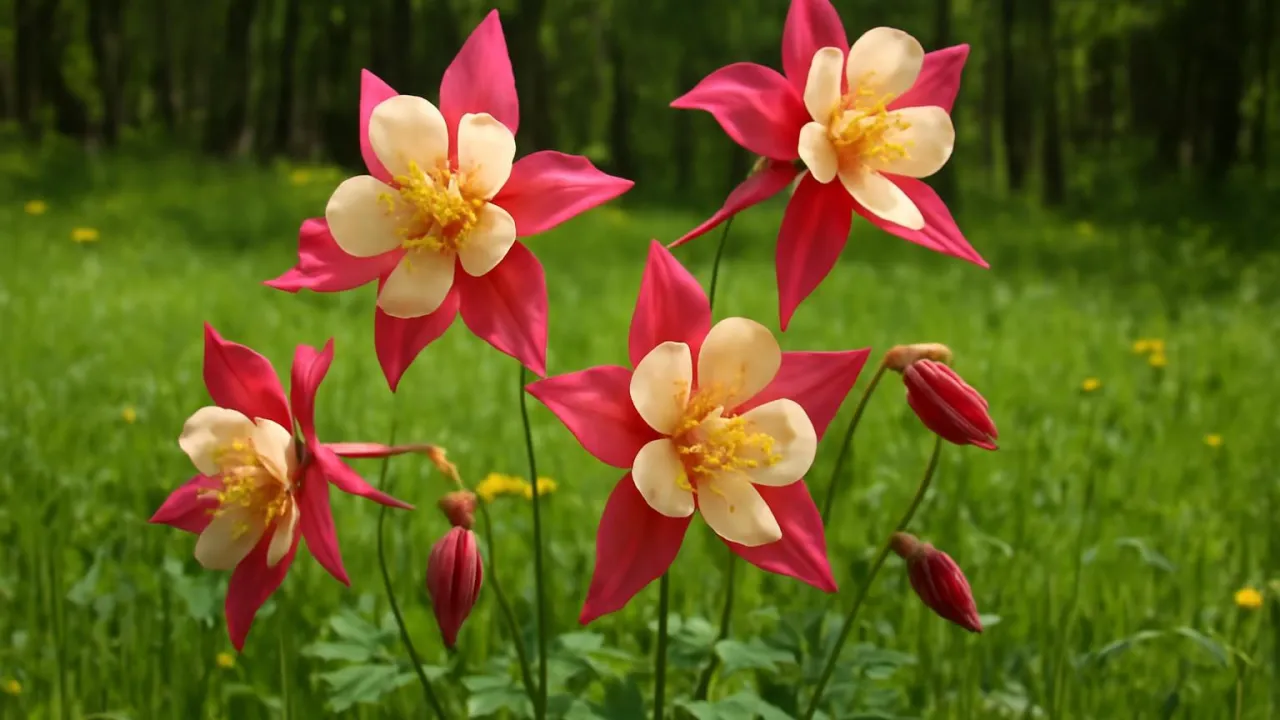
Columbine flowers use their spurs like tiny tubes to hide nectar from rain!
✨ Word Sparks (Grade 2 Glossary)
Tap 🔊 to hear
pollinators
Animals that help flowers make seeds
nectar
Sweet juice inside flowers
meadows
Open grassy places with flowers
🪝
Have you ever seen a flower shaped like a tiny hat or spurs?
1
Bright and Beautiful
Columbine flowers grow in bright colors like red, blue, and yellow. Their petals have long spurs that curve backward. Bees and hummingbirds visit these flowers often.
2
Home Sweet Home
These flowers grow in and forests where sunlight is bright. They need well-drained soil and regular water to thrive. Columbines bloom in spring and early summer.
3
Special Petals
The spurred petals hold deep inside to attract . This helps the flower make seeds and grow new plants. The shape protects nectar from rain and other animals.
Columbine’s spurred petals are a clever adaptation to protect nectar from rain and pests.
✨ Word Sparks (Grade 3 Glossary)
Tap 🔊 to hear
adaptation
A change that helps plants survive better
pollination
When pollen moves to help plants make seeds
nectar
Sweet juice inside flowers that pollinators drink
🪝
Did you know columbine flowers have special spurs to protect nectar from rain?
1
Colorful Adaptations
Columbine flowers display vibrant colors like red, blue, and yellow to attract pollinators. Their unique spurred petals act as a protective cover for inside. This helps the flower survive in rainy environments. Bright colors also help pollinators find the flower easily.
2
Pollination Helpers
Pollinators like bees and hummingbirds visit columbines to drink hidden in the spurs. This process helps the flower reproduce by spreading pollen. The shape of the flower is an that encourages specific pollinators. This relationship benefits both the flower and the pollinators.
3
Where They Grow
Columbines grow in temperate meadows and forests across North America and Eurasia. They prefer well-drained soil and areas with full sun or partial shade. These habitats provide the nutrients and water the plants need to thrive. Their ability to adapt to different environments helps them survive.
4
Survival Strategies
The spurred petals protect from rain and unwanted insects, which helps the flower save energy. This increases the chances of successful . The plant’s leaves also help collect sunlight for photosynthesis. Together, these features improve the columbine’s survival in nature.
Columbine flowers’ spurred petals create a special shelter for nectar, helping them survive rain and pests.
✨ Word Sparks (Grade 4 Glossary)
Tap 🔊 to hear
ecosystem
A community of plants and animals living together
biodiversity
Many different kinds of living things in one place
conservation
Protecting plants and animals in nature
🪝
How do columbine flowers use their spurred petals to thrive in different environments?
1
Color and Shape for Survival
Columbine flowers have bright colors and long spurred petals that attract specific pollinators like hummingbirds and bees. These spurs protect the nectar from rain and unwanted insects, allowing the flower to conserve energy. This unique shape is an important adaptation that helps the plant survive in temperate meadows and forests. The colors also help pollinators find the flowers easily in their natural habitats.
2
Ecosystem Role and Pollination
Columbines play a vital role in their by supporting pollinators that depend on their nectar. The flowers’ specialized shape encourages pollination by certain animals, which helps maintain healthy plant populations. This mutual relationship benefits both the plants and pollinators, contributing to . Additionally, columbines provide food for some insects and birds, fitting into local food webs.
3
Geographic Distribution and Growth
These flowers grow widely across temperate regions of North America and Eurasia, thriving in well-drained soils with full sun or partial shade. Their ability to adapt to different light and soil conditions allows them to colonize diverse habitats. Columbines bloom mainly in spring and early summer, producing seeds that spread to new areas. Human activities like gardening have also spread columbines beyond their native ranges.
4
Human Impact and Conservation
Though popular in gardens, columbines face threats from habitat loss and climate change in the wild. Protecting natural habitats helps preserve their populations and supports pollinators. Planting native columbine species in gardens can aid local . education raises awareness about the importance of native plants and their roles in nature.
1. What helps protect nectar inside columbine flowers?
2. How can people help columbine flowers survive?
🤯 Mind-Blowing Fact • Grade 5
Columbine petals evolved spurs that precisely match pollinators’ feeding parts, boosting survival and reproduction.
✨ Word Sparks (Grade 5 Glossary)
Tap 🔊 to hear
morphology
The shape and structure of a living thing
pollinator
An animal that helps flowers make seeds
conservation
Protecting plants and animals in nature
🪝
What makes the columbine flower’s spurred petals a remarkable evolutionary adaptation?
1
Scientific Classification and Diversity
Columbines belong to the genus Aquilegia within the Ranunculaceae family, comprising about 60 species worldwide. These species exhibit diverse flower colors and spur lengths adapted to various . Their evolutionary history shows co-adaptation with hummingbirds, bees, and moths across temperate regions. This diversity reflects ecological specialization and evolutionary pressures shaping their .
2
Physiological Mechanics of Nectar Protection
The elongated spurred petals of columbines function as nectar reservoirs, protecting sweet nectar from rain and non-pollinating insects. This structural adaptation ensures efficient pollination by specialized with long proboscises. The flower’s reduces nectar dilution and wastage, increasing reproductive success. Additionally, the spurs’ curvature directs pollinator behavior for optimal pollen transfer.
3
Ecological Role and Conservation Challenges
Columbines play crucial roles in temperate ecosystems by supporting species essential for biodiversity maintenance. Habitat fragmentation and climate change threaten some native populations, necessitating efforts. Botanical gardens and native plant restoration projects help preserve genetic diversity. Public education on native plant importance fosters community engagement in conservation.
4
Botanical History and Human Interaction
Historically, columbines have been admired for their unique flower shapes and used in traditional medicine and ornamental gardening. Their Latin name, Aquilegia, derives from 'aquila,' meaning eagle, referencing the spurred petals resembling eagle claws. Cultivation practices have spread columbines beyond native ranges, sometimes impacting local ecosystems. Understanding their biology aids responsible horticulture.
5
Quantitative Comparisons and Adaptations
Columbine flowers range from 1 to 3 feet tall, with spurs varying between 0.5 to 2 inches long, adapted to specific species. Nectar sugar concentration averages around 20%, attracting hummingbirds that can hover at speeds up to 30 miles per hour. These flowers bloom primarily in spring, surviving temperature ranges from 40 to 85 degrees Fahrenheit. Such metrics highlight their specialized ecological niche.