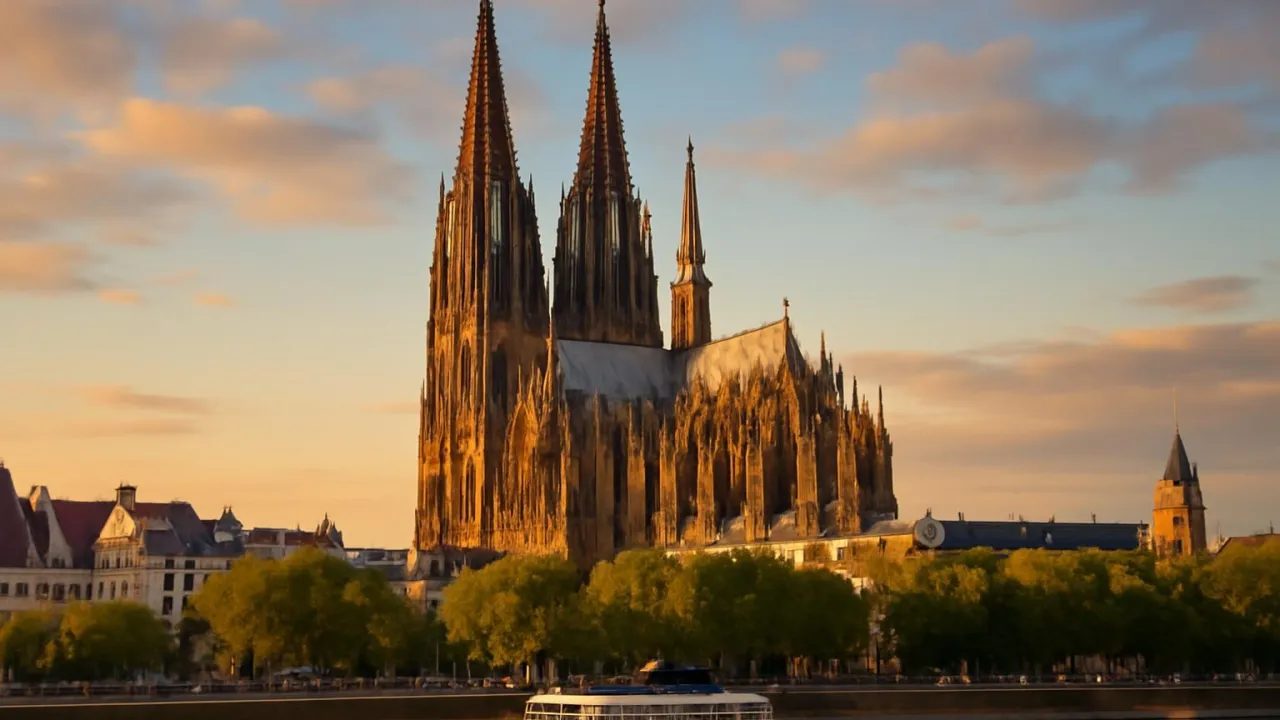
Cologne Cathedral took over 600 years to finish building!
✨ Word Sparks (Grade 2 Glossary)
Tap 🔊 to hear
cathedral
A very big, special church
echo
A sound that bounces back to you
pattern
A design that repeats again and again
🪝
Have you ever heard a bell echo through a giant stone building?
1
Sky-High Spires and Stone Walls
Cologne ’s twin spires reach far into the sky, taller than most buildings. Its dark stone walls look strong and old. Many people visit just to see how big it is.
2
Bells That Fill the Air
Huge bells hang high in the towers, and when they ring, the whole city hears them. Their deep sounds bounce off the stone and everywhere. The biggest bell is called the 'St. Peter Bell.'
3
Windows That Glow with Color
The ’s windows are made of colorful glass. When sunlight shines through, the inside sparkles with reds, blues, and golds. Visitors love to see the bright on the walls.
The St. Peter Bell is the largest free-swinging church bell in the world!
✨ Word Sparks (Grade 3 Glossary)
Tap 🔊 to hear
vibration
A fast shaking that makes sound
buttress
A stone support that holds walls up
pilgrim
A person who travels for faith
🪝
Can you imagine climbing hundreds of steps to see the whole city from above?
1
A Towering Gothic Wonder
Cologne Cathedral’s spires rise 515 feet high, making it one of the tallest churches on Earth. Its style is called 'Gothic,' with pointed arches and flying . Builders started in 1248, but it took centuries to finish. Today, its dark stone towers are famous all over the world.
2
The Mighty Bells and Their Echoes
Inside the towers, giant bells hang from strong wooden frames. When struck, these bells vibrate, creating deep, powerful sounds that echo through the city. The largest bell, the St. Peter Bell, weighs over 24 tons. People can feel the in their chests when it rings.
3
Stained Glass: Stories in Color
The cathedral’s stained glass windows tell stories with bright colors and shapes. Sunlight shining through the glass fills the space with glowing patterns. Each window is made from hundreds of colored pieces. These windows help visitors learn about history and art.
4
A Place for Visitors and Pilgrims
Every year, millions of people visit Cologne Cathedral. Some climb hundreds of spiral steps to the top. From there, they see the whole city and the Rhine River below. The cathedral is a symbol of hope and strength for many people.
The cathedral’s stained glass windows cover an area bigger than two basketball courts combined!
✨ Word Sparks (Grade 4 Glossary)
Tap 🔊 to hear
resonance
When sound echoes and fills a space
restoration
Fixing something to make it like new again
vault
A curved ceiling made of stone
🪝
What if you stepped inside a building so tall its spires seem to tickle the clouds?
1
Spires That Reach for the Sky
Imagine standing below twin towers that soar 515 feet above your head, their pointed spires almost disappearing into the mist. Cologne Cathedral’s dark stone walls are covered with carvings of saints, animals, and twisting vines. The building’s Gothic arches and flying buttresses make it look both strong and delicate at the same time. People from all over the world travel to see this amazing sight in the heart of Cologne.
2
Echoes of the Mighty Bells
Inside, the air vibrates when the eleven bells ring, especially the giant St. Peter Bell. The sound waves bounce off the high vaulted ceilings and stone pillars, filling the space with deep, echoing . Bell ringers use careful timing and strength to control the swinging bells. The whole city listens when the bells announce a special moment.
3
Stained Glass: Stories in Sunlight
Sunlight streams through over 10,000 square feet of stained glass, painting the stone floors with shifting colors. Each window is made from hundreds of tiny glass pieces, showing stories of saints, kings, and Cologne’s history. The glass glows with reds, blues, and golds, changing as the sun moves across the sky. Artists and craftspeople work hard to restore these windows so they stay bright for many years.
4
A Survivor and a Symbol
Cologne Cathedral is more than a church—it’s a symbol of hope and endurance for the city. Even during World War II, when bombs fell all around, the cathedral stood tall while much of Cologne was destroyed. Today, it is a UNESCO World Heritage Site and a place for both worship and wonder. Visitors leave feeling inspired by its beauty, history, and strength.
1. How do the cathedral’s stone walls affect the bells’ sound?
2. Why is Cologne Cathedral important to so many people?
🤯 Mind-Blowing Fact • Grade 5
Cologne Cathedral’s stone roof alone weighs over 24,000 tons, supported by a network of flying buttresses.
✨ Word Sparks (Grade 5 Glossary)
Tap 🔊 to hear
tracery
Decorative stonework in window designs
frequency
How fast something vibrates to make sound
upheaval
Big sudden change or trouble in history
🪝
What engineering marvels and artistic secrets would you discover if you explored every hidden corner of Cologne Cathedral?
1
A Pinnacle of Gothic Architecture
Cologne Cathedral stands as one of the most remarkable achievements of Gothic architecture, characterized by its soaring twin spires, pointed arches, and intricate . Construction began in 1248, paused for centuries, and was finally completed in 1880, spanning over 630 years. The cathedral’s façade is adorned with thousands of statues and elaborate stone carvings, each telling a part of the city’s religious and cultural story. At 515 feet (157 meters), its spires were the tallest structures in the world for several years. The building’s design draws visitors, historians, and architects from all over the globe.
2
Structural Genius: Flying Buttresses and Vaulted Ceilings
Engineers of the Gothic era used flying buttresses to distribute the immense weight of the cathedral’s heavy stone walls and vaulted ceilings. These external supports allow the walls to be thinner and filled with large stained glass windows, an innovation that transformed medieval architecture. The ribbed vaults inside the cathedral create a web-like ceiling structure, efficiently channeling the load to the pillars and buttresses. This engineering allowed Cologne Cathedral to reach unprecedented heights while remaining stable. The combination of height, light, and strength makes the cathedral a masterpiece of structural design.
3
The Science of Sound: Bells and Acoustics
Cologne Cathedral’s eleven bells, including the St. Peter Bell—the largest free-swinging church bell in the world—demonstrate the science of vibration and acoustic resonance. When struck, the bell’s metal vibrates at a specific , producing a deep, powerful tone that resonates throughout the cathedral and city. The stone architecture amplifies and reflects these sound waves, creating a lingering echo that can be heard for miles. Engineers must carefully monitor the bell towers for signs of vibration stress to prevent structural damage over time. The interplay between sound and structure makes every bell ringing a dramatic event.
4
Stained Glass Windows: Light, Color, and Story
The cathedral’s stained glass windows cover over 10,000 square feet and are composed of thousands of tiny colored glass pieces. Medieval artisans used minerals and metals to create vibrant reds, blues, and golds, then assembled the pieces into intricate biblical scenes and geometric patterns. Sunlight streaming through these windows bathes the interior in shifting colors, creating a dynamic interplay of light and shadow. The windows not only serve an artistic purpose but also teach visitors about history, faith, and craftsmanship. Ongoing restoration ensures these masterpieces endure for future generations.
5
A Living Landmark: History, Survival, and Global Influence
Cologne Cathedral has witnessed centuries of European history, surviving wars, political , and environmental challenges. During World War II, the cathedral was struck by bombs but remained standing, becoming a powerful symbol of resilience for the people of Cologne. Today, it is a UNESCO World Heritage Site and a center for both religious ceremonies and cultural events. The cathedral’s engineering innovations and artistic achievements have influenced countless other buildings worldwide. As a living landmark, Cologne Cathedral continues to inspire awe, curiosity, and unity among millions of visitors each year.