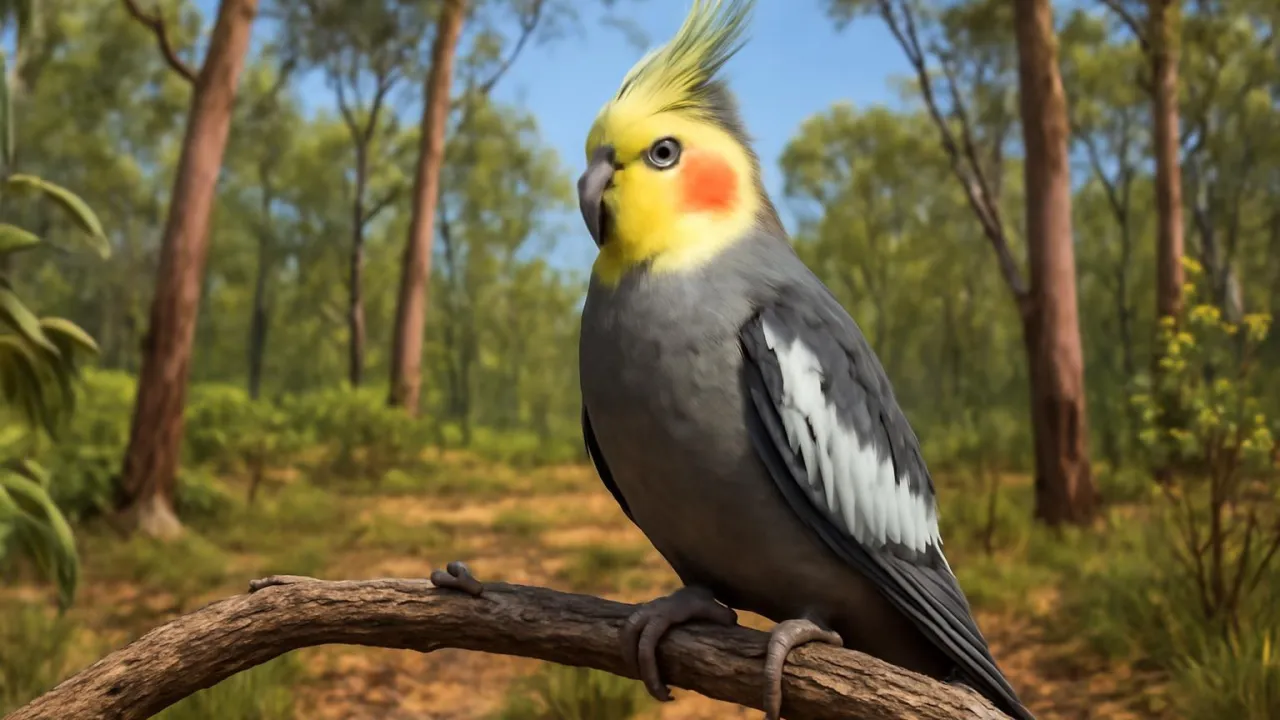
Cockatiels can copy sounds and whistles from their surroundings very well.
✨ Word Sparks (Grade 2 Glossary)
Tap 🔊 to hear
flock
A group of birds that live or fly together
nest
A safe home birds build for their eggs
beak
The hard mouth part birds use to eat
🪝
Have you ever heard a bird whistle a happy song?
1
Colorful Feathers and Cheeks
Cockatiels have bright yellow feathers on their heads and gray bodies. Their orange cheek patches stand out clearly. These colors help them talk to other birds.
2
Where Cockatiels Live
Cockatiels live mostly in dry forests and open lands in Australia. They build in tree holes or cliffs. They fly in to find food and water.
3
What Cockatiels Eat
These birds eat seeds, fruits, and small insects for energy. They use their strong to crack open seeds. Drinking fresh water is very important for them.
Cockatiels can mimic human whistles and sounds, making them clever talkers among birds.
✨ Word Sparks (Grade 3 Glossary)
Tap 🔊 to hear
predator
An animal that hunts other animals to eat
crests
Feather tufts on a bird’s head that move
mimic
To copy sounds or actions of others
🪝
Did you know cockatiels use their bright cheek patches to talk?
1
Feather Colors and Adaptations
Cockatiels have gray bodies with bright yellow on their heads. Their orange cheek patches are used for communication. These colors help them blend into dry woodlands to avoid . Their feathers also keep them warm during cool nights.
2
Habitat and Survival
Cockatiels live in Australian woodlands and scrublands where water can be scarce. They gather in flocks to find food and protect each other from . Their ability to fly quickly helps them escape danger. They nest in tree hollows to keep eggs safe from harm.
3
Diet and Feeding
Cockatiels mainly eat seeds and fruits, but sometimes small insects add nutrients to their diet. Their strong curved beaks help crack open tough seed shells. Eating a varied diet gives them energy to fly and stay healthy. They drink water often to stay hydrated in dry areas.
4
Communication and Behavior
Cockatiels are known for their whistling and mimicking sounds they hear around them. This helps them communicate with other birds in their flock. Their move up and down to show emotions like excitement or fear. These behaviors help them survive and bond socially.
Cockatiels play a key role in their ecosystem by spreading seeds and communicating with complex calls.
✨ Word Sparks (Grade 4 Glossary)
Tap 🔊 to hear
camouflage
Colors that help animals hide in their home
ecosystem
A community of plants and animals living together
mimicry
Copying sounds or actions to communicate or hide
🪝
How do cockatiels’ colors and calls help them live in Australia’s wild?
1
Feather Colors and Camouflage
Cockatiels have gray bodies with bright yellow crests and orange cheek patches that serve as communication signals. These colors also provide in dry Australian woodlands, helping them avoid predators. The crests raise or lower to express emotions like excitement or fear, which helps them interact socially. Their feathers also protect them from cold nights and hot days.
2
Habitat and Ecosystem Role
Cockatiels live mainly in the dry woodlands and scrublands of Australia where water is limited. They form flocks to search for food and water, which increases their chances of survival. As seed eaters, they help spread plant seeds through their droppings, aiding in plant growth and health. They also serve as prey for larger birds and animals, fitting into the food web.
3
Diet and Adaptations
Cockatiels eat mainly seeds and fruits but sometimes consume small insects to gain extra nutrients. Their strong, curved beaks are adapted to crack tough seed shells efficiently. This varied diet provides them with energy to fly long distances and stay healthy in dry habitats. Drinking water regularly helps them maintain hydration in hot environments.
4
Communication and Human Impact
Cockatiels use whistling and to communicate within flocks, which strengthens social bonds. Their ability to imitate sounds makes them popular pets worldwide, but wild populations face habitat loss from farming and urban growth. Conservation efforts focus on protecting their natural habitats to keep wild cockatiel numbers stable. Understanding their behavior helps humans appreciate their role in nature.
1. How do cockatiels help plants grow in their habitat?
2. What is one way cockatiels communicate with each other?
🤯 Mind-Blowing Fact • Grade 5
Cockatiels can fly up to 30 miles per hour and live over 20 years in safe environments.
✨ Word Sparks (Grade 5 Glossary)
Tap 🔊 to hear
thermoregulation
How animals control body heat to stay safe
ecological niche
The role an animal plays in its environment
vocalization
Sounds animals make to communicate with others
🪝
What makes the cockatiel’s biology and behavior uniquely suited for Australia’s dry habitats?
1
Scientific Classification and Evolution
The cockatiel, scientifically named Nymphicus hollandicus, is the smallest member of the cockatoo family. It evolved to thrive in Australia’s arid woodlands and scrublands, adapting to scarce water and food. Its closest relatives are larger cockatoos, but cockatiels developed unique traits like a slender body and long tail for agile flight. This evolutionary path allowed them to exploit different .
2
Physiological Adaptations
Cockatiels have specialized kidneys that conserve water efficiently, vital for survival in dry environments. Their strong, curved beaks allow them to crack hard seeds and access nutritious food sources. The bright yellow crest feathers serve both for communication and , helping to dissipate heat. Their feathers provide insulation against temperature extremes common in Australian habitats.
3
Behavior and Communication
Cockatiels exhibit complex , including whistles and mimicry, to maintain social bonds within flocks. Their crests move to express emotions such as excitement, fear, or curiosity, enhancing nonverbal communication. These behaviors help coordinate group activities like foraging and predator avoidance. Their ability to learn sounds also aids in adapting to changing environments.
4
Conservation and Human Interaction
While cockatiels are popular pets worldwide due to their friendly nature and vocal skills, wild populations face threats from habitat loss and climate change. Conservation efforts focus on preserving native woodlands and limiting land clearing. Scientific studies monitor population trends to ensure sustainable numbers. Educating the public about their ecological role promotes coexistence.
5
Quantitative Comparisons and Facts
Adult cockatiels measure about 12 inches (30 centimeters) in length and weigh between 3 to 4 ounces (85 to 115 grams). They can fly at speeds up to 30 miles per hour (48 kilometers per hour) when escaping predators. Their lifespan in the wild averages 10 to 14 years, but in captivity, they may live up to 20 years. These statistics highlight their agility and resilience in harsh environments.