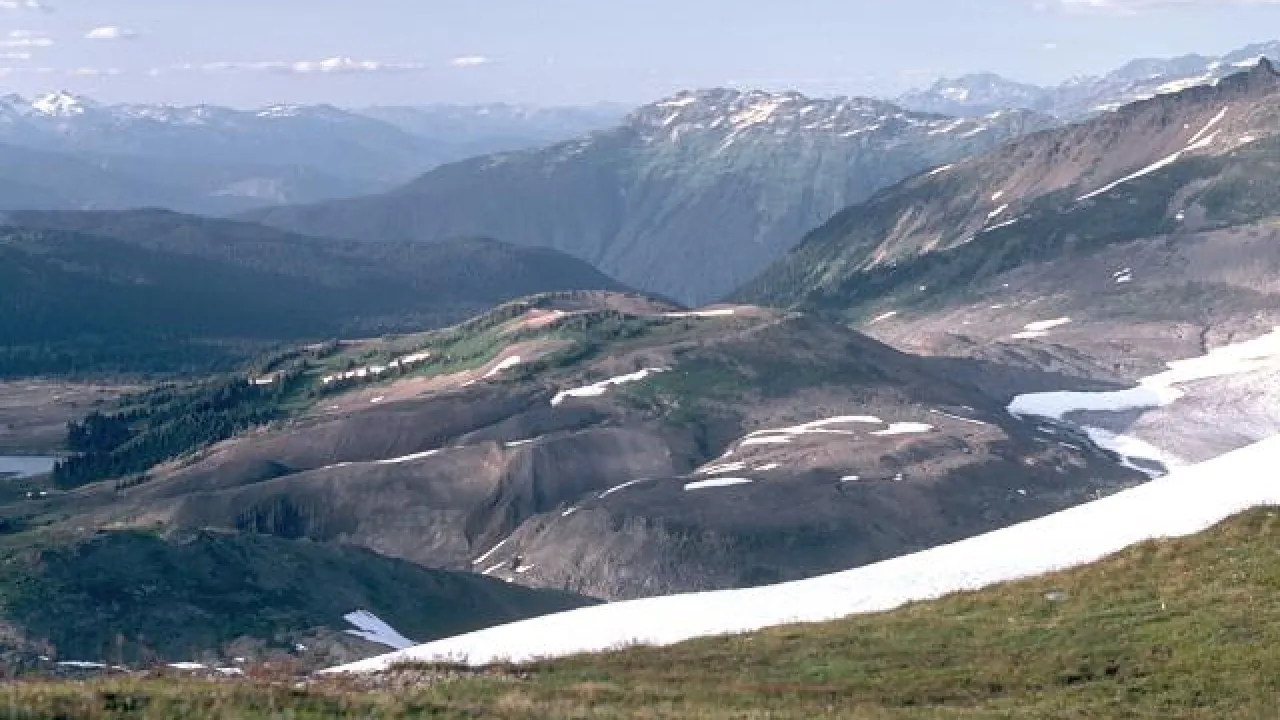
🌋 Where It FormsVolcanic Fields & Flanks of Larger Volcanoes (100–400 m Tall)
💎 Key PropertiesBubbly Scoria Cinders Resting at ~30–35° Angle of Repose
⚡ Planet Earth SparkCan sprout right out of a flat farm field and grow hundreds of meters tall in months
🤯 Mind-Blowing Fact • Grade 1
Mexico's Parícutin cinder cone grew 30 feet tall in its very first 24 hours inside a farmer's cornfield!
✨ Word Sparks (Grade 1 Glossary)
Tap 🔊 to hear
cinder
Small, bubbly, crunchy piece of cooled lava.
cone
A shape wide at bottom and narrower above.
vent
An opening in Earth where lava comes out.
🪝
What if a brand-new volcano sprouted right in the middle of a farmer's cornfield?
1
Popping Up Fast!
In 1943, a farmer in Mexico heard a rumble under his cornfield. Smoke and glowing sparks shot out of a crack! By the next day, a baby volcano stood taller than a house.
2
Piles of Crunchy Cinders
Bubbly blobs of lava flew up, cooled in the air, and clattered down like crunchy pebbles. Those dark, airy pebbles are called !
3
Small Neat Cones
pile into a neat hill with a bowl on top. Most cinder cones erupt once and then rest forever!
1. Where did the famous Parícutin cinder cone suddenly sprout in 1943?
2. How many times do most cinder cone volcanoes erupt during their whole life?
🤯 Mind-Blowing Fact • Grade 2
Sunset Crater in Arizona got its name because yellow, orange, and red minerals stained its top rim like a glowing desert sunset!
✨ Word Sparks (Grade 2 Glossary)
Tap 🔊 to hear
scoria
Dark volcanic rock full of frozen gas holes.
rim
The upper circular edge around a crater bowl.
erupt
To burst out lava, gas, or rocky cinders.
🪝
Which type of volcano is the smallest, simplest, AND most common kind on dry land?
1
Meet the Simplest Volcano
Pour dry sand slowly onto a table, and watch it stack into a neat, steep-sided hill. Cinder cone volcanoes build themselves the exact same way—except instead of sand, they shower down bubbly volcanic rocks!
2
Fountains of Bubbly Scoria
Gas-rich lava shoots straight up from a single vent like a sparkling orange fountain. Blobs of lava cool quickly as they fly through the sky, falling back around the vent as lightweight, hole-filled rocks called or cinders.
3
Lava Sneaks Out the Bottom
Loose cinders are too weak to hold heavy liquid lava inside the top bowl. Instead, denser lava usually pushes out near the bottom of the cone! Arizona's Sunset Crater is a colorful cinder cone.
1. Where does heavy liquid lava usually flow out of a cinder cone volcano?
2. Why are scoria cinders so light when you pick one up?
🤯 Mind-Blowing Fact • Grade 3
After nine years of erupting, Mexico's Parícutin grew taller than the Empire State Building's roof—and never erupted again!
✨ Word Sparks (Grade 3 Glossary)
Tap 🔊 to hear
volcanic bomb
Large blob of lava shaped smoothly while flying.
lapilli
Pea-to-walnut-sized volcanic cinders falling from eruptions.
fissure
A long narrow crack opening in the ground.
🪝
Why did scientists cheer in 1943 when Parícutin erupted—making it the first volcano watched from birth to finish?
1
Watching a Volcano Grow Up
Most volcanoes started growing long before humans wrote history. So when a cracked open in farmer Dionisio Pulido's field in Michoacán, Mexico, on February 20, 1943, geologists rushed from around the world! For nine years they studied Parícutin grow to 424 meters before falling silent in 1952.
2
Strombolian Firework Blasts
Cinder cones form from gas-charged basaltic or andesitic magma. Big gas slugs burst at the vent in rhythmic 'Strombolian' fountains, tossing glowing clots of lava hundreds of meters into the air.
3
Angle of Repose
As solidified scoria, pebbles, and twisted '' rain down, gravity tumbles them down the sides until they rest at a steady 30-to-35-degree slope—nature's steepest stable pile!
4
Dotting Giant Neighbors
Besides forming clusters on flat plains, dozens of small cinder cones often dot the flanks of giant shield volcanoes and stratovolcanoes like Mauna Kea and Mount Etna.
1. About how steep are the sides of most fresh cinder cone volcanoes?
2. Why was Parícutin such an important milestone for Earth scientists?
🤯 Mind-Blowing Fact • Grade 4
Flowing lava oozing from the bottom of a cinder cone can actually lift one whole side of the loose hill onto its back and carry giant blocks miles away!
✨ Word Sparks (Grade 4 Glossary)
Tap 🔊 to hear
monogenetic
Volcano formed during a single eruption life cycle.
angle of repose
Steepest angle loose pebbles stack without sliding down.
Strombolian
Fountain-like blasts of gas slugs and glowing cinders.
🪝
Why do cinder cones almost all stop growing around 300 to 400 meters tall—and why do wind directions shape their craters?
1
Monogenetic Wonders of Volcanology
Across western North America—from California's Lassen Volcanic National Park and Idaho's Craters of the Moon to New Mexico's Capulin Volcano—stand hundreds of crisp, steep-sided hills topped by neat bowl-shaped craters. Known as cinder cones or scoria cones, they are Earth's most abundant continental volcano type. Unlike shield or composite volcanoes that erupt repeatedly for hundreds of thousands of years, most cinder cones are ',' built during a single eruptive episode.
2
Physics of the Angle of Repose
During eruptions, gas-rich mafic magma blasts frothy clots skyward. Chilling mid-flight into vesicular scoria, cinders, and spindle-shaped volcanic bombs, these fragments accumulate around the vent. Once the pile steepens past 30 to 35 degrees—the natural for interlocking rough gravel—loose cinders cascade downslope, keeping the cone remarkably symmetrical unless strong prevailing winds blow more tephra onto one downwind side!
3
Breached Cones and Basal Lava Flows
Why don't lava flows spill over a cinder cone's summit crater rim? Because unconsolidated scoria lacks the strength to support a tall column of dense liquid basalt! Instead, degassed lava burrows out at the cone's base—sometimes rafting an entire wall of the cone away on its back like a conveyor belt, leaving a horseshoe-shaped 'breached cone.'
4
Erosion Clocks and Everyday Uses
Because loose scoria erodes easily under rain and frost, geologists can estimate a cinder cone's age from how sharp its rim looks—while landscapers use lightweight red scoria for garden mulch and icy winter roads!
1. What does calling a cinder cone 'monogenetic' mean?
2. What can cause one side of a cinder cone to grow taller than the opposite side?
🤯 Mind-Blowing Fact • Grade 5
Because a cinder cone's narrow underground feeder pipe freezes into rock-solid basalt once an eruption stops, future magma finds it easier to crack open a brand-new volcano next door than reuse the old vent!
✨ Word Sparks (Grade 5 Glossary)
Tap 🔊 to hear
vesicular
Rock texture pitted with many frozen gas bubbles.
parasitic cone
Small cinder cone growing on a larger volcano's flank.
pyroclast
Airborne rock fragment ejected during an explosive eruption.
🪝
Why does fresh magma in a volcanic field open a brand-new cinder cone next door instead of reusing yesterday's plumbing?
1
Distributed Monogenetic Volcanic Fields
Look across Arizona's San Francisco Volcanic Field around Flagstaff or central Mexico's Michoacán-Guanajuato field, and more than 600 individual scoria cones pepper the landscape! Unlike polygenetic stratovolcanoes fed by long-lived, thermally insulated crustal magma chambers, cinder cones tap small batches of volatile-rich basaltic or basaltic-andesite melt rising directly from the upper mantle along thin dikes. Once an eruption ends—whether after days or Parícutin's nine-year run—the meter-wide feeder dike freezes into solid basaltic rock that is harder to crack open again than surrounding country rock, forcing the next batch of magma to punch a brand-new cone kilometers away.
2
Two-Phase Slug Flow and Strombolian Dynamics
Inside the upper hundred meters of a cinder cone's conduit, exsolving `H2O` and `CO2` bubbles coalesce into meter-wide gas pockets called Taylor bubbles or gas slugs. Rising faster than surrounding melt, each slug bursts violently at the free surface, hurling incandescent on ballistic trajectories. Aerodynamic drag sculpts molten clots into fusiform (spindle) bombs and breadcrust bombs while rapid quenching freezes frothy fragments into low-density, highly scoria.
3
Granular Mechanics and Cone Morphometry
Freshly constructed scoria cones exhibit remarkably consistent morphometry: basal diameters average five times cone height (`H/W ≈ 0.18`), summit crater widths average 40 percent of basal width, and outer flanks stand at the static angle of repose (~32°–34°) for angular, interlocking . Over hundreds of thousands of years, diffusive hillslope erosion rounds the sharp crater rim and lowers flank angles below 20°, letting geomorphologists date quaternary cones from LiDAR elevation profiles.
4
Late-Stage Effusion and Rafted Mounds
As volatile reserves wane late in an eruption, denser degassed lava rises in the conduit, exerts high hydrostatic pressure against the loose scoria edifice, and breaches the base—rafting giant stratified blocks of oxidized red and black scoria far across surrounding plains.
5
Parasitic Cones and Planetary Analogs
Beyond continental fields, parasitic scoria cones trace radial rift fissures across shield and composite volcanoes like Mount Etna—and orbital cameras have even photographed crisp cinder cones across the volcanic plains of Mars and the Moon!