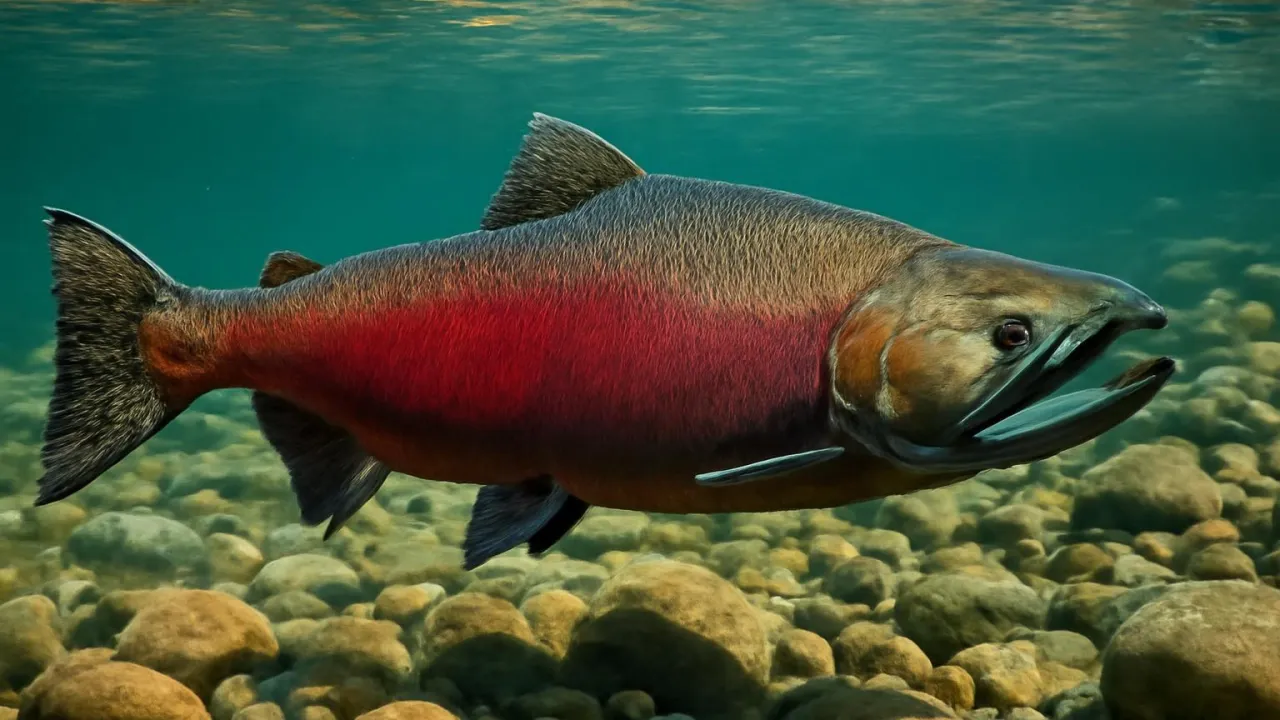
Chinook salmon use their sense of smell to find their exact birth river after years at sea.
✨ Word Sparks (Grade 3 Glossary)
Tap 🔊 to hear
migration
Long travel to a special place
camouflage
Colors that help hide from enemies
spawn
To lay eggs in water
🪝
How does the Chinook salmon’s body help it survive long river journeys?
1
Amazing Migration
Chinook salmon migrate thousands of miles from the ocean to freshwater rivers. This journey is called spawning . It allows them to reproduce safely in clean water. Their strong muscles help them swim against strong currents.
2
Body Adaptations
Their streamlined bodies reduce water resistance during swimming. Sharp fins help with steering and balance. Their scales provide protection and from predators. These adaptations increase their chances of survival.
3
Life Cycle Stages
Chinook salmon hatch from eggs laid in riverbeds. Young salmon, called fry, grow in freshwater before moving to the ocean. Adults return to their birth rivers to and then die. This life cycle ensures new generations.
4
Food and Predators
They eat smaller fish and plankton in the ocean to gain nutrients. Predators like bears and eagles wait for them during . helps salmon avoid predators. Their survival depends on finding enough food and avoiding danger.
2. Why do Chinook salmon return to their birth river?
🤯 Mind-Blowing Fact • Grade 4
Chinook salmon can leap over waterfalls up to 12 feet high during migration.
✨ Word Sparks (Grade 4 Glossary)
Tap 🔊 to hear
ecosystem
All living things in one place
conservation
Protecting nature and animals
migration
Moving to a new place to live
🪝
What role does the Chinook salmon play in its ecosystem and why is it important?
1
Migration and Ecosystem Impact
Chinook salmon migrate from the ocean to freshwater rivers to spawn, which supports many other species. Their eggs and carcasses provide vital nutrients to river . This nutrient flow helps plants and animals thrive along the riverbanks. Human activities like dam building can disrupt these important .
2
Physical Adaptations for Survival
Their large size and powerful muscles allow Chinook salmon to leap over obstacles during . Their keen sense of smell helps them navigate back to their exact birthplace. Camouflage coloring protects them from predators in both ocean and river habitats. These adaptations increase their survival chances in changing environments.
3
Geographic Range and Habitat
Chinook salmon are found in the North Pacific Ocean and rivers along the Pacific Coast from California to Alaska. They prefer cold, clean freshwater for spawning and rich ocean waters for feeding. Seasonal temperature and water flow changes affect their timing. efforts focus on protecting these habitats.
4
Human Impact and Conservation
Overfishing and habitat loss have reduced Chinook salmon populations in many areas. Dams block routes, preventing salmon from reaching spawning grounds. programs include fish ladders and habitat restoration to support salmon recovery. Protecting Chinook salmon helps maintain healthy and fisheries.
1. Why is Chinook salmon migration important for rivers?
2. What human activity harms Chinook salmon migration?
🤯 Mind-Blowing Fact • Grade 5
Chinook salmon can migrate over 900 miles upstream, leaping 12-foot waterfalls to spawn.
✨ Word Sparks (Grade 5 Glossary)
Tap 🔊 to hear
olfactory
Related to the sense of smell
cardiovascular
Relates to heart and blood vessels
biodiversity
Variety of living things in nature
🪝
How do Chinook salmon’s biology and behavior illustrate complex adaptations for survival and reproduction?
1
Taxonomy and Scientific Context
Chinook salmon, scientifically named Oncorhynchus tshawytscha, belong to the family Salmonidae. They are the largest species of Pacific salmon and play a vital role in marine and freshwater ecosystems. Their evolutionary adaptations have allowed them to thrive in diverse habitats along the Pacific Rim. Understanding their taxonomy helps scientists track population health and .
2
Physiological Mechanics of Migration
Chinook salmon possess powerful red muscle fibers that enable sustained swimming against strong river currents. Their system adjusts to varying oxygen levels during migration from saltwater to freshwater. They rely on an acute system to detect chemical cues for precise natal stream homing. These physiological traits ensure successful spawning migration over hundreds of miles.
3
Conservation and Human Impact
Chinook salmon populations have declined due to overfishing, habitat degradation, and climate change. Dams and water diversions obstruct migration routes, reducing reproductive success. Conservation efforts include fish passage improvements, hatchery programs, and habitat restoration to bolster wild populations. Protecting Chinook salmon is crucial for maintaining ecological balance and indigenous cultural heritage.
4
Quantitative Comparisons and Records
Adult Chinook salmon can reach lengths up to 58 inches and weigh as much as 125 pounds, making them the largest Pacific salmon species. They can leap vertically over obstacles as high as 12 feet during migration. Their migration distances can exceed 900 miles upstream, enduring water temperatures between 39 and 59 degrees Fahrenheit. These impressive metrics highlight their extraordinary endurance.
5
Botanical and Ecological Connections
The nutrients from decomposing Chinook salmon carcasses enrich riverbank soils, supporting plant growth and forest ecosystems. This nutrient cycling exemplifies a symbiotic relationship between aquatic and terrestrial environments. Indigenous peoples have historically relied on Chinook salmon for food and cultural practices. Understanding these ecological connections emphasizes the importance of salmon conservation.