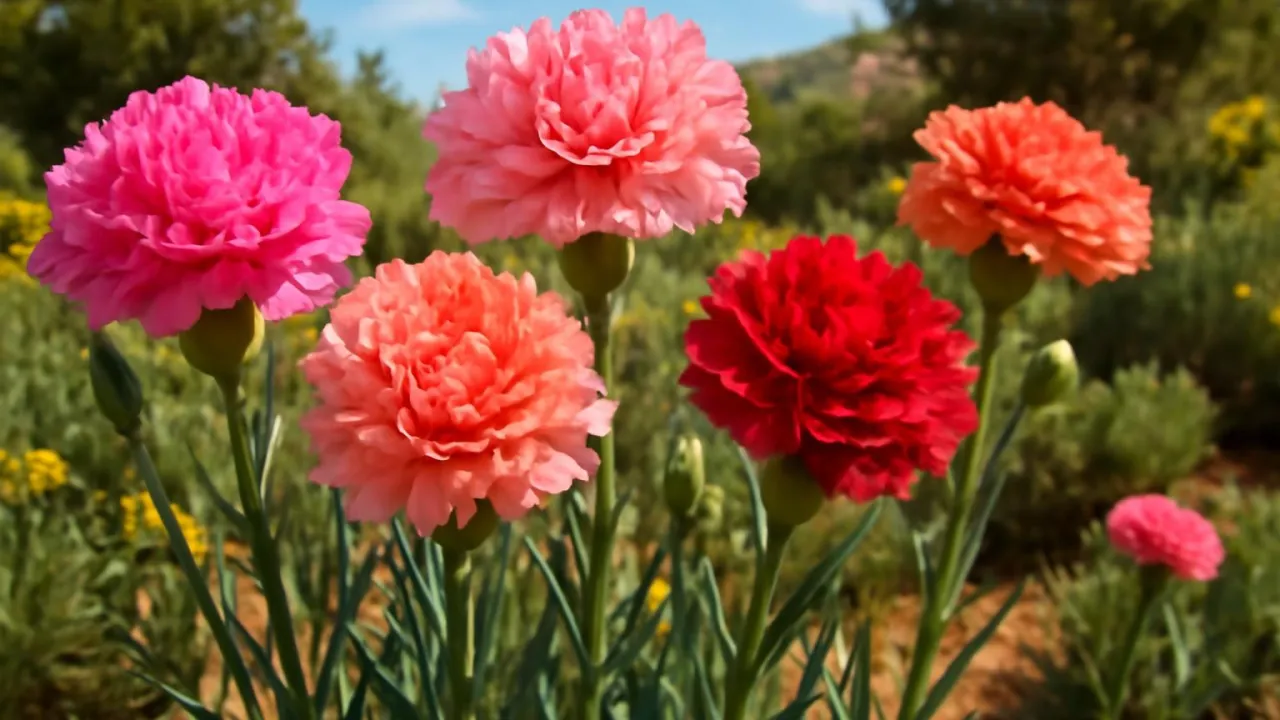
Carnations can keep their sweet scent for over a week after being cut!
✨ Word Sparks (Grade 2 Glossary)
Tap 🔊 to hear
nectar
Sweet juice inside flowers
pollinators
Animals that help flowers make seeds
soil
The dirt where plants grow
🪝
Have you ever smelled a flower that stays fresh for days?
1
Bright Colors and Shapes
Carnations have many colors like pink, white, and red with ruffled edges. Their petals are soft and look like waves. Bees and butterflies visit them often to drink .
2
Where Carnations Live
Carnations grow best in warm places with lots of sunlight and well-drained . They need regular watering but not too much water to stay healthy. Gardeners plant them in spring to enjoy their blooms all summer.
3
Special Sweet Smell
Carnations have a sweet smell that lasts a long time after they are picked. People use their fragrant petals in bouquets and decorations. Their scent helps attract like bees to the flowers.
Carnations’ scent is a special adaptation that helps them survive by attracting pollinators.
✨ Word Sparks (Grade 3 Glossary)
Tap 🔊 to hear
pollination
When pollen moves to help flowers make seeds
adaptation
A change that helps plants survive
photosynthesis
How plants make food from sunlight
🪝
Did you know carnations use their scent to attract helpful pollinators?
1
Colorful Petals and Camouflage
Carnations have ruffled petals that come in many colors like pink, white, and red. Their bright petals help attract pollinators such as bees and butterflies. The petals’ shapes also help protect the flower from some predators by blending with surrounding plants.
2
Growing in the Right Habitat
Carnations thrive in Mediterranean climates with warm temperatures and well-drained soil. They need sunlight to produce nutrients through . Proper watering helps carnations grow strong stems and healthy leaves for support.
3
Pollination and Survival
Carnations rely on pollinators to transfer pollen between flowers for reproduction. Their sweet fragrance is an that helps attract these pollinators. This process ensures the plants can produce seeds and continue their life cycle.
4
Human Uses and Care
People grow carnations in gardens and use them in floral arrangements because of their beauty and scent. They require careful watering and sunlight to stay healthy. Gardeners prune carnations to encourage more blooms and remove dead flowers.
Carnations play a key role in ecosystems by supporting pollinators and biodiversity.
✨ Word Sparks (Grade 4 Glossary)
Tap 🔊 to hear
ecosystem
A community of plants and animals living together
symbiosis
A helpful relationship between two living things
biodiversity
Many different kinds of living things
🪝
Have you ever wondered how carnations fit into their ecosystem?
1
Flower Colors and Ecosystem Role
Carnations display vibrant colors such as pink, white, and red, which attract essential pollinators like bees and butterflies. This attraction supports the food web by helping pollinators gather nectar while assisting the plants in reproduction. Their petals’ ruffled edges also help protect the flower by camouflaging it from some predators.
2
Growth Requirements and Effects
Carnations require full sunlight and well-drained soil to thrive, and too much water can harm their roots. These growth conditions affect their health and ability to produce fragrant blooms. Healthy carnations contribute to the by providing food and habitat for insects, which in turn support birds and other animals.
3
Geographic Distribution and Human Impact
Originally native to the Mediterranean region, carnations are now cultivated worldwide in gardens and farms. Humans have impacted their growth by selectively breeding varieties with different colors and scents. This cultivation helps the floral industry but can reduce wild populations if not managed sustainably.
4
Symbiosis and Conservation
Carnations engage in symbiotic relationships with pollinators that benefit both species. Protecting these flowers helps maintain and supports pollinator populations. Conservation efforts include growing carnations in botanical gardens and educating people about their ecological importance.
Carnations have been cultivated for over two millennia and remain a top global flower today.
✨ Word Sparks (Grade 5 Glossary)
Tap 🔊 to hear
taxonomy
How scientists group and name living things
volatile
Easily evaporates to make smells
cultivar
A plant variety made by people
🪝
Did you know carnations belong to the Caryophyllaceae family with fascinating biology?
1
Scientific Classification and Taxonomy
Carnations are scientifically classified as Dianthus caryophyllus within the Caryophyllaceae family. This family includes about 300 species known for their five-petaled flowers and opposite leaves. The genus name Dianthus means 'flower of the gods' in Greek, highlighting its cultural and botanical importance. This classification helps scientists understand their relationships with other plants.
2
Physiological Mechanics and Adaptations
Carnations have specialized petals with ruffled edges that increase surface area to attract pollinators visually. Their sweet fragrance results from organic compounds produced in petal glands. These adaptations improve pollination efficiency and reproductive success in Mediterranean climates. Additionally, their sturdy stems support the flowers during windy conditions.
3
Conservation and Botanical History
Carnations have been cultivated for over 2,000 years, originating in the Mediterranean basin. Selective breeding has produced hundreds of with diverse colors and scents. Conservation efforts focus on preserving wild populations and genetic diversity amid habitat loss and commercial farming. Botanical gardens play a key role in maintaining rare varieties.
4
Quantitative Comparisons and Growth Data
Carnations typically grow between 12 and 24 inches tall, with flowers measuring 1.5 to 3 inches in diameter. They thrive in temperatures from 50 to 70 degrees Fahrenheit and require moderate watering approximately twice a week. Cut carnations can last up to two weeks in water, making them popular in floral arrangements. Their growth rate depends on sunlight and soil quality.
5
Ecological and Economic Importance
Carnations contribute ecologically by supporting pollinator species vital to many ecosystems. Economically, they rank among the top cut flowers worldwide, generating significant income in horticulture. Sustainable cultivation practices aim to balance commercial demand with environmental stewardship. These flowers also have cultural significance in many countries.