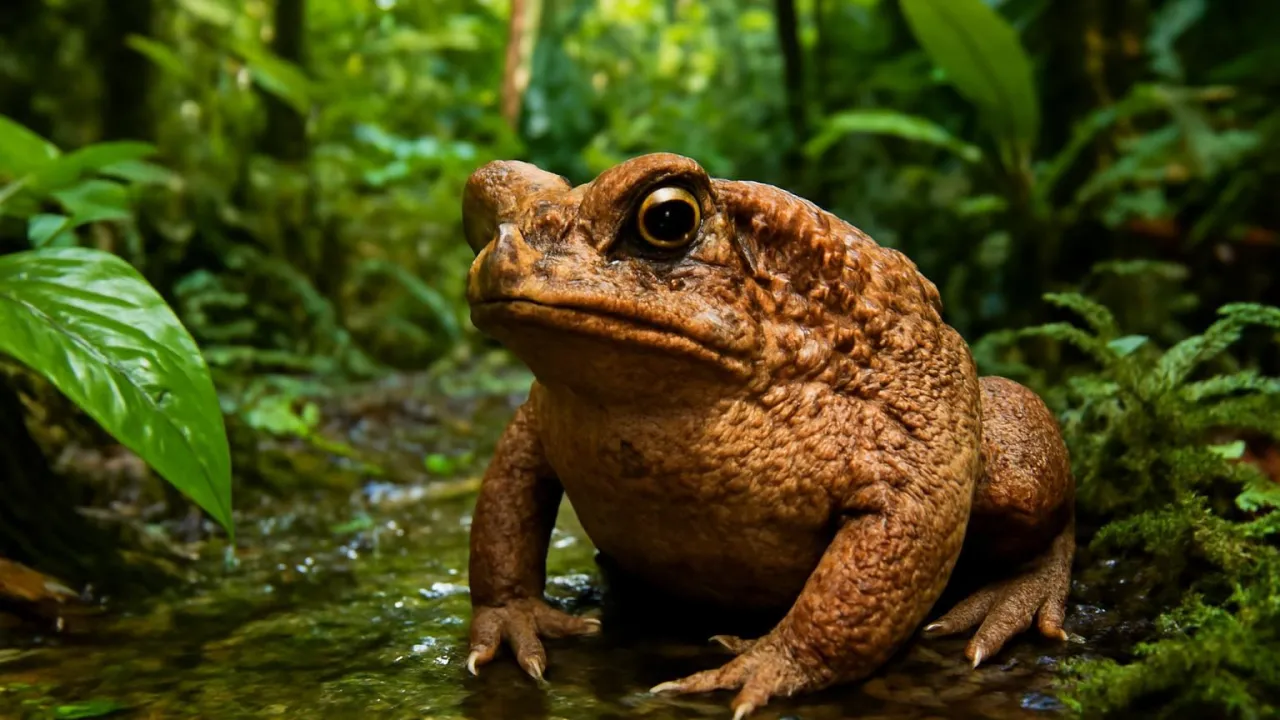
A single cane toad can poison many animals with its skin secretions!
✨ Word Sparks (Grade 2 Glossary)
Tap 🔊 to hear
predator
An animal that hunts other animals for food.
poison
A harmful liquid or gas that can hurt living things.
habitat
The natural home where an animal lives.
🪝
Can you imagine a toad that can protect itself with poison?
1
Cane Toad’s Appearance
Cane toads have bumpy brown skin and big round eyes that help them see well. They can grow very big, up to eight inches long. Their strong legs help them hop far across the ground.
2
Where They Live
These toads live in warm, wet places like forests and near farms. They like hiding under leaves and rocks during the day. At night, they come out to find food and water.
3
What They Eat and Their Defense
Cane toads eat insects, small animals, and plants to stay healthy. When danger comes, they release from their skin to scare away . This poison can be very harmful to animals and people.
Cane toads produce a poison so strong it can kill animals much bigger than themselves!
✨ Word Sparks (Grade 3 Glossary)
Tap 🔊 to hear
camouflage
Colors or shapes that help animals hide.
toxin
A poison made by animals or plants.
ecosystem
All living and nonliving things in a place.
🪝
Did you know cane toads use poison to survive in many places?
1
Physical Features and Adaptations
Cane toads have rough, bumpy skin that helps them blend into their environment. Their large eyes give them excellent night vision for hunting insects. They use their strong legs to hop quickly and escape danger.
2
Habitat and Spread
Originally from Central and South America, cane toads have spread to places like Australia. They live in forests, grasslands, and near farms where they find food and water. Their ability to adapt helps them survive in many habitats.
3
Diet and Predation
Cane toads are carnivores that eat insects, small mammals, and amphibians. They use their sticky tongue to catch prey quickly. Predators often avoid cane toads because of their toxic skin secretions.
4
Defense and Impact
The cane toad’s poison glands produce a that can kill many animals. This defense helps them survive but harms native species in new places. Their presence can disrupt local and food chains.
Cane toads have caused declines in native Australian species by poisoning predators and upsetting food chains.
✨ Word Sparks (Grade 4 Glossary)
Tap 🔊 to hear
invasive
An animal that spreads and harms new places.
symbiosis
When animals or plants live closely and help each other.
ecosystem
All plants, animals, and nature in one place.
🪝
How does the cane toad’s poison change ecosystems where it lives?
1
Physical Traits and Survival
The cane toad has rough, bumpy skin that provides camouflage in its environment, helping it avoid predators. Its large eyes allow it to see well at night when it hunts for insects and small animals. Strong legs enable it to hop quickly to escape danger or find new habitats.
2
Habitat and Geographic Spread
Native to Central and South America, cane toads were introduced to Australia to control pests but became . They now thrive in forests, grasslands, and urban areas across northern Australia. Their ability to tolerate different environments helps them spread widely.
3
Ecological Impact and Food Webs
Cane toads secrete a powerful toxin that kills many native predators, disrupting local food webs. Their presence reduces populations of animals that normally control insects and small pests. This imbalance affects plants and other animals, showing how one species can change an .
4
Human Interaction and Control Efforts
Humans have tried to control cane toads using traps and barriers to protect native wildlife. Their poison can be dangerous to pets and people, so education helps reduce risks. Research continues to find better ways to manage cane toad populations and protect .
1. What happens when cane toads poison native predators?
2. Why were cane toads brought to Australia?
🤯 Mind-Blowing Fact • Grade 5
Cane toad toxins can kill animals as large as crocodiles, showing their extreme chemical defense.
✨ Word Sparks (Grade 5 Glossary)
Tap 🔊 to hear
bufotoxin
A strong poison made by cane toads.
invasive species
Animals or plants that harm new environments.
biodiversity
Many different kinds of plants and animals living together.
🪝
How does the cane toad’s toxic defense affect biodiversity and ecosystems worldwide?
1
Taxonomy and Scientific Classification
The cane toad, Rhinella marina, belongs to the family Bufonidae, which includes true toads. It is native to Central and South America but has been introduced to other regions such as Australia and the Pacific Islands. This species is characterized by its large size, bumpy skin, and potent toxin glands located behind its eyes.
2
Physiological Mechanics of Defense
Cane toads produce in parotoid glands that secrete a milky poison when the animal feels threatened. This toxin affects the nervous and cardiac systems of predators, often causing death. Their skin’s rough texture and coloration serve as camouflage, helping them avoid detection by both predators and prey.
3
Invasive Species Impact and Conservation Challenges
Introduced to Australia in 1935 to control agricultural pests, cane toads rapidly became invasive, spreading across vast areas and outcompeting native species. Their toxic secretions have led to significant declines in native predator populations, including snakes and marsupials, disrupting ecological balance and .
4
Quantitative Comparisons and Ecological Effects
Adult cane toads can reach lengths of up to 7.9 inches (20 centimeters) and weigh over 2 pounds (900 grams). They can consume hundreds of insects each night, impacting insect populations. Their toxins are potent enough to kill animals many times larger, such as dogs and crocodiles, demonstrating their powerful ecological influence.
5
Historical and Botanical Context
The cane toad’s introduction was intended as a biological control method to reduce cane beetle populations damaging sugarcane crops. However, this strategy failed because toads could not reach the beetles high on stalks. Today, research focuses on managing their spread and mitigating environmental damage caused by this species.