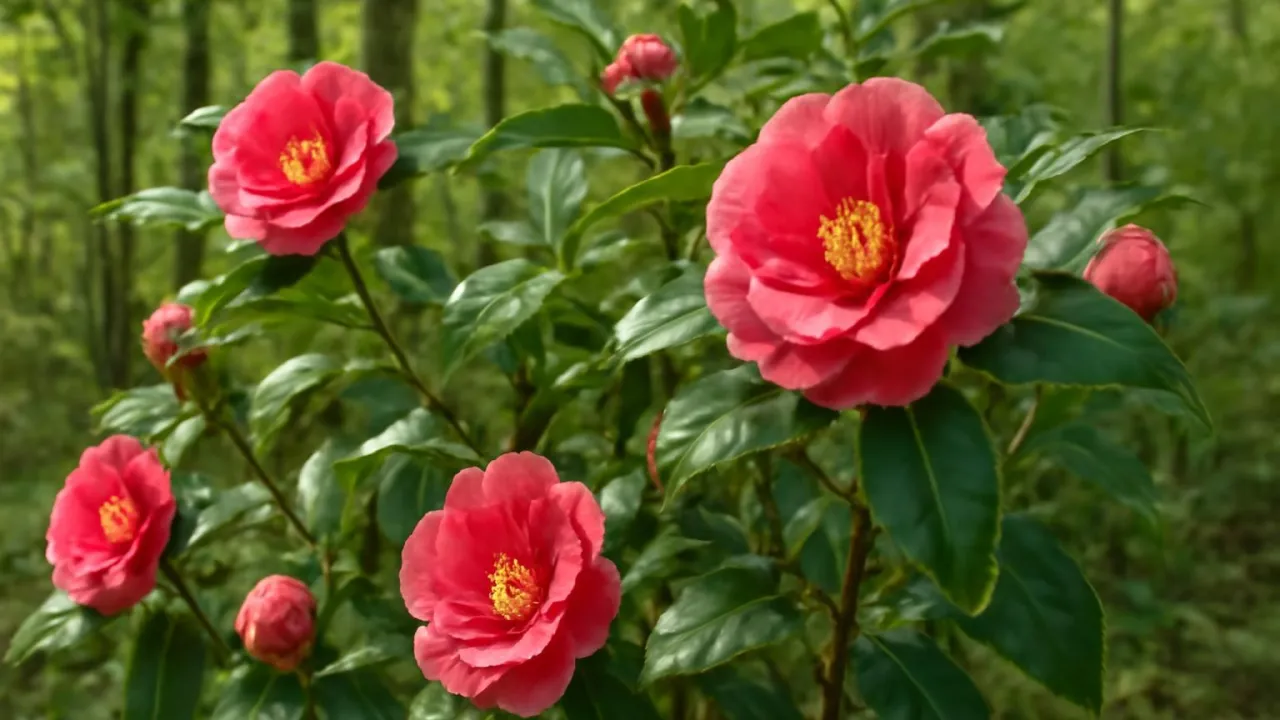
Camellia flowers can last for many weeks even in cold weather.
✨ Word Sparks (Grade 2 Glossary)
Tap 🔊 to hear
nectar
Sweet juice flowers make to attract animals
shady
A place with little sunlight
acidic
Soil that is sour and good for some plants
🪝
Have you ever seen flowers blooming in chilly winter weather?
1
Colorful Winter Blooms
Camellias bloom with red, pink, or white flowers that smell sweet. They grow on bushes that can be small or tall. Bees and birds visit camellias for and pollen.
2
Leaves and Growing Places
Camellia leaves are shiny, dark green, and thick to keep water inside. These plants like to grow in forests with moist, soil. They come from East Asia where winters are cool but not freezing.
3
Flower Life and Care
Camellias start to bloom in late fall and keep blooming through winter. They need shade and regular watering to stay healthy. People plant camellias in gardens to enjoy their bright flowers all winter long.
Camellias’ waxy leaves help them survive cold winters by keeping water inside.
✨ Word Sparks (Grade 3 Glossary)
Tap 🔊 to hear
pollination
When pollen moves to help plants make seeds
adaptation
A change that helps plants or animals survive
nutrients
Food that plants get from soil to grow
🪝
Why do camellias bloom when most flowers are asleep in winter?
1
Winter Blooms and Colors
Camellias bloom brightly in winter, showing red, pink, or white petals that attract pollinators. Their flowers produce nectar that helps bees and birds find food during cold months. This early blooming helps camellias avoid competition for pollinators in spring.
2
Adapted Leaves and Growth
The thick, waxy leaves of camellias help reduce water loss in winter’s dry air. Their shiny surface reflects sunlight, protecting the plant from cold damage. Camellias grow as shrubs or small trees in temperate forests with acidic soil rich in .
3
Pollination and Survival
occurs when bees and birds transfer pollen from flower to flower, helping camellias reproduce. Camellias’ bright colors and sweet nectar are that increase pollinator visits. These survival strategies help camellias thrive in cooler climates.
4
Human Uses and Care
People grow camellias in gardens for their stunning winter flowers and evergreen leaves. They require partial shade and moist soil to prevent leaf damage and promote healthy growth. Camellias also play a role in local ecosystems by providing food for insects and birds.
1. How do camellias attract pollinators in winter?
2. Why are camellia leaves thick and waxy?
🤯 Mind-Blowing Fact • Grade 4
Camellias help early pollinators survive by blooming when few other flowers do.
✨ Word Sparks (Grade 4 Glossary)
Tap 🔊 to hear
ecosystem
A community of plants and animals living together
frost
Ice that forms on plants when it is very cold
biodiversity
Many different types of living things in one place
🪝
How do camellias survive and bloom when winter is cold and many plants sleep?
1
Winter Blooming and Ecosystem Role
Camellias bloom during cold winter months, providing nectar and pollen for early pollinators like bees and birds. This early food source supports the local food web when few other flowers are available. By blooming in winter, camellias reduce competition for pollinators in spring.
2
Leaf Adaptations and Growth Habits
The thick, waxy leaves of camellias reduce water loss and protect against damage during winter. These evergreen shrubs grow best in shaded, acidic soils found in temperate forests of East Asia. Their ability to thrive in partial shade helps them avoid harsh sunlight that could harm their leaves.
3
Human Impact and Cultivation
Humans have cultivated camellias for centuries, selecting varieties with larger flowers and diverse colors. Gardeners provide shade and moist, acidic soil to mimic natural habitats and promote healthy growth. Camellias also contribute to local by supporting pollinators and other wildlife.
4
Geographic Distribution and Climate
Native to East Asia, camellias grow in temperate forests with mild winters and high humidity. They have been introduced worldwide to similar climates, including parts of North America and Europe. Their cold tolerance allows them to survive temperatures just below freezing, but extreme can damage flowers.
1. Why is camellia blooming important for early pollinators?
2. Where do camellias naturally grow?
🤯 Mind-Blowing Fact • Grade 5
Camellias produce antifreeze proteins in their petals to survive freezing winter temperatures.
✨ Word Sparks (Grade 5 Glossary)
Tap 🔊 to hear
transpiration
Water loss from leaves into the air
antifreeze proteins
Proteins that stop ice from forming in plants
genetic diversity
Many different genes in a plant group
🪝
What unique traits allow camellias to thrive and bloom in cold winter climates?
1
Scientific Classification and Origins
Camellias belong to the family Theaceae and the genus Camellia, with Camellia japonica being the most common species. They are native to temperate forests of East Asia, including China, Korea, and Japan. This genus includes over 100 species, many cultivated for ornamental use worldwide. Their evolutionary history traces back millions of years in these regions.
2
Physiological Adaptations for Winter Blooming
Camellias have thick, waxy leaves that reduce and protect cells from freezing damage during cold winter months. Their flowers contain that help prevent ice crystal formation inside petals. These adaptations allow camellias to maintain metabolic functions and bloom when temperatures drop below freezing. Additionally, their cellular structures stabilize membranes against cold stress.
3
Conservation and Botanical History
Historically, camellias were prized by East Asian cultures for their beauty and symbolism, featuring in art and gardens. Conservation efforts focus on preserving wild populations threatened by habitat loss and climate change. Botanical gardens worldwide cultivate camellias to maintain and educate the public. Some species are endangered due to deforestation and urban expansion.
4
Ecological Role and Geographic Distribution
Camellias support early-season pollinators by providing nectar and pollen during winter when few other plants bloom. They thrive in acidic, well-drained soils in temperate forests with mild winters and high humidity. Introduced populations exist in parts of North America, Europe, and New Zealand, adapting to similar climates. Their cold tolerance allows survival down to 15°F (-9°C), but extreme frost can cause damage.
5
Quantitative Comparisons and Growth Characteristics
Camellia shrubs range from 3 to 15 feet tall (1 to 4.5 meters), with flowers measuring 2 to 5 inches (5 to 12 centimeters) across. They can bloom continuously for 6 to 8 weeks during winter months. Camellias tolerate temperatures down to about 15°F (-9°C) but suffer damage below this threshold. Their growth rate varies depending on soil quality and climate conditions.