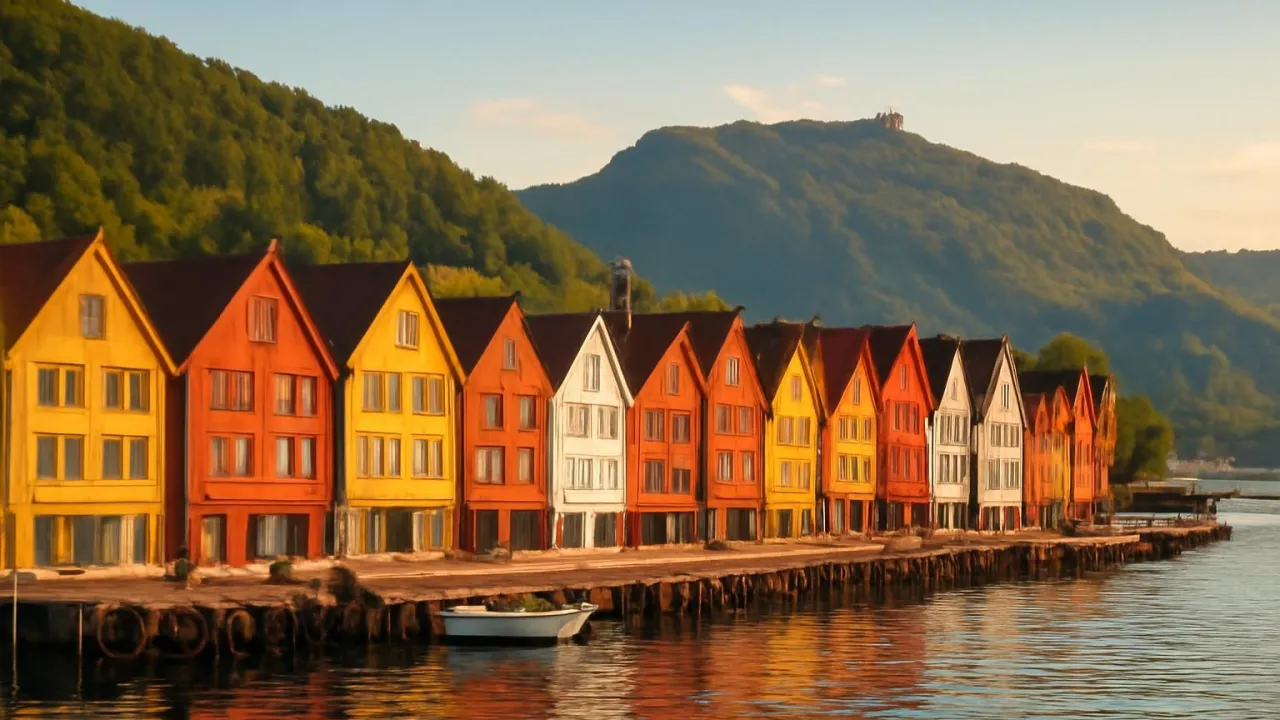
Bryggen has stood by Bergen’s harbor for almost 1,000 years.
✨ Word Sparks (Grade 2 Glossary)
Tap 🔊 to hear
harbor
A safe place for boats
museum
A place with old things to see
rebuild
To build something again
🪝
Can you imagine walking past bright wooden houses by the cold sea?
1
A Row of Color
Bryggen is a row of old, colorful wooden houses. They stand close together along the . Their roofs are pointed, and their walls are painted red, yellow, and white.
2
Life by the Water
The houses sit right next to the sea, where fishing boats come and go. People walk along the wooden paths and watch the water sparkle. Visitors love to take pictures of the pretty view.
3
History in the Wood
Bryggen is very old and has been rebuilt after many fires. People work hard to keep the houses strong and safe. Today, shops and fill the rooms, sharing stories from long ago.
Bryggen’s timber buildings are joined by wooden pegs instead of nails.
✨ Word Sparks (Grade 3 Glossary)
Tap 🔊 to hear
Hanseatic
A group of old-time merchants
timber
Strong wood used for building
UNESCO
A group that protects special places
🪝
What stories could the wooden walls of Bryggen tell if they could talk?
1
A Harbor of Colors
Bryggen’s wooden buildings line the edge of Bergen’s busy harbor. Their bright red, yellow, and white walls make the wharf look like a painting. The roofs point sharply toward the sky, and the houses stand close together. Visitors walk along the wooden paths, listening to the sounds of seagulls and boat horns.
2
A Place for Trade
Long ago, Bryggen was a center for the League, a group of merchants who traded fish and goods. The houses were built with strong to hold heavy barrels and supplies. Inside, the rooms were filled with the smell of dried fish and the sound of busy workers. The wharf was always full of life and activity.
3
Surviving Fire and Time
Bryggen’s buildings have faced many fires, but people always rebuilt them using old techniques. The construction allows the houses to flex and survive harsh weather. Today, some of the buildings are museums that show how people lived and worked in the past. Bryggen is now protected as a World Heritage site.
4
A Living Landmark
Bryggen is more than just a row of houses; it is a symbol of Bergen’s history. The wharf helps us learn about trade, architecture, and life in Norway long ago. Every year, thousands of people visit to see its unique beauty. Bryggen’s story continues as people care for it and share its secrets with the world.
Bryggen’s oldest surviving buildings date back to the early 1700s.
✨ Word Sparks (Grade 4 Glossary)
Tap 🔊 to hear
ventilation
Letting fresh air move through buildings
preservation
Keeping old things safe and strong
warehouse
A big building for storing goods
🪝
Can you hear the echo of footsteps on Bryggen’s wooden planks as traders once did?
1
A Harbor Alive with History
Bryggen’s colorful wooden buildings have stood along Bergen’s harbor for centuries, creating a vibrant scene beside the sea. The sharp, triangular roofs and closely packed houses form a unique architectural pattern. Seagulls call overhead as visitors stroll along the creaking wooden walkways. The entire wharf feels like a living museum, connecting the present with Norway’s medieval past.
2
The Hanseatic League and Trade
In the Middle Ages, Bryggen was a major trading post for the Hanseatic League, a powerful group of German merchants. They imported grain and exported dried fish, using the sturdy timber buildings as and offices. The buildings were cleverly designed to withstand Bergen’s wet climate, with raised floors and narrow alleys for . Trade at Bryggen helped Bergen become one of Northern Europe’s most important cities.
3
Fire, Rebuilding, and Preservation
Bryggen’s history is marked by frequent fires, but each time, the community rebuilt using traditional timber techniques. Wooden pegs, not metal nails, hold the beams together, allowing the structures to flex in Norway’s damp weather. Today, experts use both old and new methods to protect the buildings from decay and fire. Bryggen’s survival shows the importance of heritage conservation.
4
A World Heritage Landmark
Bryggen is recognized as a UNESCO World Heritage site because of its cultural and architectural significance. Museums, shops, and artists’ studios now fill the ancient rooms, sharing stories from Bergen’s trading days. Every year, people from around the world visit to experience its unique atmosphere. Bryggen’s colorful wharf stands as a symbol of Norway’s resilience, creativity, and rich history.
2. Why do experts use both old and new methods at Bryggen?
🤯 Mind-Blowing Fact • Grade 5
Bryggen’s longest building, Svensgården, stretches over 230 feet (70 meters) along the harbor.
✨ Word Sparks (Grade 5 Glossary)
Tap 🔊 to hear
dovetail joint
A strong way to fit wood pieces together
firebreak
A gap that helps stop fires from spreading
conservation
Careful protection of something important
🪝
What engineering secrets helped Bryggen’s wooden wharf survive centuries of storms and fire?
1
A Medieval Port Frozen in Time
Imagine the salty wind whipping through rows of brightly painted wooden houses, their triangular gables rising above Bergen’s bustling harbor. Bryggen’s wharf, stretching nearly 1,000 feet along the Vågen inlet, has witnessed over nine centuries of Norwegian history. The rhythmic creak of wooden planks underfoot echoes the footsteps of traders, fishermen, and travelers from distant lands. Today, Bryggen’s vibrant façade invites visitors to step into a living storybook of architecture and commerce.
2
Hanseatic Engineering and Urban Design
Bryggen became a hub for the Hanseatic League, whose merchants shaped its unique urban layout and construction techniques. Buildings were constructed with robust pine timber, joined by wooden pegs and rather than metal nails, which could rust in Bergen’s damp climate. The narrow alleys between the buildings allowed for efficient ventilation and , while raised floors protected goods from flooding. This design maximized both storage capacity and resilience in a challenging environment.
3
Surviving Fire and Adapting Over Time
Throughout its history, Bryggen has endured at least a dozen major fires, with the most devastating in 1702 destroying almost the entire wharf. Each time, the community rebuilt using traditional methods, preserving the medieval street pattern and timber framework. Modern preservation efforts include treating wood with fire-retardant chemicals and installing discreet sprinkler systems, blending innovation with historical authenticity. These measures have helped Bryggen remain one of the world’s best-preserved wooden urban quarters.
4
Cultural Impact and UNESCO Recognition
Bryggen’s significance extends beyond its architecture; it represents centuries of cultural exchange, economic growth, and resilience. The wharf’s museums and heritage workshops preserve ancient crafts, from barrel-making to ropework, and educate visitors about Norway’s maritime history. In 1979, UNESCO designated Bryggen a World Heritage Site, recognizing its global importance as a symbol of medieval trade and Norwegian identity. Today, the area thrives as a lively center for art, tourism, and community events.
5
A Living Laboratory for Conservation Science
Preserving Bryggen’s timber structures requires advanced science, including monitoring humidity, controlling pests, and using reversible restoration techniques. Researchers study how climate change and urban development threaten the wharf’s delicate wood, adapting new technologies to prevent decay. Bryggen’s ongoing restoration serves as a model for protecting wooden heritage sites worldwide, demonstrating how tradition and innovation can work together. As visitors wander its storied lanes, they witness a remarkable blend of history, science, and living culture.