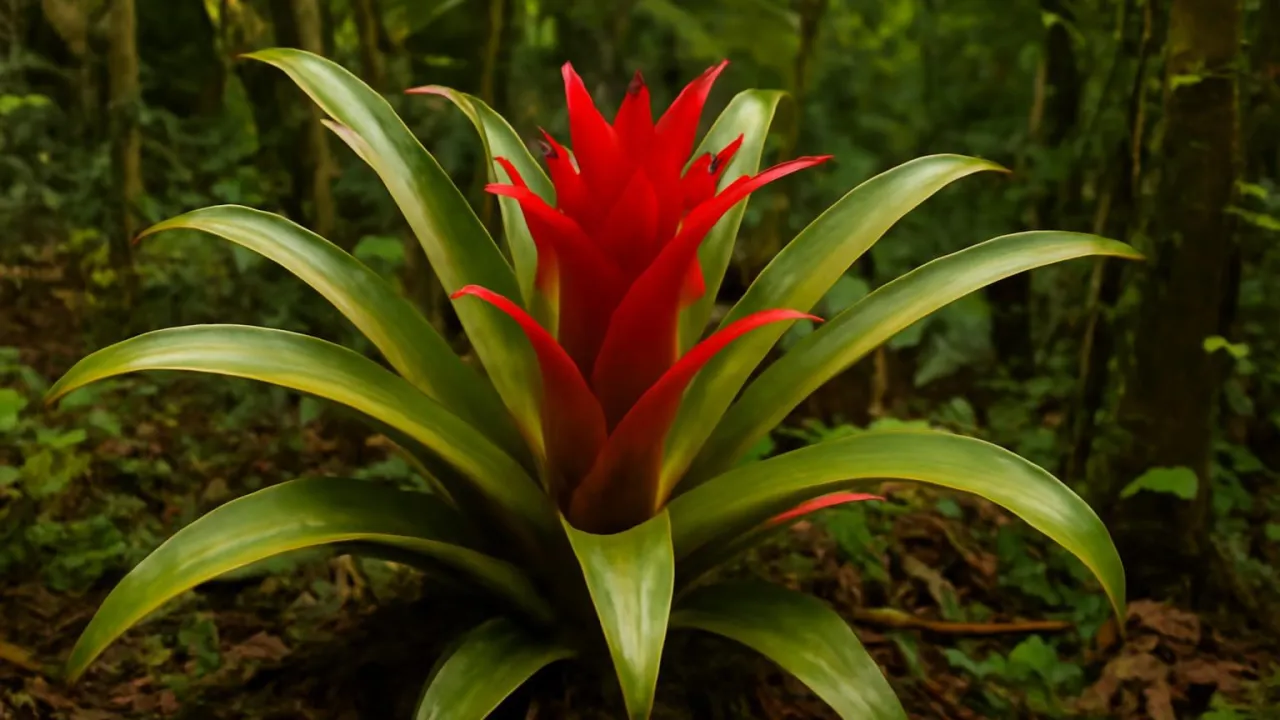
Some bromeliads catch rainwater to create tiny homes for frogs and insects!
✨ Word Sparks (Grade 2 Glossary)
Tap 🔊 to hear
tropical
Warm places near the equator
nutrients
Food plants need to grow strong
shade
A cool, darker place away from sun
🪝
Have you ever seen a plant that holds rainwater like a cup?
1
Colorful Leaves Hold Water
Bromeliads have bright leaves that form a cup shape to hold rainwater. These cups collect water for the plant and animals to drink. The leaves come in many colors like red, green, and yellow.
2
Where Bromeliads Grow
Bromeliads grow mostly in warm forests. They often live on tree branches or on the forest floor. They like places with some and plenty of rain.
3
How Bromeliads Stay Healthy
The plants get water from rain caught in their leaves. They also absorb from the air and rainwater. This helps them survive where soil is poor or missing.
1. What shape do bromeliad leaves make to catch water?
2. Why do bromeliads absorb nutrients from rain and air?
🤯 Mind-Blowing Fact • Grade 3
Bromeliads create mini-ecosystems in their water cups that support many small animals!
✨ Word Sparks (Grade 3 Glossary)
Tap 🔊 to hear
epiphyte
A plant that grows on another plant
symbiosis
When two living things help each other
pollination
How plants get pollen to make seeds
🪝
Did you know bromeliads use their cup-shaped leaves to survive in forests?
1
Bromeliad Structure and Adaptation
Bromeliads have thick, waxy leaves that form a central cup to collect rainwater. This adaptation helps them store water in dry times. Their leaves also protect the plant from losing too much moisture.
2
Habitat and Survival
These plants mostly grow in tropical rainforests, where sunlight is filtered through tall trees. Bromeliads often live as , which means they grow on other plants without harming them. This helps them reach light and avoid ground predators.
3
Ecosystem Role
The water stored in bromeliad cups creates tiny habitats for frogs, insects, and other animals. This helps the ecosystem by providing shelter and food. Bromeliads also help by attracting hummingbirds and insects.
4
Life Cycle and Growth
Bromeliads start as seeds that grow into small plants. They take nutrients from rainwater and debris trapped in their cups. As they mature, they produce flowers that attract pollinators and then seeds to continue the cycle.
1. What does it mean that bromeliads are epiphytes?
2. How do bromeliads help pollination?
🤯 Mind-Blowing Fact • Grade 4
Bromeliads’ water cups support entire tiny food webs vital to rainforest health.
✨ Word Sparks (Grade 4 Glossary)
Tap 🔊 to hear
microhabitat
A small place where animals live
biodiversity
Many different kinds of living things
deforestation
Cutting down many trees in forests
🪝
How do bromeliads survive and help their rainforest homes?
1
Adaptations for Survival
Bromeliads have evolved thick, waxy leaves that form water-holding cups, which help them survive dry periods in tropical forests. This adaptation reduces water loss and allows the plants to absorb rainwater and nutrients directly from their environment. The cup shape also protects the plant from harsh sunlight and wind, keeping moisture inside.
2
Role in the Ecosystem
By holding water in their leaf cups, bromeliads create that support diverse animals like frogs, insects, and tiny crustaceans. These animals rely on bromeliads for shelter and breeding space, which helps maintain balanced food webs. The plants also attract pollinators such as hummingbirds and bees, contributing to forest .
3
Geographic Distribution
Bromeliads are native to tropical and subtropical regions of the Americas, ranging from the southern United States to South America. They thrive in humid rainforests but can also be found in mountainous cloud forests and dry deserts. Their ability to adapt to different environments allows them to spread widely across diverse habitats.
4
Human Impact and Conservation
and habitat loss threaten many bromeliad species, disrupting their ecosystems and the animals that depend on them. Illegal collection for horticulture also poses risks. Conservation efforts focus on protecting natural habitats and encouraging sustainable cultivation to preserve bromeliads and their ecological roles.
1. Why are bromeliads’ water cups important for rainforests?
2. What threatens bromeliads in their natural habitats?
🤯 Mind-Blowing Fact • Grade 5
Some bromeliads can hold over four liters of water, creating vital habitats for many species.
✨ Word Sparks (Grade 5 Glossary)
Tap 🔊 to hear
trichomes
Tiny hairs on leaves that absorb water
keystone species
A species that supports many others
monocot
A plant with one seed leaf
🪝
What makes bromeliads unique plants that shape tropical ecosystems?
1
Taxonomy and Scientific Classification
Bromeliads belong to the family Bromeliaceae, which includes over 3,000 species across about 75 genera. They are flowering plants primarily native to tropical and subtropical Americas, ranging from the southern United States through Central and South America to the Caribbean. Their diversity includes terrestrial and epiphytic species adapted to many environments.
2
Physiological Adaptations and Water Mechanics
Bromeliads have specialized rosettes of thick, waxy leaves that form tanks capable of holding up to several liters of rainwater. These tanks absorb nutrients dissolved in the water, enabling survival in nutrient-poor soils. Their —tiny hair-like structures on leaves—help absorb moisture directly from the air, enhancing water uptake during dry spells.
3
Ecological Roles and Symbiotic Relationships
The water reservoirs in bromeliads create microecosystems that support diverse fauna, including amphibians, insects, and microorganisms. These relationships contribute to nutrient cycling and food web dynamics, making bromeliads in many tropical forests. Their flowers attract pollinators, ensuring reproduction and genetic diversity.
4
Conservation and Human Interaction
Many bromeliad species face threats from deforestation, climate change, and illegal collection. Conservation programs promote habitat preservation and sustainable cultivation to protect these plants and their associated ecosystems. Botanical gardens and research institutions study bromeliads to understand their ecological importance.
5
Quantitative Comparisons and Growth
Bromeliads vary widely in size, from small species just a few centimeters tall to large ones over three feet high. Some tanks can hold over four liters of water, and these plants thrive in temperatures ranging from 50 to 95 degrees Fahrenheit, adapting to diverse tropical environments. Their growth rates and water storage capacities differ depending on species and habitat.