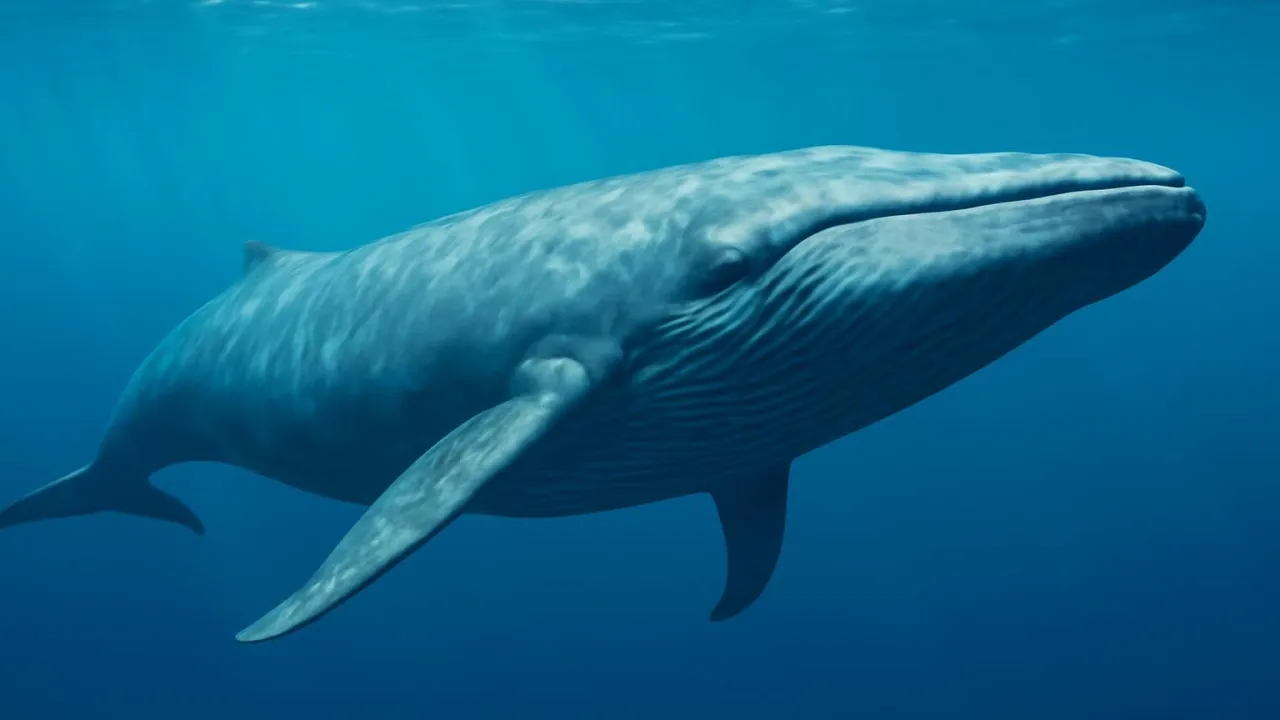
A blue whale’s tongue can weigh as much as an elephant!
✨ Word Sparks (Grade 2 Glossary)
Tap 🔊 to hear
krill
Tiny sea animals whales eat
mouth
Where animals eat food
ocean
Big water where whales swim
🪝
Have you ever wondered how the biggest animal eats tiny food?
1
Where They Live
Blue whales live in all around the world, mostly in cold waters. They swim long distances to find food. Sometimes they travel to warmer waters to have babies.
2
Eating Tiny Krill
Blue whales eat tiny by opening their huge wide. They take in lots of water and krill. Then they push the water out and keep the krill inside to eat.
3
Amazing Size
Blue whales can grow up to 100 feet long, which is longer than a school bus. Their tongues alone can weigh as much as an elephant. They are the largest animals ever known on Earth.
Blue whale calls can travel over 1,000 miles underwater!
✨ Word Sparks (Grade 3 Glossary)
Tap 🔊 to hear
baleen
Filter plates whales use to catch food
blubber
Thick fat that keeps whales warm
camouflage
Color that helps animals hide
🪝
How does the blue whale’s huge body help it survive in the ocean?
1
Giant Ocean Dweller
Blue whales live in oceans worldwide, especially in cold waters where krill are plentiful. Their massive size helps protect them from predators like orcas. They migrate thousands of miles to find food and warmer waters to give birth.
2
Feeding by Filter
Blue whales use plates to filter tiny krill from seawater. This adaptation lets them eat huge amounts of food efficiently. Their large mouths and expandable throat grooves allow them to take in massive water volumes.
3
Body Adaptations
Their blue-gray skin helps with in deep ocean water. The thick layer of keeps them warm in cold seas. Their strong tail flukes provide powerful swimming to travel long distances.
4
Communication and Survival
Blue whales produce loud, low-frequency sounds that travel far underwater. These sounds help them communicate and find mates across oceans. Their calls can be louder than a jet engine, aiding survival in vast habitats.
Blue whales help ocean health by recycling nutrients that support tiny plants.
✨ Word Sparks (Grade 4 Glossary)
Tap 🔊 to hear
ecosystem
All living things and their home
migration
Long travel to find food or babies
conservation
Protecting animals and their homes
🪝
What role does the blue whale play in ocean ecosystems and why is it important?
1
Worldwide Ocean Traveler
Blue whales inhabit oceans worldwide, mostly favoring cold polar and temperate waters where krill thrive abundantly. Their seasonal link different marine , moving nutrients across vast ocean distances and supporting food webs. These migrations are essential for connecting ecosystems and maintaining ocean health.
2
Feeding and Ecosystem Impact
By consuming tons of krill daily, blue whales regulate krill populations, which helps maintain balance in the marine food web. Their feeding also recycles nutrients through their fecal plumes, enriching surface waters and promoting phytoplankton growth. This nutrient recycling supports many other ocean creatures.
3
Human Impact and Conservation
Blue whales were heavily hunted in the 20th century, causing population declines worldwide. Today, international protections and whale sanctuaries help blue whale numbers recover, but ship strikes and noise pollution remain threats to their survival. efforts continue to be vital for their future.
4
Communication and Social Life
Blue whales use low-frequency calls for long-distance communication that supports mating and social bonding. These sounds are critical for navigation and finding others in the vast ocean, showing complex social behaviors important for species survival. Their communication helps them stay connected across great distances.
Blue whale vocalizations can be louder than a jet engine and heard over 1,000 miles away.
✨ Word Sparks (Grade 5 Glossary)
Tap 🔊 to hear
baleen
Filter plates used to catch tiny food
respiratory
Body system for breathing air
migration
Long travel to find food or babies
🪝
How do blue whales' anatomy and behavior reflect their place as the largest animals on Earth?
1
Taxonomy and Scientific Context
The blue whale, Balaenoptera musculus, belongs to the family Balaenopteridae and is the largest known animal species to have ever lived on Earth. As a whale, it lacks teeth and uses baleen plates to filter feed. Its evolutionary adaptations reflect millions of years of marine specialization and ecological success.
2
Physiological Mechanics
Blue whales can reach lengths up to 100 feet and weigh as much as 200 tons, with a heart the size of a small car pumping massive volumes of blood. Their system allows them to hold breath for up to 30 minutes while diving to depths over 500 meters to forage. Their muscular tail flukes generate powerful thrusts to propel their enormous bodies through water.
3
Conservation and Historical Impact
Once hunted nearly to extinction during the 20th century whaling era, blue whales have been protected internationally since the 1960s. Conservation efforts have helped populations slowly recover, though threats like ship collisions, entanglement in fishing gear, and ocean noise pollution still endanger their survival. Ongoing research and protection are crucial for their future.
4
Ecological Role and Quantitative Comparisons
Blue whales consume up to 4 tons of krill daily, significantly impacting ocean food webs by controlling krill populations. Their vocalizations can reach 188 decibels and travel over 1,000 miles underwater, facilitating communication across vast ocean expanses. Compared to other marine mammals, blue whales are unmatched in size and acoustic power.
5
Behavior and Migration Patterns
These whales undertake seasonal spanning thousands of miles between polar feeding grounds and tropical breeding areas. Their social behaviors include complex vocalizations and solitary or small group interactions, demonstrating advanced marine mammal intelligence. Their ability to navigate vast ocean distances is aided by their keen sensory adaptations.