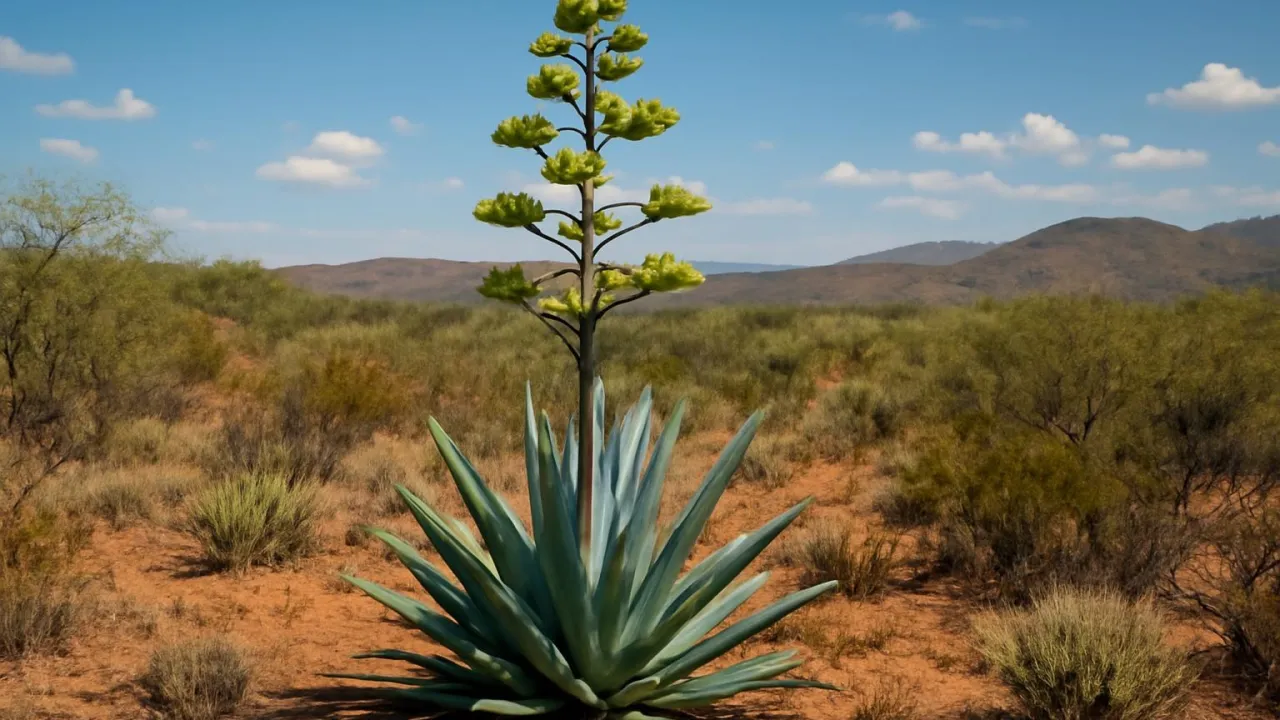
Blue agave leaves can grow up to 6 feet long and store water inside!
✨ Word Sparks (Grade 2 Glossary)
Tap 🔊 to hear
sharp
Having a thin, pointed edge or tip
desert
A dry place with little rain
juice
Sweet liquid inside plants or fruits
🪝
Have you ever seen a plant that looks like it has sharp swords?
1
Sharp Leaves and Color
The blue agave has long, leaves that look like swords. Its leaves are blue-green and thick. These leaves help the plant protect itself from animals.
2
Where It Grows
Blue agave grows in dry, hot places with lots of sun. It does not need much water to survive. It lives mostly in Mexico’s warm and hills.
3
Sweet Juice Inside
Inside the thick leaves, the blue agave stores sweet . People use this juice to make drinks like tequila. This makes the plant very special and useful.
Blue agave flowers only once after many years, then the plant dies.
✨ Word Sparks (Grade 3 Glossary)
Tap 🔊 to hear
adaptation
A change to survive better
pollinator
An animal that helps flowers make seeds
nectar
Sweet liquid made by flowers
🪝
Did you know the blue agave uses its spiky leaves to survive in dry places?
1
Adapted Leaves
The blue agave has thick, spiky leaves that store water to survive droughts. These leaves also protect the plant from predators like animals that want to eat it. This is a great example of in plants.
2
Dry Habitat
Blue agave grows in arid regions of Mexico where rainfall is very low. It thrives in hot sun and poor soil by using stored water and nutrients efficiently. This helps it survive where other plants might die.
3
Life Cycle and Growth
The blue agave grows slowly and flowers once in its lifetime before it dies. The tall flower stalk can reach up to 20 feet high and attracts like bats and insects. This helps the plant reproduce.
4
Sweet Nectar and Use
Inside the stalk, the plant produces sweet that people harvest to make tequila. This nectar is rich in sugars that come from the stored water and nutrients in the leaves. It is a valuable natural resource.
2. What animals help pollinate blue agave flowers?
🤯 Mind-Blowing Fact • Grade 4
Blue agave nectar feeds bats at night, helping pollinate the plant in deserts.
✨ Word Sparks (Grade 4 Glossary)
Tap 🔊 to hear
herbivore
An animal that eats plants
pollination
Moving pollen to make seeds
ecosystem
All living things in one place
🪝
How does the blue agave’s spiky leaves help it survive in the hot deserts of Mexico?
1
Water Storage and Protection
The blue agave’s thick, spiky leaves store water, allowing it to survive long dry periods in arid environments. These sharp leaves deter , which reduces damage from animals trying to eat the plant. This combination of water storage and defense is key to its survival. The leaves’ waxy coating also helps reduce water loss.
2
Role in the Ecosystem
Blue agave plays an important role in desert by providing nectar for pollinators like bats and insects. These pollinators help the plant reproduce by spreading pollen. In turn, the plant supports food webs by feeding these animals. It also helps prevent soil erosion with its root system.
3
Human Uses and Impact
Humans harvest the blue agave stalk to produce tequila, an important cultural and economic product in Mexico. Overharvesting can threaten wild populations, so sustainable farming practices are important to protect this species. Conservation efforts help balance use and preservation while maintaining biodiversity.
4
Geographic Distribution
The blue agave is native to central and western Mexico, especially in the states of Jalisco and Guanajuato. It thrives in semi-arid climates with rocky soils and full sun exposure. This specific habitat supports its growth and reproduction, making it a vital plant in these regions.
Blue agave uses CAM photosynthesis to save water, thriving where many plants cannot survive.
✨ Word Sparks (Grade 5 Glossary)
Tap 🔊 to hear
monocarpic
Flowers once then dies
CAM photosynthesis
A way plants save water
symbiotic
Two living things help each other
🪝
What unique adaptations allow the blue agave to thrive in Mexico’s arid climates and support important ecosystems?
1
Scientific Classification and Habitat
Blue agave, scientifically known as Agave tequilana, belongs to the Asparagaceae family and is native to Mexico’s semi-arid regions. It grows primarily in the states of Jalisco and Guanajuato, favoring rocky, well-drained soils with full sunlight exposure. This specific habitat provides the ideal conditions for its growth and reproduction.
2
Physiological Adaptations for Survival
The plant’s thick, fleshy leaves store significant amounts of water, enabling it to endure prolonged droughts common in its native environment. Its spiny leaf margins deter herbivores, reducing damage and conserving vital resources. Additionally, the blue agave uses , a water-efficient process that allows it to minimize water loss during hot days.
3
Reproductive Biology and Pollination
Blue agave is , meaning it flowers once after 8 to 12 years before dying. The towering flower stalk can reach up to 20 feet in height and produces abundant nectar that attracts nocturnal pollinators such as bats and various insects. This relationship ensures effective pollination and genetic diversity within populations.
4
Economic Importance and Conservation
The sweet sap harvested from the blue agave stalk is the primary ingredient in tequila, a globally recognized Mexican spirit. Due to high demand, cultivation practices have intensified, sometimes threatening wild populations. Conservation efforts focus on sustainable farming and protecting natural habitats to maintain biodiversity and cultural heritage.
5
Quantitative Comparisons and Growth Details
Blue agave plants typically reach heights between 6 and 10 feet, with leaves up to 6 feet long and flower stalks soaring up to 20 feet. They can survive in temperatures ranging from 50 to 95 degrees Fahrenheit and require minimal water compared to other plants. These remarkable traits highlight their exceptional adaptation to harsh environments.