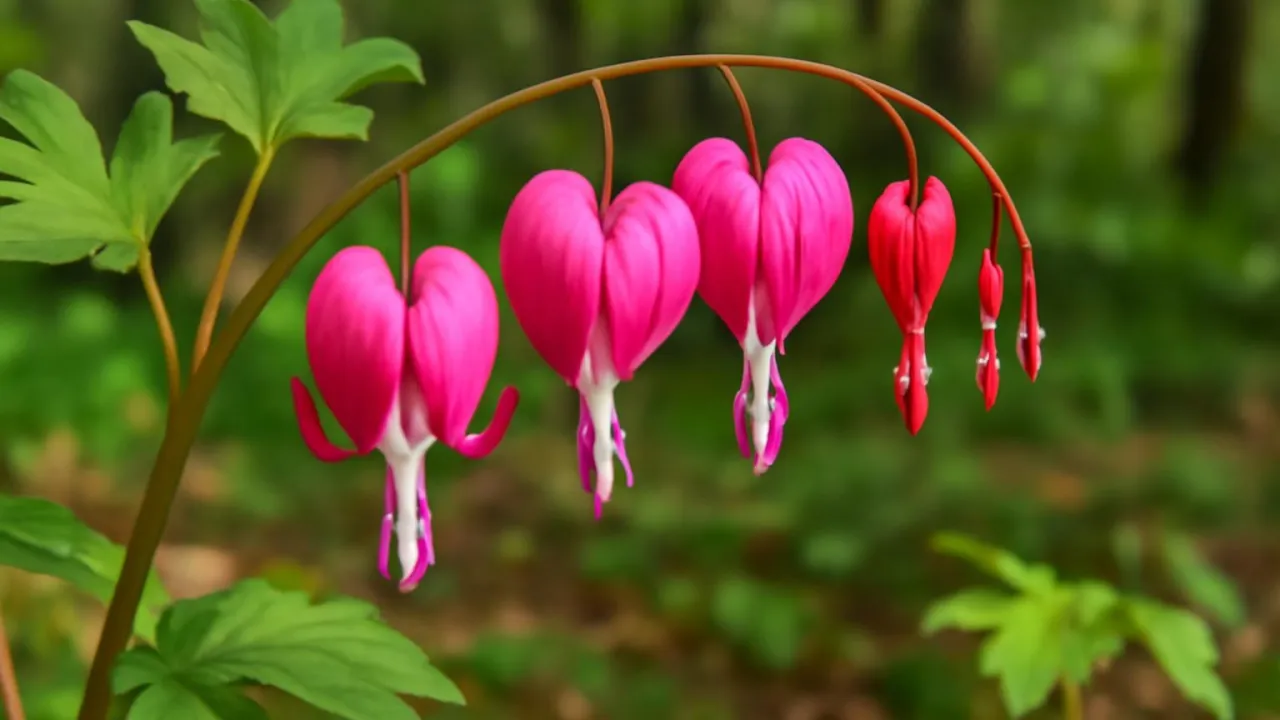
1. What shape does the bleeding heart flower look like?
2. Where does the bleeding heart flower like to grow?
🤯 Mind-Blowing Fact • Grade 2
Bleeding heart flowers drip nectar that looks like tiny drops of blood!
✨ Word Sparks (Grade 2 Glossary)
Tap 🔊 to hear
nectar
Sweet juice inside flowers for bugs.
pollinate
Help flowers make seeds by moving pollen.
shade
A cool place with little sunlight.
🪝
Have you ever seen a flower that looks like a heart?
1
A Flower That Looks Like a Heart
The bleeding heart flower has pink and white petals that hang like hearts. It grows on green stems that bend gently. Bees and butterflies often visit these flowers to drink .
2
Where It Lives and Grows
This flower grows in shady woodlands where the soil stays moist and cool. It needs partial to protect it from strong sunlight. The plant blooms in spring and early summer when temperatures are mild.
3
A Special Flower Feature
The bleeding heart flower looks like it is bleeding because of the red that drips from its petals. This nectar attracts insects that help the flowers. The shape and color help the flower stand out in the forest.
The bleeding heart’s nectar looks like tiny drops of blood to attract pollinators.
✨ Word Sparks (Grade 3 Glossary)
Tap 🔊 to hear
pollination
When pollen moves to help flowers make seeds.
adaptation
A change that helps plants or animals survive.
nectar
Sweet juice flowers make to attract bugs.
🪝
Why does the bleeding heart flower look like it is bleeding?
1
Heart-Shaped Flowers
The bleeding heart flower has heart-shaped petals that hang in a row from arching stems. This unique shape helps attract pollinators like bees and butterflies. The pink and white colors make the flower easy to see in shaded woodlands. The flower’s shape is an for survival.
2
Where It Grows
Bleeding hearts grow in cool, moist woodland habitats with partial shade. These conditions protect the delicate flowers from harsh sunlight and drying winds. The soil is rich in nutrients, which helps the plant grow strong roots. This habitat supports many other plants and animals.
3
How It Attracts Pollinators
The flower produces sweet that drips like tiny drops of blood, which attracts insects. Pollinators collect nectar and spread pollen from flower to flower, helping the plant reproduce. This process is called . The nectar’s color and sweetness are important survival tools.
4
Plant Adaptations
The bleeding heart’s arching stems keep flowers hanging downward, protecting from rain. Its leaves are divided and feathery, which helps reduce water loss. These help the plant survive in its woodland environment. It also fits into the food web by feeding insects.
Bleeding heart flowers help many pollinators and support woodland ecosystems worldwide.
✨ Word Sparks (Grade 4 Glossary)
Tap 🔊 to hear
symbiosis
A helpful relationship between living things.
biodiversity
Many different kinds of plants and animals.
pollinator
An animal that helps flowers make seeds.
🪝
How does the bleeding heart flower’s shape help it survive in the forest?
1
Unique Flower Shape and Colors
The bleeding heart flower’s heart-shaped petals hang in a row from curved stems, which help attract like bees and butterflies by making nectar easy to find. Its pink and white colors stand out in shaded woodland environments, increasing the chances of pollination. This flower shape is an important adaptation that helps the plant reproduce successfully.
2
Habitat and Growth Needs
Bleeding hearts thrive in cool, moist woodlands with partial shade, where the soil is rich and well-drained. These conditions protect the plant from harsh sunlight and drying winds, which could damage its delicate flowers and leaves. The plant grows best in spring and early summer, completing its life cycle before hot, dry weather arrives.
3
Role in the Ecosystem
This flower provides nectar that feeds many , including bees, butterflies, and hummingbirds, supporting the woodland food web. By attracting these animals, the bleeding heart helps pollinate other plants in the area, promoting . It also forms a symbiotic relationship with soil microbes that improve nutrient uptake, benefiting the entire ecosystem.
4
Human Impact and Distribution
Native to East Asia, the bleeding heart has been cultivated worldwide as an ornamental garden plant due to its unique flowers. However, habitat loss and climate change threaten some wild populations. Gardeners can help by planting bleeding hearts in shaded areas and protecting woodland habitats to support .
1. What role do bleeding heart flowers play in the ecosystem?
2. Why do gardeners plant bleeding hearts?
🤯 Mind-Blowing Fact • Grade 5
Bleeding heart flowers produce nectar that mimics blood drops to attract specific pollinators efficiently.
✨ Word Sparks (Grade 5 Glossary)
Tap 🔊 to hear
morphology
The shape and structure of living things.
perennial
A plant that lives for many years.
pollination
The process of moving pollen to make seeds.
🪝
What makes the bleeding heart flower a fascinating example of plant adaptation and ecological interaction?
1
Scientific Classification and Origins
The bleeding heart, scientifically known as Lamprocapnos spectabilis, belongs to the Papaveraceae family, native to the temperate woodlands of East Asia. It is a herbaceous plant that grows between 1 and 3 feet tall, with compound leaves and distinctive heart-shaped flowers. Its unique floral has fascinated botanists for centuries due to its specialized mechanisms.
2
Physiological Adaptations and Flower Mechanics
The plant’s arching stems bear pendulous flowers shaped like hearts, which secrete nectar resembling drops of blood to attract pollinators. The downward-facing flowers protect nectar from rain, ensuring pollinators can feed effectively. Its divided, fern-like leaves reduce water loss and maximize photosynthesis in shaded environments, demonstrating multiple adaptations to its woodland habitat.
3
Ecological Role and Conservation Status
Bleeding hearts play a vital role in woodland ecosystems by providing nectar to diverse pollinators such as bees, butterflies, and hummingbirds, facilitating and supporting biodiversity. Although widely cultivated as ornamental plants globally, wild populations face threats from habitat destruction and climate change, prompting conservation efforts in native regions.
4
Botanical History and Cultural Significance
First described scientifically in the 19th century, the bleeding heart has been valued in horticulture for its striking appearance and symbolic heart shape. It has cultural significance in several East Asian traditions, symbolizing love and compassion. Its popularity in gardens worldwide reflects both aesthetic appeal and botanical curiosity.
5
Quantitative Comparisons and Growth Conditions
Bleeding heart plants typically grow 30 to 90 centimeters tall and prefer temperatures between 55 and 75 degrees Fahrenheit for optimal growth. Their nectar production varies with humidity and temperature, influencing pollinator activity. Compared to other woodland flowers, bleeding hearts bloom earlier in spring, giving them a competitive advantage for .