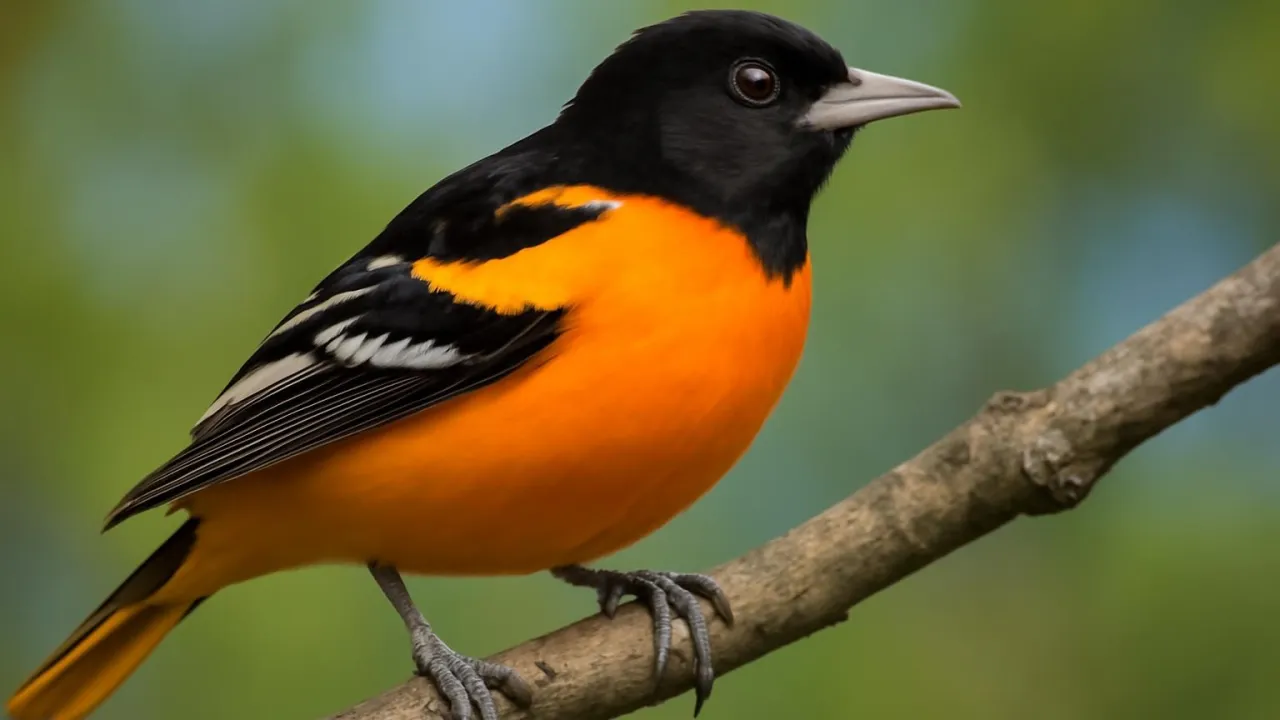
Baltimore Orioles weave hanging nests that swing gently in the wind for safety!
✨ Word Sparks (Grade 2 Glossary)
Tap 🔊 to hear
migrate
To move to a warmer place when seasons change
pollinate
Help flowers make seeds by moving pollen around
territory
An area a bird protects as its own home
🪝
Have you ever seen a bird with bright orange feathers singing in the trees?
1
Bright and Beautiful
The Baltimore Oriole has bright orange feathers with black wings and head. It sings clear, sweet songs to attract mates and mark its . Its sharp beak helps it catch insects and sip nectar from flowers.
2
Where It Calls Home
This bird lives in North American woodlands and parks during spring and summer. It builds a unique hanging nest made of woven fibers on tree branches. Orioles south to warmer places in fall to avoid cold weather.
3
What It Likes to Eat
Baltimore Orioles eat insects, nectar, and ripe fruit like oranges and berries. They help flowers while feeding on nectar. Their diet changes with the seasons to get needed nutrients.
1. What special nest does the Baltimore Oriole build?
2. Why do Baltimore Orioles migrate south?
🤯 Mind-Blowing Fact • Grade 3
Baltimore Orioles’ hanging nests reduce predator attacks by swinging away from tree trunks.
✨ Word Sparks (Grade 3 Glossary)
Tap 🔊 to hear
adaptation
A change that helps an animal survive better
pollination
When pollen moves to help plants make seeds
predator
An animal that hunts other animals for food
🪝
Did you know Baltimore Orioles use their bright colors and songs to survive and thrive?
1
Striking Colors and Song
Baltimore Orioles have bright orange feathers with black wings that help them stand out to mates. Their flutelike songs serve to mark territory and attract partners during breeding season. This colorful display is an important for survival.
2
Habitat and Nesting
These birds inhabit woodlands, parks, and gardens across North America during warmer months. They build unique hanging nests woven from plant fibers, which protect eggs from . This nest design is a clever to avoid ground dangers.
3
Diet and Role in Nature
Baltimore Orioles feed on insects, nectar, and fruit, playing a role in as they sip flower nectar. Their diet provides essential nutrients needed for energy and feather growth. They also help control insect populations, balancing their ecosystem.
4
Migration and Survival
Each fall, Baltimore Orioles migrate thousands of miles to Central and South America to escape cold winters. Migration is a survival strategy to find food and suitable climates year-round. Their body adapts to long flights with strong wing muscles and fat storage.
1. How do Baltimore Orioles protect their eggs from predators?
2. Why do Baltimore Orioles migrate south each fall?
🤯 Mind-Blowing Fact • Grade 4
Baltimore Orioles’ hanging nests swing to avoid predators, showing a clever survival strategy.
✨ Word Sparks (Grade 4 Glossary)
Tap 🔊 to hear
evolutionary
Changes over time that help animals survive better
food web
How animals and plants depend on each other for food
urbanization
When cities grow and take over natural places
🪝
Have you wondered how Baltimore Orioles use their bright colors and songs to survive in different places?
1
Color and Song: Survival Tools
Baltimore Orioles use their bright orange and black feathers as a visual signal to attract mates and warn rivals. Their melodious, flutelike songs serve multiple purposes, such as defending territory and strengthening pair bonds. These traits result from adaptations that improve reproductive success.
2
Nesting and Ecosystem Role
The species builds intricately woven hanging nests suspended from tree branches, which reduce predation risk by swinging away from predators. Orioles contribute to ecosystems by controlling insect populations and assisting in pollination when feeding on nectar. Their presence supports balanced in North American woodlands.
3
Migration Patterns and Geography
Baltimore Orioles breed throughout much of the eastern and central United States and southern Canada during summer months. They migrate thousands of miles to Central and South America for winter, demonstrating remarkable navigational skills. This migration allows them to exploit seasonal food resources and avoid harsh northern winters.
4
Human Impact and Conservation
and habitat loss threaten Baltimore Oriole populations by reducing available nesting sites and food sources. Conservation efforts include planting native trees and providing nectar feeders to support their diet. Public awareness helps protect these vibrant birds and maintain biodiversity in their habitats.
2. How does migration help Baltimore Orioles survive?
🤯 Mind-Blowing Fact • Grade 5
Baltimore Orioles migrate over 3,000 miles each year, crossing countries to find food and warmth.
✨ Word Sparks (Grade 5 Glossary)
Tap 🔊 to hear
plumage
The feathers covering a bird’s body
vocal apparatus
The bird’s body parts that help it sing
pesticide
Chemicals used to kill bugs that can harm birds
🪝
How do Baltimore Orioles’ bright feathers, songs, and long migrations help them thrive across continents?
1
Scientific Classification and Physical Traits
The Baltimore Oriole, scientifically named Icterus galbula, belongs to the family Icteridae, known for vibrant and melodious songs. Adult males display striking orange and black feathers, while females are duller with yellowish tones, aiding camouflage. Their slender, pointed beaks are specialized for feeding on nectar and insects efficiently. These physical traits help them survive in diverse environments.
2
Physiological Adaptations and Behavior
Baltimore Orioles possess strong flight muscles and fat reserves enabling long migratory journeys exceeding 3,000 miles. Their allows complex flutelike songs used in territory defense and mate attraction. The hanging nest construction reduces predation risk by suspending offspring away from ground-based predators. These behaviors increase their chances of survival and reproduction.
3
Migration, Habitat, and Geographic Range
These birds breed across eastern and central North America, favoring deciduous woodlands and suburban parks. Each autumn, they migrate to Central and northern South America, traveling at speeds up to 30 miles per hour. Migration timing aligns with seasonal food availability and temperature changes to optimize survival. Their impressive navigation skills ensure they reach suitable habitats.
4
Conservation Challenges and Human Interaction
Habitat loss from urban expansion and use threatens Baltimore Oriole populations by reducing insect prey and nesting sites. Conservation initiatives encourage planting native trees and providing nectar feeders to supplement diets. Public education on bird-friendly gardening supports population recovery and ecosystem health. Protecting these birds helps maintain biodiversity and healthy ecosystems.
5
Quantitative Comparisons and Ecological Impact
Baltimore Orioles weigh approximately 1.5 ounces (42 grams) and measure 7 to 8 inches (18 to 20 centimeters) in length. Their migration covers distances up to 3,000 miles annually, flying at speeds near 30 miles per hour. By controlling insect populations and pollinating flowers, they play a vital role in maintaining balanced ecosystems. Their ecological contributions benefit many other species.