Have you ever heard your voice bounce in a giant stone hall?
1
A Mosque Full of Echoes
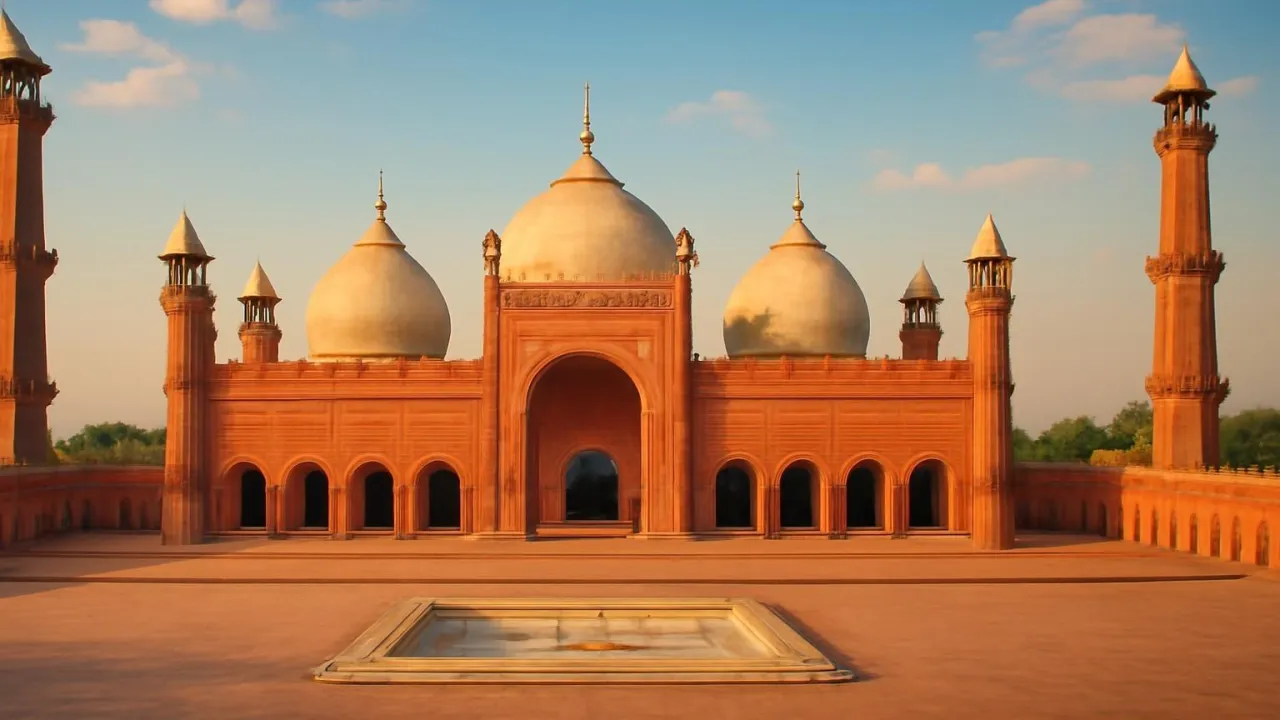
When you clap, the sound bounces off the red stone walls. The mosque has a huge open , and your voice echoes everywhere. People come here to pray, and they hear these echoes too.
2
Big Domes and Tall Towers
The mosque has three big white domes that shine in the sun. Four tall stand like guards at each corner. Builders used red to make it strong and beautiful.
3
A Place for Many People
Families and friends visit together, taking off their shoes at the gate. The is so big that thousands can pray at once. The cool stone floor feels nice under your feet.
The Badshahi Mosque was the largest mosque in the world for over 300 years!
✨ Word Sparks (Grade 3 Glossary)
Tap 🔊 to hear
arch
A curved shape that holds weight
acoustic
How sound moves in a space
monument
A building made to remember something
🪝
What secrets might a giant red mosque whisper if its walls could talk?
1
A Marvel of Mughal Design
The Badshahi Mosque stands tall with bright red sandstone and shining marble domes. Its huge courtyard can hold thousands of people who gather to pray together. Four minarets rise high, each built to help the call to prayer travel far. The mosque’s and domes create a space where sound vibrates and echoes beautifully.
2
Building with Stone and Skill
Mughal builders used special sandstone and marble to make the mosque strong and lasting. They carved patterns into the stone, making each wall a work of art. The use curved shapes to hold up heavy roofs without falling. This clever engineering lets the mosque stand for hundreds of years.
3
Echoes and Acoustics
If you speak or clap inside, sound waves bounce between the high . This is called resonance, making voices sound louder and fuller. The smooth floors and open spaces help the sound travel in every direction. Visitors love to listen to the echoes as they walk.
4
A Place for All
People from all over the world visit to see its beauty and history. The mosque is a to Mughal culture and faith. It is still used for prayers, festivals, and big gatherings today. Its red walls and white domes are a symbol of Lahore’s heart.
The mosque’s main prayer hall is decorated with hand-painted floral patterns and intricate calligraphy.
✨ Word Sparks (Grade 4 Glossary)
Tap 🔊 to hear
resonance
When sound gets louder and stronger
mortar
A paste that holds stones together
heritage
Something important passed down in history
🪝
Imagine your footsteps echoing beneath giant domes—how did builders create such a magical sound?
1
A Royal Wonder in Red
The Badshahi Mosque rises above Lahore with its striking red sandstone walls and gleaming white marble domes. Built by Emperor Aurangzeb in the 1670s, it became the largest mosque of the Mughal Empire. Its vast courtyard, surrounded by high walls and four minarets, can hold over 50,000 worshippers at once. The mosque’s design combines beauty, strength, and careful planning.
2
Engineering Marvels of the Mughal Era
Architects used massive sandstone blocks, marble inlays, and precise arches to support the mosque’s heavy domes and roofs. The minarets, each 176 feet tall, were engineered to withstand earthquakes and weather. Builders used interlocking stones and special to make the structure last for centuries. The grand entrance gate leads to a courtyard paved with cool, smooth bricks.
3
The Science of Sound and Space
Inside, the mosque’s domes and high arches create acoustic , allowing even a whisper to travel far. This effect happens because sound waves reflect off the curved surfaces, amplifying voices and prayers. The open courtyard and marble floors also help sound move smoothly, making the mosque feel alive with echoes. These acoustic features were carefully designed by Mughal engineers.
4
Legacy and Global Importance
Today, the Badshahi Mosque is a UNESCO World site, admired for its beauty and history. It remains a center for religious gatherings, cultural festivals, and tourism in Pakistan. The mosque stands as a symbol of Lahore’s rich Mughal heritage and architectural genius. Its red walls and white domes inspire visitors from all around the world.
1. How did builders make the mosque earthquake-resistant?
2. What makes sound travel so well in the mosque?
🤯 Mind-Blowing Fact • Grade 5
The Badshahi Mosque’s prayer hall is so acoustically perfect that a single human voice can be heard clearly by thousands without microphones.
✨ Word Sparks (Grade 5 Glossary)
Tap 🔊 to hear
pietra dura
Colorful stone inlay art in marble
seismic
Related to earthquakes or ground shaking
restoration
Fixing something to make it like new again
🪝
If you could measure every echo, what secrets would the Badshahi Mosque reveal about sound, stone, and history?
1
Mughal Majesty on the Lahore Skyline
As dawn breaks over Lahore, the Badshahi Mosque’s red sandstone glows with golden light, revealing intricate Mughal artistry. Commissioned by Emperor Aurangzeb and completed in 1673, the mosque was designed by architect Nawab Zain Yar Jang Bahadur to symbolize imperial power and religious devotion. Its monumental scale—278 feet square with four 176-foot minarets—made it the largest mosque in the world for centuries. The mosque’s harmonious blend of Persian, Central Asian, and Indian design elements reflects the cosmopolitan spirit of the Mughal Empire.
2
Structural Engineering and Material Science
The mosque’s primary construction material, red sandstone, was sourced from distant quarries and meticulously carved for both strength and beauty. White marble inlays and floral patterns decorate the prayer hall, while the three marble domes rest on sturdy arches engineered for optimal load distribution. The minarets are built with hollow cores and thick walls, allowing them to absorb vibrations and resist collapse during earthquakes. Special lime mortar binds the massive stones, ensuring the mosque’s resilience across centuries of weather and conflict.
3
Acoustics: The Science Behind the Echoes
Inside, the mosque’s domes and high-vaulted arches create a unique acoustic environment where even the softest prayer can be heard across the vast hall. This phenomenon, known as acoustic resonance, occurs when sound waves reflect off curved surfaces and reinforce each other, amplifying their intensity. The marble floor and open courtyard further enhance sound transmission, allowing the call to prayer to reach thousands without modern amplification. Mughal engineers intentionally designed these features to foster a sense of awe and unity among worshippers.
4
Historical Evolution and Cultural Significance
Throughout its history, the Badshahi Mosque has witnessed periods of glory, neglect, and . During the Sikh and British colonial eras, the mosque was repurposed as military barracks and storage, causing significant damage to its structure and artwork. Major restoration efforts in the 20th century, led by Pakistani architects and historians, revived its original splendor using traditional materials and techniques. Today, the mosque stands not only as a place of worship but also as a symbol of national pride and cultural resilience.
5
A Living Monument of Global Heritage
Recognized as a UNESCO World Heritage site, the Badshahi Mosque attracts millions of visitors annually, including architects, historians, and spiritual seekers. Its vast courtyard accommodates over 50,000 worshippers during major religious festivals, making it a focal point for communal gatherings. The mosque’s design principles have influenced religious architecture throughout South Asia and beyond, inspiring new generations of builders and artists. As sunlight dances on its red and white surfaces, the Badshahi Mosque continues to echo the stories of faith, innovation, and unity across centuries.