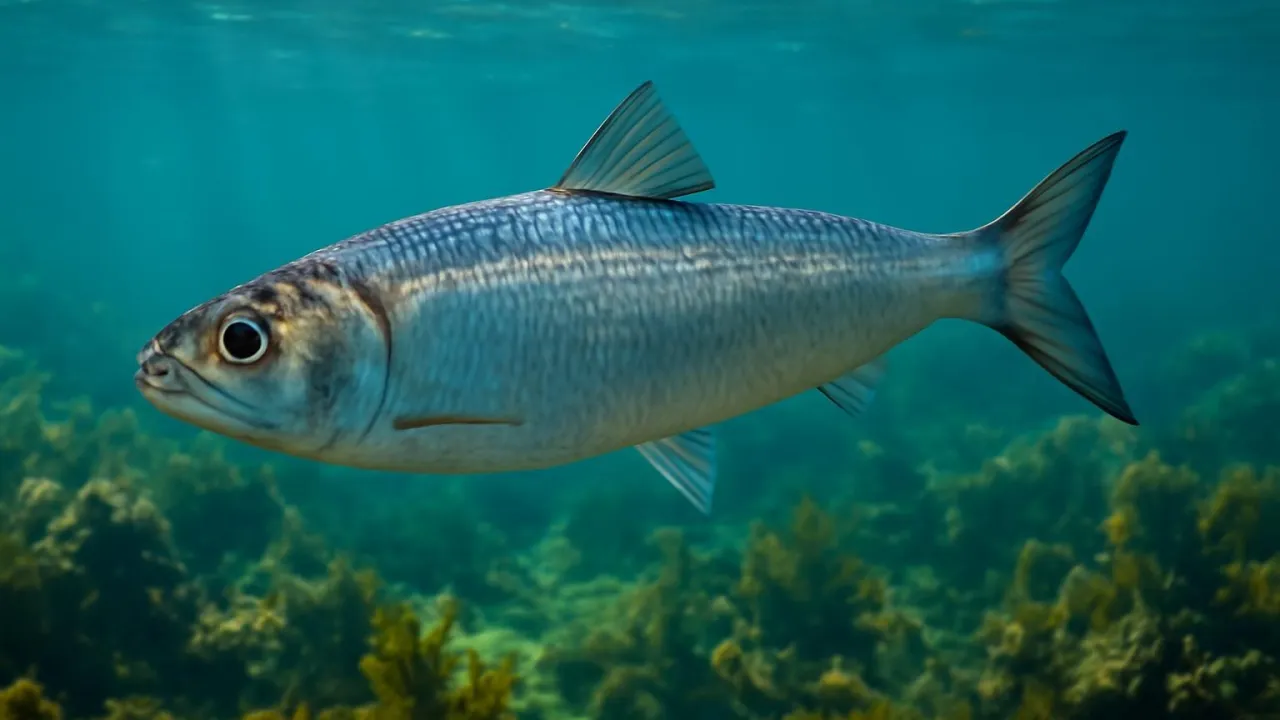
Some Atlantic herring schools can stretch for miles underwater!
✨ Word Sparks (Grade 2 Glossary)
Tap 🔊 to hear
school
A large group of fish swimming together
predator
An animal that hunts other animals
plankton
Tiny plants and animals floating in water
🪝
Have you ever seen fish swim together like a big team in the ocean?
1
Bright Silver Fish
Atlantic herring are shiny silver fish that live in cold ocean waters. They can grow up to sixteen inches long and swim very fast. Their bright scales help them hide from bigger fish by reflecting light.
2
Living in Big Groups
These fish live in large groups called that can have thousands of fish. Swimming in schools helps protect them from like bigger fish and seals. The schools move together in the ocean like a big silver cloud.
3
Eating Tiny Food
Atlantic herring eat small creatures called and tiny shrimp-like animals. They open their mouths wide to catch these tiny foods as they swim. Eating lots of plankton gives them energy to swim and grow.
1. What helps Atlantic herring hide from predators?
2. What do Atlantic herring eat?
🤯 Mind-Blowing Fact • Grade 3
Atlantic herring schools can be so large they are visible from space!
✨ Word Sparks (Grade 3 Glossary)
Tap 🔊 to hear
camouflage
Colors that help animals hide in their homes
adaptation
A trait that helps animals survive better
nutrients
Food parts that help animals grow strong
🪝
Did you know Atlantic herring can swim in huge groups called schools to stay safe?
1
Silver Fish with Shiny Scales
Atlantic herring have shiny silver scales that reflect light to them in water. This camouflage helps them avoid predators by blending into the ocean around them. Their streamlined bodies allow them to swim quickly through the water.
2
Swimming in Large Schools
These fish form large schools that can include thousands or even millions of individuals. Swimming in schools is an that confuses predators and reduces the chance any one fish will be caught. The schools move in coordinated patterns as if they are one big fish.
3
Feeding on Tiny Creatures
Atlantic herring feed mainly on plankton, which are tiny plants and animals floating in the ocean. They use their gill rakers to filter plankton from the water as they swim. This feeding method helps them get enough to grow and reproduce.
4
Life Cycle and Growth
Herring start life as eggs that hatch into larvae near coastal areas. The larvae grow into young fish that join schools for protection. As they mature, they migrate to deeper waters and can live up to 20 years in the wild.
Atlantic herring schools can contain billions of fish moving as one giant organism!
✨ Word Sparks (Grade 4 Glossary)
Tap 🔊 to hear
symbiosis
When animals help each other live better
ecosystem
All living things and places in one area
migration
Moving from one place to another seasonally
🪝
How does swimming in huge schools help Atlantic herring survive in the ocean?
1
Camouflage and Speed Protect Herring
Atlantic herring have shiny silver scales that reflect sunlight, creating camouflage that confuses predators. Their streamlined bodies allow them to swim quickly, helping them escape threats. This combination of speed and camouflage is vital for survival in open waters. These traits help herring avoid being caught by larger fish and seals.
2
Schools as a Defense Strategy
Herring form massive schools that can stretch for miles, creating a moving silver wall that confuses predators like seals and larger fish. This symbiotic behavior benefits each fish by reducing individual risk of being eaten. Schools also help herring find food more efficiently during feeding. The coordinated movement of schools makes it harder for predators to target single fish.
3
Role in the Ocean Ecosystem
Atlantic herring are a key food source for many predators, including whales, seabirds, and humans. They help transfer energy from tiny plankton up the food chain. Overfishing can disrupt this balance, showing how humans impact their populations and the . Protecting herring helps keep the ocean ecosystem healthy and balanced.
4
Where They Live and Migrate
These fish live in the North Atlantic Ocean, from the coasts of North America to northern Europe. They migrate seasonally to spawn in coastal waters and then move to deeper ocean areas to feed. Their patterns are important for maintaining healthy populations. These movements help herring find food and safe places to lay eggs.
2. Why is Atlantic herring important in the ocean ecosystem?
🤯 Mind-Blowing Fact • Grade 5
Atlantic herring schools are so huge they can be seen from space, moving like one giant fish!
✨ Word Sparks (Grade 5 Glossary)
Tap 🔊 to hear
lateral line
A fish's sense organ to detect water movement
keystone species
An important animal that helps balance nature
gill rakers
Fish parts that filter tiny food from water
🪝
What makes the Atlantic herring one of the most important fish in the North Atlantic Ocean?
1
Scientific Classification and Physical Traits
The Atlantic herring, scientifically named Clupea harengus, belongs to the Clupeidae family. It typically grows up to sixteen inches long and has a streamlined, silver body that reflects light to avoid predators. Its are specialized to filter tiny plankton from seawater efficiently. This fish’s body shape and scales are perfect adaptations for fast swimming and camouflage.
2
Physiological Adaptations for Survival
Atlantic herring have a system that detects water vibrations, allowing them to coordinate schooling behavior effectively. Their scales reflect sunlight, providing camouflage in the open ocean’s blue environment, which helps them evade predators. These adaptations improve their chances of survival and help maintain group cohesion when swimming in large schools.
3
Ecological Role and Human Impact
As a , Atlantic herring transfer energy from microscopic plankton to larger predators such as whales, seabirds, and commercial fish. Overfishing has caused population declines, leading to conservation efforts aimed at maintaining sustainable stocks and protecting marine ecosystems. Healthy herring populations are essential for ocean biodiversity and fisheries.
4
Migration Patterns and Life Cycle
Atlantic herring migrate seasonally from deep ocean feeding grounds to shallow coastal spawning areas, where females lay thousands of eggs on seaweed or gravel. Larvae hatch and grow near shore before joining schools and migrating to deeper waters. Their lifespan can reach up to twenty years, with migration patterns critical for reproduction and survival.
5
Quantitative Comparisons and Interesting Facts
Atlantic herring schools can contain billions of fish, stretching over miles and moving at speeds up to twenty miles per hour. They weigh about one pound on average and thrive in water temperatures between 37 and 59 degrees Fahrenheit. These massive schools are so dense and vast that they are visible from satellites in space, showcasing their incredible scale.