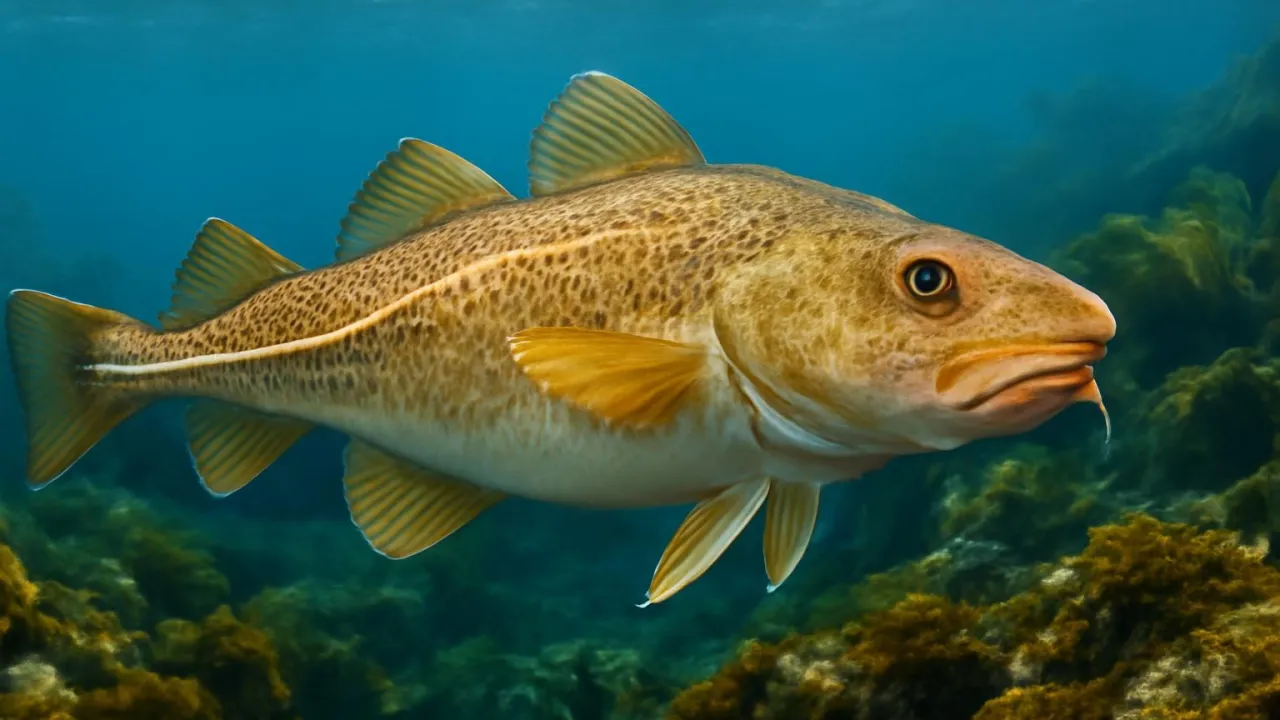
Atlantic cod can live up to 25 years and grow over 4 feet long!
✨ Word Sparks (Grade 2 Glossary)
Tap 🔊 to hear
barbel
A small whisker under a fish’s chin.
predator
An animal that hunts other animals.
hatch
When a baby fish comes out of an egg.
🪝
Have you ever wondered how fish live in icy cold oceans?
1
The Fish’s Home
Atlantic cod live in the cold North Atlantic Ocean. They swim near the ocean floor where it is chilly and dark. These fish like to hide around rocks and sandy bottoms to stay safe.
2
How They Grow
Atlantic cod start as tiny eggs that float in the water. When the eggs , young cod swim near the shore. As they grow bigger, they move to deeper, colder waters to find food.
3
A Special Body
The cod has a wide mouth and a under its chin. This barbel helps it feel for food in the dark ocean. Its body color helps it blend into the ocean floor to hide from .
Atlantic cod can grow up to 4 feet and weigh over 70 pounds in the wild!
✨ Word Sparks (Grade 3 Glossary)
Tap 🔊 to hear
camouflage
Colors or patterns that help hide animals.
nutrients
Food parts that help animals grow.
ecosystem
A community of plants and animals living together.
🪝
Did you know Atlantic cod use camouflage to hide from predators?
1
Cold Ocean Home
Atlantic cod live in the cold North Atlantic Ocean where temperatures stay low. They prefer deep waters near the ocean floor where they can find shelter. Their spotted bodies help them blend into rocky and sandy environments. This protects them from predators that hunt by sight.
2
Life Cycle and Growth
The life cycle of Atlantic cod begins with eggs floating in the water column. After hatching, the larvae drift near coastal areas to find . As they grow, cod develop strong muscles and larger fins to swim efficiently. These adaptations help them survive in colder, deeper waters.
3
Body Features and Adaptations
Atlantic cod have a barbel on their chin that acts like a sensory organ to detect prey. Their wide mouths allow them to catch a variety of small fish and crustaceans. Their bodies are streamlined to reduce water resistance while swimming. These adaptations help cod hunt and avoid predators in their environment.
4
Role in the Ecosystem
Atlantic cod are important predators in the ocean food web, feeding on smaller fish and invertebrates. They help control populations of prey species, maintaining balance in their . Cod are also prey for larger fish, seals, and humans. Their presence supports healthy marine biodiversity.
1. Why do Atlantic cod have spots on their bodies?
2. What is one role of Atlantic cod in the ocean?
🤯 Mind-Blowing Fact • Grade 4
Atlantic cod can survive in water temperatures as low as 28 degrees Fahrenheit due to unique body adaptations.
✨ Word Sparks (Grade 4 Glossary)
Tap 🔊 to hear
metabolism
How animals use energy to live and grow.
migration
Animals moving to new places for food or breeding.
conservation
Protecting animals and nature from harm.
🪝
How does the Atlantic cod survive and thrive in cold ocean waters?
1
Adaptations to Cold Waters
Atlantic cod have special body features that allow them to survive in cold, deep waters where temperatures often drop below freezing. Their thick layer of fat helps insulate them against the cold, and their slow conserves energy. These adaptations enable cod to live in environments that many other fish cannot tolerate.
2
Ecosystem Role and Food Web
As a key predator, Atlantic cod control populations of smaller fish and invertebrates, which helps maintain a balanced ecosystem. They also serve as prey for larger marine animals like seals and sharks, creating an important link in the ocean food web. Human fishing impacts cod populations, which can affect the entire marine ecosystem.
3
Geographic Distribution
Atlantic cod are found throughout the North Atlantic Ocean, from the coasts of North America to northern Europe. They prefer colder waters and are commonly found at depths ranging from 200 to 600 feet. Seasonal occur as cod move to spawning grounds during the winter months.
4
Human Impact and Conservation
Overfishing has greatly reduced Atlantic cod populations in many areas, leading to efforts and fishing regulations. Scientists study cod to understand how to protect them and support sustainable fishing. These efforts aim to restore cod numbers and preserve their role in marine ecosystems for future generations.
2. What is one effect of overfishing Atlantic cod?
🤯 Mind-Blowing Fact • Grade 5
Atlantic cod blood contains antifreeze proteins that prevent ice crystals in freezing ocean waters.
✨ Word Sparks (Grade 5 Glossary)
Tap 🔊 to hear
demersal
Fish that live near the ocean floor.
antifreeze proteins
Special proteins that stop ice from forming in blood.
spawning
When fish lay eggs in the water.
🪝
What makes the Atlantic cod a scientifically fascinating species in cold marine environments?
1
Scientific Classification and Habitat
Atlantic cod, scientifically known as Gadus morhua, belong to the family Gadidae and inhabit the cold waters of the North Atlantic Ocean. They are fish, living near the ocean floor at depths ranging from 20 to over 600 meters. Their distribution spans from the eastern coast of North America to northern Europe, adapting to a wide range of cold marine environments.
2
Physiological Adaptations
The Atlantic cod possesses physiological adaptations such as in its blood, which prevent ice crystal formation in subzero temperatures. Their thick subcutaneous fat layer provides insulation, while a slow metabolic rate conserves energy in nutrient-poor cold waters. Additionally, their sensory barbels aid in detecting prey on dark ocean floors, enhancing feeding efficiency.
3
Reproductive Biology and Life Cycle
Cod reproduce by releasing millions of buoyant eggs into the water column during seasons, typically in winter. The larvae hatch and drift with ocean currents toward coastal nurseries where they find abundant nutrients. Growth rates vary with temperature and food availability, with some individuals reaching lengths over 1.2 meters and weights exceeding 40 kilograms.
4
Conservation History and Human Impact
Historically, Atlantic cod supported major commercial fisheries but suffered dramatic population declines due to overfishing in the 20th century. Conservation measures, including fishing quotas and protected areas, have been implemented to promote recovery. Ongoing scientific monitoring assesses stock health and guides sustainable management practices to balance ecological and economic interests.
5
Quantitative Comparisons and Ecological Role
Atlantic cod can grow up to 4 feet (1.2 meters) and weigh over 70 pounds (32 kilograms), making them one of the largest predatory fish in their ecosystem. They swim at speeds up to 5 miles per hour (8 kilometers per hour) while hunting small fish, crustaceans, and mollusks. Their presence significantly influences prey populations, contributing to marine biodiversity and ecosystem stability.