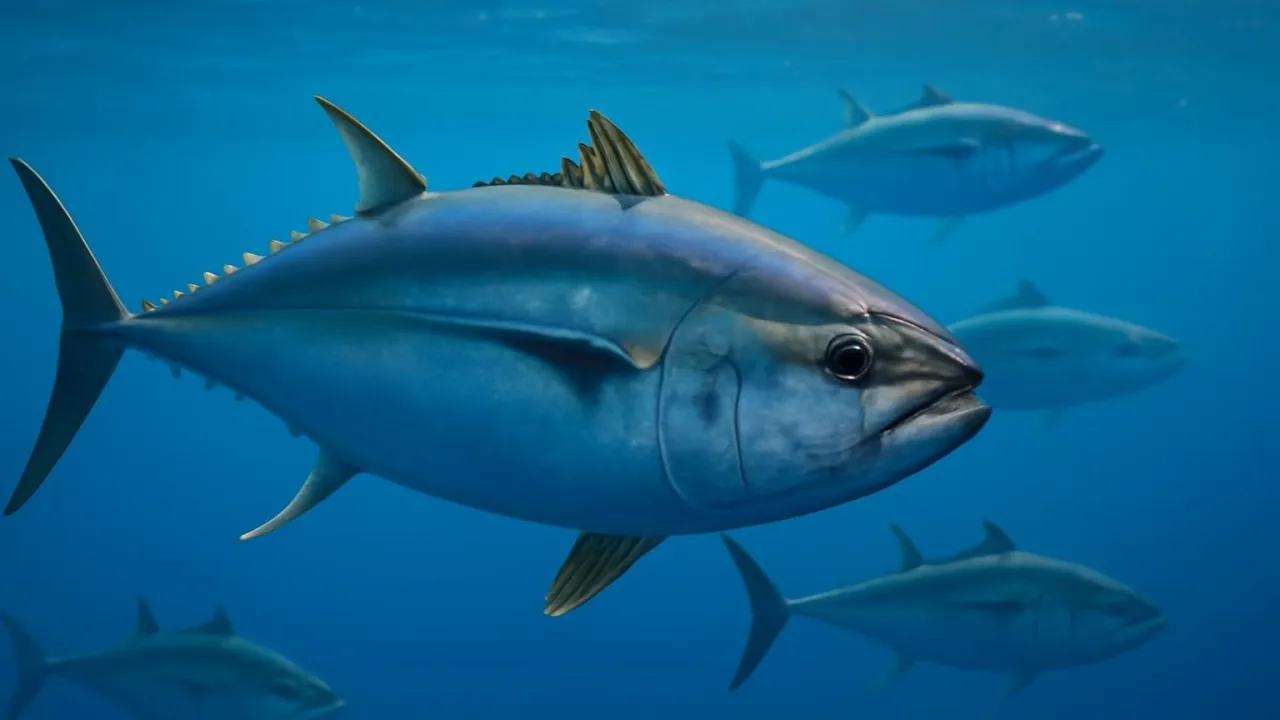
Atlantic bluefin tuna can swim faster than most cars on city streets!
✨ Word Sparks (Grade 2 Glossary)
Tap 🔊 to hear
predator
An animal that hunts other animals for food
muscles
Parts of the body that help animals move
prey
An animal that is hunted and eaten
🪝
Have you ever wondered how fast a fish can swim underwater?
1
Speedy Swimmer
The Atlantic bluefin tuna can swim very fast in the ocean water. It uses its strong tail to move quickly. This fish can reach speeds up to 45 miles per hour while hunting. Its shiny blue body helps it blend into the sea.
2
Big Ocean Fish
Bluefin tuna can grow very large, sometimes up to 10 feet long. They live in the North Atlantic Ocean and the Mediterranean Sea. These fish travel long distances to find food and warmer water. They are strong swimmers with powerful .
3
Hungry Hunter
This tuna eats smaller fish and squid to get energy. It uses its sharp teeth to catch . Bluefin tuna must eat a lot to stay fast and healthy. It is an important in the ocean food chain.
2. What does the bluefin tuna use to catch its food?
🤯 Mind-Blowing Fact • Grade 3
Bluefin tuna can regulate their body temperature, staying warmer than the surrounding water.
✨ Word Sparks (Grade 3 Glossary)
Tap 🔊 to hear
camouflage
Colors that help animals hide in their home
migration
Long travel to find food or a safe place
larvae
Baby fish that look different from adults
🪝
Did you know the Atlantic bluefin tuna is one of the fastest fish in the ocean?
1
Amazing Speed and Camouflage
The Atlantic bluefin tuna can swim up to 45 miles per hour, making it one of the fastest fish. Its sleek, streamlined body reduces water resistance, allowing quick movement. The blue and silver colors help it in the ocean water. This adaptation helps it avoid predators and sneak up on prey.
2
Large Size and Powerful Muscles
Bluefin tuna can grow up to 10 feet long and weigh over 1,000 pounds. Their strong muscles provide the power needed for long-distance swimming. These muscles also help the fish maintain body heat, which is unusual for most fish. This ability allows them to live in colder waters.
3
Diet and Hunting Skills
This fish is a top predator that hunts smaller fish and squid for food. It uses sharp teeth to catch and hold slippery prey. Bluefin tuna often hunt in groups to corner their prey more easily. Their excellent eyesight helps them spot food from far away.
4
Life Cycle and Migration
Atlantic bluefin tuna migrate thousands of miles to spawn in warm waters. Their eggs hatch into tiny that grow quickly by eating plankton. As they mature, they move to cooler waters to hunt and grow larger. This helps them find the best places to survive.
1. How does the bluefin tuna’s body help it swim fast?
2. Why do bluefin tuna migrate long distances?
🤯 Mind-Blowing Fact • Grade 4
Atlantic bluefin tuna can maintain body temperatures up to 15°F warmer than surrounding water.
✨ Word Sparks (Grade 4 Glossary)
Tap 🔊 to hear
ecosystem
All living and nonliving things in one place
conservation
Protecting animals and their homes
spawning
When fish lay eggs to make babies
🪝
What makes the Atlantic bluefin tuna a key player in ocean ecosystems?
1
Speed and Adaptations
The Atlantic bluefin tuna’s ability to swim up to 45 miles per hour results from its streamlined body and powerful tail fin, which reduce drag and increase thrust. Its counter-shaded coloring, with a dark blue top and silvery belly, provides camouflage that helps avoid predators and sneak up on prey. This fish also has a unique ability to regulate its body temperature, allowing it to survive in colder waters where other fish cannot.
2
Role in the Food Web
As a top predator, the bluefin tuna plays a critical role in controlling populations of smaller fish and squid, maintaining balance in the ocean food web. Its hunting helps prevent any one species from becoming too numerous, which supports healthy . Humans also rely on bluefin tuna for food, which has led to overfishing concerns and the need for efforts.
3
Migration and Breeding
Atlantic bluefin tuna undertake long migrations across the North Atlantic Ocean and Mediterranean Sea to reach warm grounds. These migrations are essential for reproduction and survival of the species. Spawning occurs in specific areas where water temperatures are ideal for egg development. The young grow rapidly and eventually join adult populations in cooler waters.
4
Geographic Distribution and Human Impact
This species is found mainly in the western and eastern North Atlantic Ocean and Mediterranean Sea, adapting to a range of temperatures. Overfishing has severely reduced bluefin tuna populations, prompting international regulations to protect them. Sustainable fishing practices and marine protected areas are vital to ensure the species’ survival and maintain ocean biodiversity.
1. Why is the bluefin tuna important in the ocean food web?
2. What human activity threatens bluefin tuna populations?
🤯 Mind-Blowing Fact • Grade 5
Atlantic bluefin tuna can swim up to 45 miles per hour, faster than many ocean animals and some cars!
✨ Word Sparks (Grade 5 Glossary)
Tap 🔊 to hear
endothermy
Ability to keep body warm inside
rete mirabile
Special blood vessels that keep heat inside
pelagic
Living in open ocean waters far from land
🪝
How does the Atlantic bluefin tuna’s biology make it a remarkable ocean predator and conservation challenge?
1
Taxonomy and Scientific Classification
The Atlantic bluefin tuna, scientifically named Thunnus thynnus, belongs to the family Scombridae, which includes mackerels and other tunas. It is one of the largest species in the genus Thunnus, characterized by a robust, streamlined body adapted for high-speed swimming. This species has evolved physiological traits that distinguish it from other tunas, such as regional , allowing it to regulate its body temperature.
2
Physiological Adaptations and Mechanics
Atlantic bluefin tuna possess a unique vascular system called the that conserves metabolic heat, enabling them to maintain body temperatures up to 15 degrees Fahrenheit warmer than surrounding waters. This adaptation enhances muscle efficiency and swimming speed in cold environments. Their crescent-shaped tail fin provides powerful thrust, while their hydrodynamic body shape minimizes drag, allowing bursts of speed up to 45 miles per hour.
3
Conservation Status and Human Impact
Due to intense commercial fishing pressure, Atlantic bluefin tuna populations have declined significantly, leading to their classification as endangered by the International Union for Conservation of Nature. Overfishing, driven by high demand for sushi and sashimi markets, threatens their long-term survival. Conservation efforts include international quotas, fishing bans during spawning seasons, and the establishment of marine protected areas to facilitate population recovery.
4
Migration Patterns and Life Cycle
Atlantic bluefin tuna undertake extensive transoceanic migrations between spawning grounds in the Mediterranean Sea and feeding areas in the North Atlantic. They spawn in warm waters during spring and early summer, producing millions of tiny eggs that hatch into larvae. Juveniles grow rapidly, feeding on plankton and small fish, before migrating to cooler waters as adults. These migrations are critical for genetic diversity and species resilience.
5
Quantitative Comparisons and Ecological Role
An adult Atlantic bluefin tuna can weigh over 1,000 pounds and measure up to 10 feet in length, making it one of the largest predators. Its swimming speed of 45 miles per hour rivals that of some of the fastest marine mammals. As an apex predator, it regulates populations of smaller fish and squid, maintaining oceanic food web balance. These ecological roles underscore the importance of sustainable management to preserve marine biodiversity.