Aoraki / Mount Cook
Sky-High Peaks and Ancient Glaciers Await
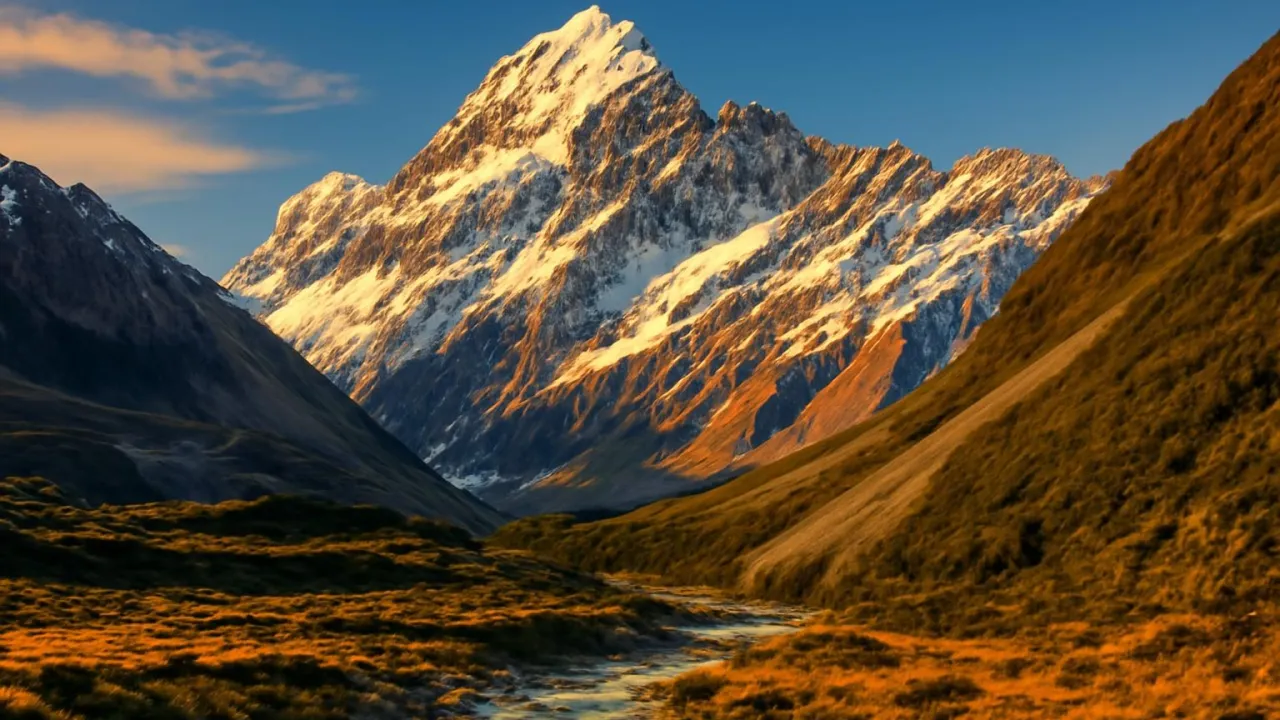
Aoraki’s Tasman Glacier contains enough ice to fill over 20 billion bathtubs!
1 Geological Origins and Mountain Building
Aoraki / Mount Cook’s dramatic height is the result of millions of years of tectonic uplift along the Alpine Fault, where the Pacific and Indo-Australian plates collide. The Southern Alps, including Aoraki, began rising about 10 million years ago, but the mountain itself continues to grow a few millimeters each year due to ongoing geological forces. Earthquakes and landslides frequently reshape its slopes, while weathering and gradually wear down the rock. The summit, once measured at 12,349 feet (3,764 meters), lost about 30 meters in 1991 after a massive rock and ice collapse, giving its current height of 12,218 feet (3,724 meters).
2 Glacial Dynamics and Landscape Shaping
Aoraki’s most impressive feature is the Tasman Glacier, which stretches 14 miles (23 kilometers) and is up to 2,000 feet (600 meters) thick in places. Glaciers act as powerful agents of , grinding and sculpting the mountain’s valleys into classic U-shapes. Seasonal cycles of snowfall and melting drive the glacier’s movement, while climate change has accelerated its retreat in recent decades. Scientists use satellite imagery and on-site measurements to monitor glacial mass, flow rates, and sediment transport, providing insights into both past and future landscape evolution.
3 Ecology: Adaptation to Extreme Conditions
The alpine and subalpine zones of Aoraki support a remarkable array of species, including the Mount Cook buttercup, the world’s largest buttercup, and the bold, intelligent kea parrot. These organisms have evolved and behavioral adaptations, such as antifreeze proteins in plants and problem-solving skills in birds, to survive freezing temperatures, high UV exposure, and limited food sources. Conservationists work to protect these fragile ecosystems from threats like invasive species, tourism impacts, and shifting climate patterns.
4 Cultural Significance and Māori Heritage
For the Ngāi Tahu Māori tribe, Aoraki is not just a mountain but a revered ancestor, central to their creation stories and identity. The name Aoraki means ‘Cloud Piercer’ in Māori, reflecting both its physical prominence and spiritual importance. In 1998, the mountain’s official name was changed to Aoraki / Mount Cook to honor this heritage. Collaborative management between the Māori and the New Zealand government ensures that both cultural values and natural resources are protected for future generations.
5 Aoraki Today: Adventure, Science, and Global Impact
Aoraki / Mount Cook National Park attracts thousands of climbers, hikers, and scientists each year, drawn by its challenging terrain, unique biodiversity, and breathtaking scenery. The mountain’s extreme weather and technical climbing routes have made it a training ground for mountaineers, including Sir Edmund Hillary before his Everest ascent. Ongoing research on glacial retreat, alpine ecology, and geological activity at Aoraki contributes to our understanding of climate change and mountain environments worldwide. The mountain stands as a symbol of both natural wonder and the need for global stewardship.
1. How do scientists track changes in Aoraki’s glaciers over time?
2. Why is Aoraki’s name written as Aoraki / Mount Cook today?