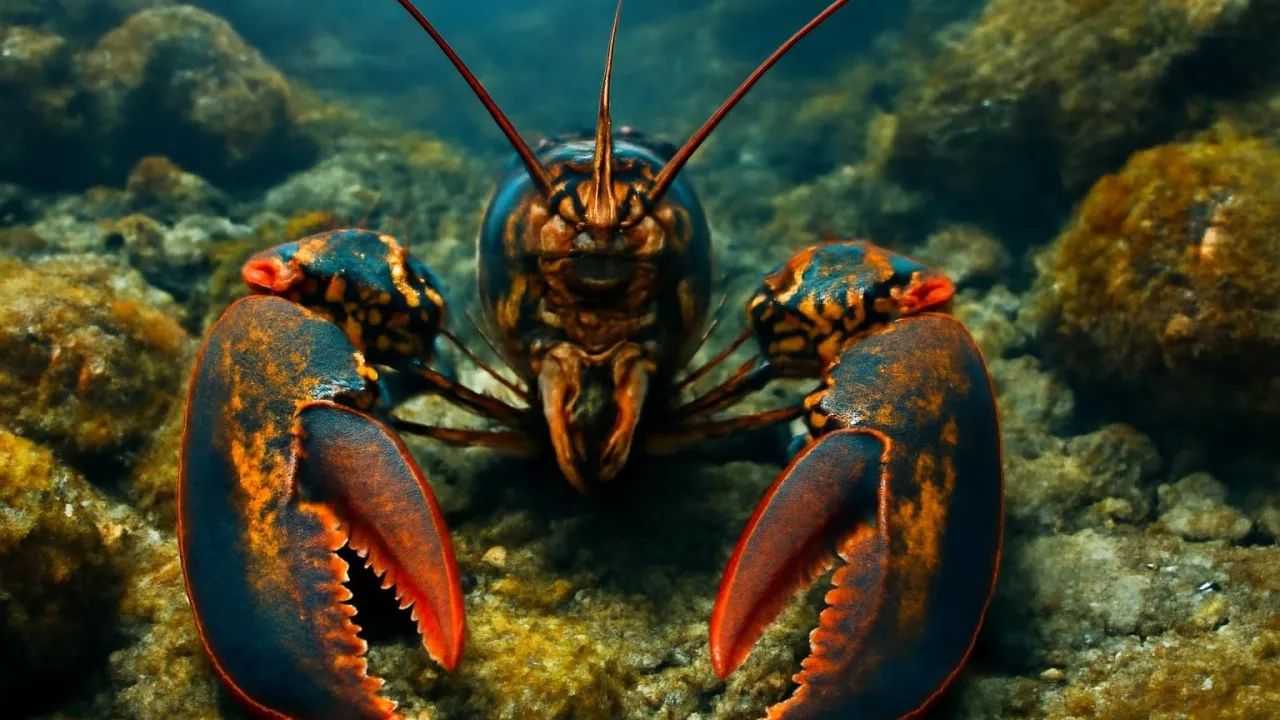
Lobsters can grow new claws if they lose one in a fight or accident.
✨ Word Sparks (Grade 2 Glossary)
Tap 🔊 to hear
predator
An animal that hunts other animals for food
scavenger
An animal that eats dead plants or animals
crush
To press or squeeze something very hard
🪝
Have you ever seen a lobster with giant claws in the ocean?
1
Lobster’s Strong Claws
American lobsters have two big claws that help them catch and food. Their claws are very strong and different sizes. One claw is sharp for cutting, and the other is big for crushing shells. Lobsters use claws to protect themselves from danger.
2
Where They Live and Hide
Lobsters live in cold, rocky ocean areas along the North Atlantic coast. They hide in cracks and holes during the day to stay safe from . At night, they come out to look for food. Lobsters like water that is salty and cool.
3
What Lobsters Eat
Lobsters eat many things like fish, clams, and sea plants. They use their claws to break open shells and catch small animals. Lobsters are and also eat dead plants and animals on the ocean floor. Their diet helps keep the ocean clean.
Lobsters can live more than 50 years and grow as big as 3 feet long.
✨ Word Sparks (Grade 3 Glossary)
Tap 🔊 to hear
camouflage
Colors or patterns that help animals hide
molting
Shedding old shell to grow a new one
omnivore
An animal that eats plants and animals
🪝
Did you know lobsters can grow back lost claws to survive better?
1
Amazing Claws and Adaptations
American lobsters have two different claws called crusher and cutter claws. The crusher claw is large and strong for breaking shells, while the cutter claw is sharp for slicing prey. These claws help lobsters catch food and defend themselves from predators. This adaptation improves their chances of survival in the wild.
2
Habitat and Camouflage
Lobsters live on rocky ocean floors along the North Atlantic coast where water is cold. Their dark greenish-blue shells help them blend into the ocean rocks, a type of that protects them from predators. They hide in crevices during the day and hunt at night. This behavior helps lobsters avoid danger and find food.
3
Diet and Role in the Ecosystem
Lobsters are that eat fish, clams, seaweed, and dead animals on the ocean floor. They use their claws to crack open shells and catch small creatures. By eating dead plants and animals, lobsters help clean the ocean floor and recycle nutrients. This makes them important members of their marine ecosystem.
4
Life Cycle and Growth
Lobsters hatch from eggs and grow by shedding their shells in a process called . Young lobsters hide in shallow waters to avoid predators. As they grow, they move to deeper ocean areas. Molting allows lobsters to increase in size and repair damaged body parts like claws.
American lobsters can regenerate lost claws and legs during molting cycles.
✨ Word Sparks (Grade 4 Glossary)
Tap 🔊 to hear
overfishing
Catching too many animals and hurting their numbers
scavenging
Eating dead plants and animals in nature
reproduction
How animals have babies and make more of their kind
🪝
How do American lobsters survive and thrive in cold ocean waters?
1
Claws and Survival Strategies
American lobsters have two specialized claws that allow them to catch prey and defend themselves effectively. The crusher claw is large and powerful, capable of breaking hard shells, while the cutter claw is sharper and used for slicing. This division of labor between claws helps lobsters adapt to their environment and survive against predators. Their strong claws also help them compete for food and mates.
2
Ecosystem Role and Human Impact
Lobsters play a crucial role in the marine food web by controlling populations of smaller animals and recycling nutrients through . They serve as prey for larger fish, octopuses, and humans. Lobster fishing is economically important but must be managed carefully to avoid . Conservation efforts include size limits and protected seasons to keep lobster populations healthy.
3
Habitat and Geographic Range
American lobsters inhabit the cold, rocky bottoms of the North Atlantic Ocean, from Canada to the mid-Atlantic United States. They prefer water temperatures between 45 and 60 degrees Fahrenheit and depths from shallow coastal areas to over 500 feet deep. Their ability to hide in rocky crevices and use camouflage helps them avoid predators. Seasonal movements allow them to find food and mates.
4
Growth, Molting, and Reproduction
Lobsters grow by molting their shells, a process that becomes less frequent as they age. Females carry eggs for nearly a year before hatching, and young lobsters spend their early life in shallow waters to avoid predators. This life cycle ensures that enough young survive to maintain the population. Molting also allows lobsters to regenerate lost limbs, an important adaptation for survival.
1. Why is it important to manage lobster fishing carefully?
2. How do lobsters grow bigger over time?
🤯 Mind-Blowing Fact • Grade 5
American lobsters can live over 50 years and regrow lost limbs multiple times through molting.
✨ Word Sparks (Grade 5 Glossary)
Tap 🔊 to hear
exoskeleton
A hard outer shell that protects the lobster’s body
molting
Shedding old shell to grow a new, bigger one
sustainable
Using resources carefully to keep them long-term
🪝
What fascinating adaptations help the American lobster thrive for decades in the ocean?
1
Taxonomy and Scientific Classification
The American lobster, scientifically named Homarus americanus, belongs to the family Nephropidae within the order Decapoda. This crustacean is closely related to other lobsters and crayfish but is distinct due to its large claws and marine habitat. Understanding its taxonomy helps scientists study its evolutionary relationships and ecological role in the North Atlantic Ocean.
2
Physiological Mechanics of Claws and Movement
American lobsters possess two morphologically distinct claws: a crusher claw that exerts tremendous force to break shells, and a cutter claw designed for precision slicing. Their muscular tail enables rapid backward swimming to escape predators. Lobsters breathe through gills located under their carapace, which extract oxygen efficiently from cold, oxygen-rich ocean water.
3
Conservation and Fisheries Management
Due to their economic importance, American lobsters are subject to strict fisheries management practices including size limits, trap restrictions, and seasonal closures. These regulations aim to prevent overfishing and ensure populations. Conservation efforts also focus on habitat protection and monitoring lobster health in response to climate change impacts.
4
Growth, Molting, and Regeneration
Lobsters grow by periodically their , a complex physiological process that allows them to increase in size and regenerate lost limbs such as claws and legs. Molting frequency decreases with age, but this adaptation is crucial for survival and recovery from injuries sustained during fights or predator attacks.
5
Quantitative Comparisons and Habitat Range
American lobsters can reach lengths up to 3 feet (1 meter) and weigh over 40 pounds (18 kilograms). They inhabit depths ranging from shallow coastal waters to over 500 feet (150 meters), preferring temperatures between 45 and 60 degrees Fahrenheit (7 to 15 degrees Celsius). Their longevity can exceed 50 years, making them one of the longest-living marine crustaceans.