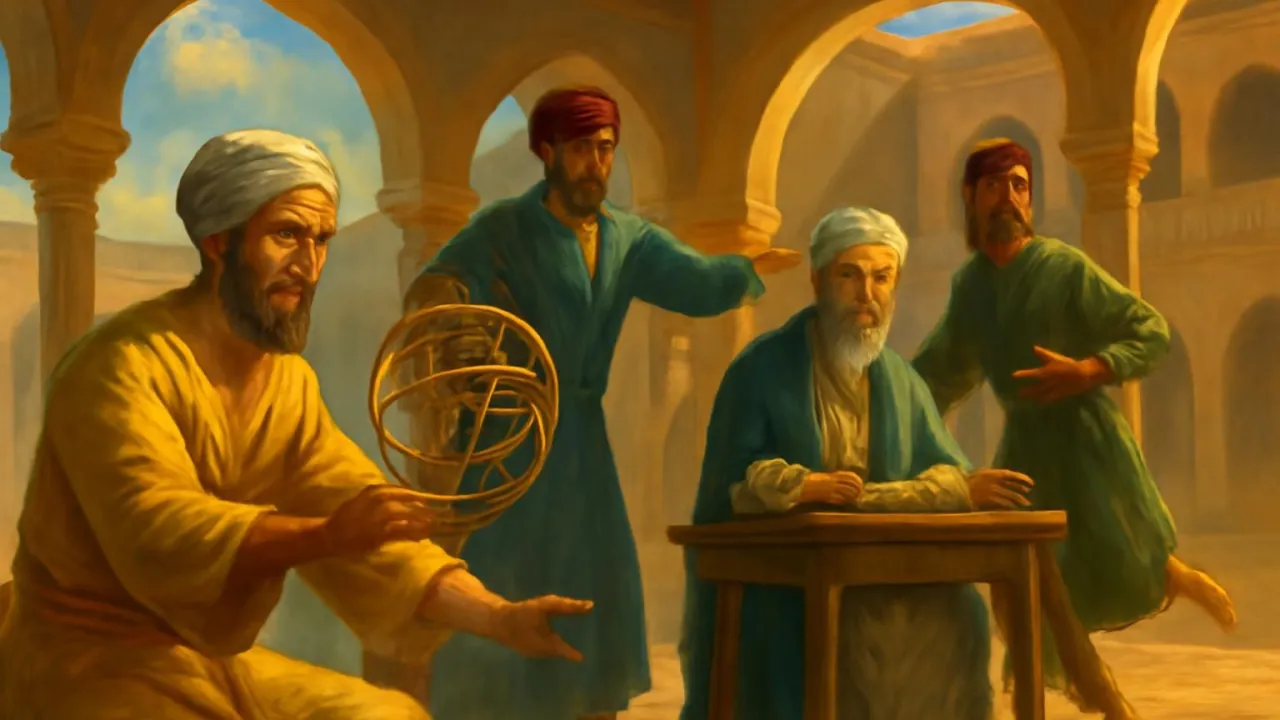
Al-Zahrawi’s book included drawings of over 200 surgical instruments.
✨ Word Sparks (Grade 2 Glossary)
Tap 🔊 to hear
curious
Wanting to learn or know about something
invented
Made something new that did not exist before
surgery
Doctors fixing the body by using tools carefully
🪝
How did Al-Zahrawi’s inventions help doctors long ago?
1
Curious About Healing
As a child, Al-Zahrawi was about how the body works and heals. He studied hard to learn about medicine and . He practiced using tools carefully to help people feel better.
2
Inventing New Surgical Tools
Al-Zahrawi many new surgical tools that made operations safer and easier. He shared his ideas with other doctors by writing a big book. His inventions helped doctors save many lives.
3
A Lasting Achievement
His book, called Al-Tasrif, was used by doctors for hundreds of years. It taught many new ways to treat patients and perform . Al-Zahrawi’s work changed medicine forever.
Some of Al-Zahrawi’s surgical tools inspired modern medical instruments still used today.
✨ Word Sparks (Grade 3 Glossary)
Tap 🔊 to hear
hypothesis
An idea to test and learn from
perseverance
Trying hard even when things are tough
encyclopedia
A big book full of facts about many things
🪝
What made Al-Zahrawi’s surgical tools special in medical history?
1
A Young Mind Full of Curiosity
Al-Zahrawi showed great curiosity about human anatomy and medicine from a young age. He developed a about how to improve surgical methods. His helped him learn complex medical skills. This curiosity led him to become a skilled surgeon.
2
Inventing and Innovating Surgery
He invented over 200 surgical instruments, many of which are still used today. His innovative designs improved precision and safety during operations. Al-Zahrawi’s work combined practical skills with deep medical knowledge. His inventions changed how surgeons approached their craft.
3
Writing the Al-Tasrif Encyclopedia
Al-Tasrif was a comprehensive medical with detailed illustrations and explanations. It covered topics from surgery to pharmacology and dentistry. His clear descriptions helped doctors worldwide learn new techniques. The book became a standard reference for centuries.
4
Overcoming Challenges and Legacy
Al-Zahrawi faced challenges from limited medical knowledge and resources in his time. Through and careful observation, he overcame these obstacles. His legacy influenced both Islamic and European medicine deeply. Today, he is remembered as the father of modern surgery.
Al-Zahrawi was the first to describe using catgut for internal stitches in surgery.
✨ Word Sparks (Grade 4 Glossary)
Tap 🔊 to hear
innovation
A new idea or method that improves things
catgut
A special thread used inside the body to heal
anesthesia
Medicine that helps stop pain during surgery
🪝
How did Al-Zahrawi’s work during the Islamic Golden Age change medicine forever?
1
Medicine in the Islamic Golden Age
During the Islamic Golden Age, scholars like Al-Zahrawi advanced science and medicine greatly. Medical knowledge spread across the Middle East and Europe through translated texts. Al-Zahrawi’s work built on earlier Greek and Roman ideas while adding new . This era was a turning point for medical progress worldwide.
2
Turning Points in Surgical Practice
Al-Zahrawi introduced precise surgical techniques that reduced risks during operations. His inventions included scalpels, forceps, and catheters designed for specific tasks. These tools improved surgeons’ ability to treat wounds and diseases effectively. His techniques emphasized cleanliness and careful handling of patients.
3
Signature Innovations and Techniques
He pioneered the use of for internal stitches, which dissolves naturally inside the body. This reduced the need for painful stitch removal after surgery. Al-Zahrawi also described early dental surgery and the use of -like substances. His detailed drawings helped doctors understand complex procedures.
4
Global Impact and Legacy
Al-Zahrawi’s medical encyclopedia was translated into Latin and used in European universities for centuries. His surgical instruments inspired designs still used in modern hospitals today. He influenced both Islamic and Western medicine deeply through his writings and inventions. His legacy continues to inspire doctors and scientists worldwide.
1. What was one of Al-Zahrawi’s important innovations?
2. How did Al-Zahrawi’s work spread to Europe?
🤯 Mind-Blowing Fact • Grade 5
Al-Zahrawi’s Al-Tasrif was used as a primary medical textbook in Europe for over 500 years.
✨ Word Sparks (Grade 5 Glossary)
Tap 🔊 to hear
sutures
Special stitches used to close wounds after surgery
pharmacology
The study of medicines and how they help people
encyclopedia
A big book full of detailed facts and pictures
🪝
What made Al-Zahrawi’s surgical innovations revolutionary during the medieval period and beyond?
1
Early Life and Medical Education
Al-Zahrawi, born in Córdoba during the Islamic Golden Age, studied medicine extensively under skilled mentors. His early fascination with human anatomy and surgical techniques led him to experiment with new tools and methods. He combined knowledge from Greek, Roman, and Islamic scholars to create innovative practices. His dedication to learning shaped his future contributions to surgery.
2
Innovative Surgical Instruments and Techniques
He designed over 200 surgical instruments, including scalpels, forceps, and surgical needles, many of which are prototypes of modern tools. Al-Zahrawi pioneered the use of catgut , which dissolve naturally inside the body, reducing infection risks. He introduced precise surgical methods emphasizing cleanliness and patient care, advancing the safety and effectiveness of operations. His detailed illustrations in Al-Tasrif helped surgeons understand complex procedures.
3
Al-Tasrif: A Medical Masterpiece
Al-Tasrif, his thirty-volume medical , covered surgery, , dentistry, and midwifery with clear explanations and diagrams. This comprehensive work became a standard reference in both the Islamic world and medieval Europe after translation into Latin. The encyclopedia preserved and expanded medical knowledge, influencing generations of physicians and surgeons. Its practical approach bridged theory and hands-on surgical practice.
4
Historical Legacy and Influence
Al-Zahrawi’s contributions marked a turning point in medieval medicine by introducing systematic surgical techniques and innovative tools. His work influenced famous European surgeons like Guy de Chauliac and continued to shape medical education for centuries. The spread of his writings helped unify medical knowledge across cultures during a time of intellectual exchange. Today, he is honored as the father of modern surgery.
5
Inspiring Lessons from Al-Zahrawi
His life teaches the importance of curiosity, perseverance, and innovation in science and medicine. Al-Zahrawi’s dedication to improving patient care shows how careful observation leads to breakthroughs. His example encourages young learners to explore, invent, and share knowledge for the benefit of all. His legacy reminds us that thoughtful creativity can change the world.