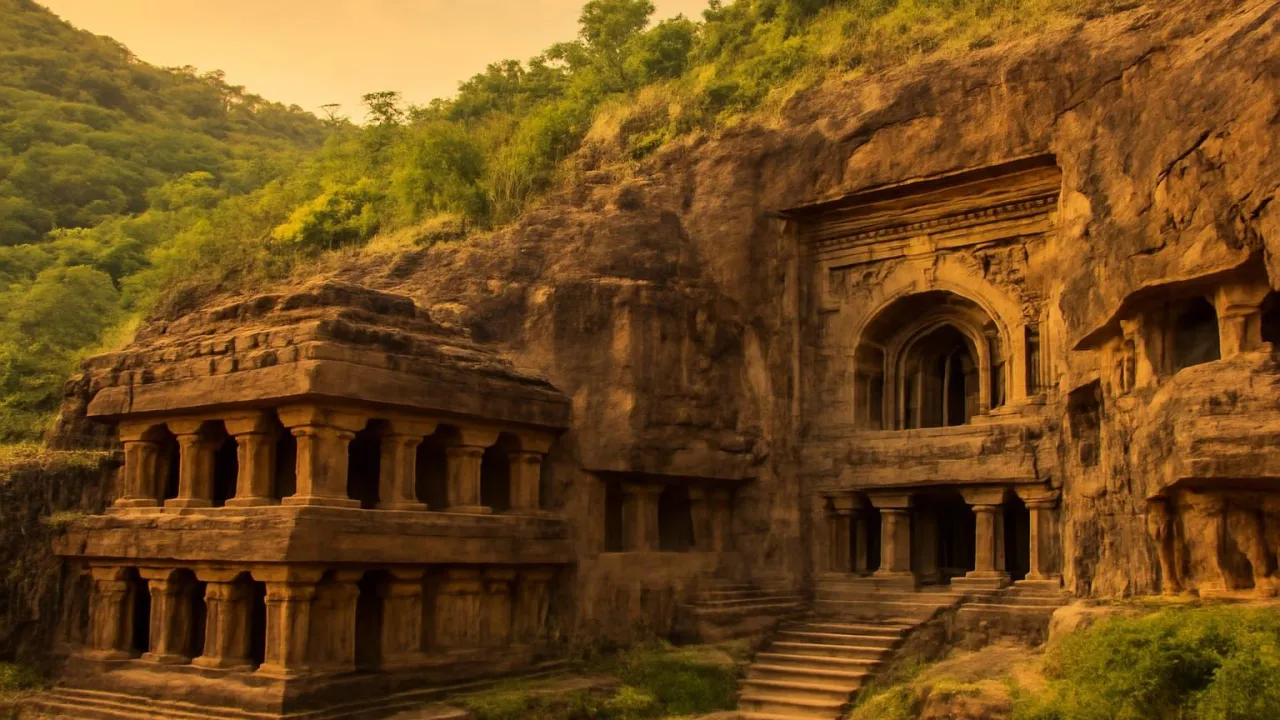
The Kailasa Temple at Ellora was carved from one giant rock!
✨ Word Sparks (Grade 2 Glossary)
Tap 🔊 to hear
pillar
A tall stone post that holds up a roof
echo
A sound that bounces back to you
artist
A person who makes art
🪝
Have you ever heard your voice echo inside a giant stone cave?
1
Hidden Wonders
The Ajanta and Ellora Caves are carved into rocky hills. People long ago made these caves by hand. They created dark halls and bright paintings.
2
Amazing Carvings
Some caves have huge statues and fancy . used tools to carve animals, people, and stories into stone. The colors and shapes are still bright today.
3
A Special Place to Explore
Many visitors come to see these old caves each year. They walk through cool tunnels and look up at tall carvings. The caves are a treasure from the past.
The paintings in Ajanta Caves are some of the oldest Buddhist art in the world!
✨ Word Sparks (Grade 3 Glossary)
Tap 🔊 to hear
chisel
A sharp tool for cutting stone
passageway
A hallway or path between rooms
heritage
Something special saved from the past
🪝
Can you imagine chiseling a whole temple from a mountain rock?
1
Ancient Hills Full of Secrets
High in the Sahyadri hills, stone caves wait in silence. The Ajanta and Ellora Caves were carved by hand, hundreds of years ago. Monks and artists shaped halls, shrines, and statues from solid rock. Echoes bounce softly in the cool, dark chambers.
2
Art and Stories in Stone
Ajanta’s walls are covered with colorful paintings telling old stories. These paintings show kings, animals, and even flying people. At Ellora, giant statues and columns fill the caves with amazing shapes. Artists used hammers and to create every detail.
3
How Were the Caves Built?
Workers used simple tools to chip away stone, making rooms and . The Kailasa Temple at Ellora was carved from the top down, not built up. This engineering method kept the temple strong and stable. It took many years and careful planning to finish.
4
Why Do People Visit Today?
People from around the world come to see these wonders. They study the ancient art and learn about old religions and cultures. The caves are a UNESCO World site, protected for everyone to enjoy. Visiting feels like stepping into a story carved in stone.
1. How did workers keep the Kailasa Temple strong?
2. What makes Ajanta’s paintings special?
🤯 Mind-Blowing Fact • Grade 4
The Kailasa Temple at Ellora is twice as tall as a giraffe and carved from a single rock!
✨ Word Sparks (Grade 4 Glossary)
Tap 🔊 to hear
monolithic
Made from one huge piece of stone
mural
A big painting on a wall
acoustic
How sound moves and echoes in a space
🪝
What secrets would you discover if you explored a mountain filled with hand-carved temples?
1
Hidden Marvels in Stone
Nestled in the lush Sahyadri hills, the Ajanta and Ellora Caves reveal a world of ancient creativity. Over centuries, Buddhist, Hindu, and Jain artists carved entire temples, halls, and shrines from volcanic rock. These rock-cut monuments are famous for their intricate sculptures and vivid . Echoes of chanting monks and the steady tap of chisels once filled these cool, shadowy chambers.
2
Engineering Feats and Artistic Wonders
The caves were not built but sculpted directly into the cliff faces, using simple iron tools. At Ellora, the Kailasa Temple stands out as the largest structure, carved from the top down to prevent collapse. Ajanta’s walls are covered with ancient , using natural pigments that have lasted for centuries. The precise geometry and resonance inside some halls show advanced planning and architectural skill.
3
History Carved in Rock
Ajanta’s caves date back to the 2nd century BCE, while Ellora’s were created between the 6th and 10th centuries CE. Each cave tells a story about the people, religions, and rulers of ancient India. The paintings at Ajanta depict scenes from the life of Buddha and show daily life long ago. Ellora’s caves celebrate Hindu gods, Jain saints, and Buddhist teachers, reflecting India’s diverse spiritual history.
4
A Global Treasure
Today, the Ajanta and Ellora Caves are UNESCO World Heritage sites, visited by scholars and tourists from across the globe. They are studied for their art, engineering, and cultural importance, helping us understand ancient civilizations. The caves inspire artists, architects, and historians even now. Exploring these stone wonders is like traveling through time, discovering stories that have lasted for over a thousand years.
1. Why did artists carve from the top down at Ellora?
2. What do Ajanta’s murals show?
🤯 Mind-Blowing Fact • Grade 5
To carve the Kailasa Temple, ancient workers removed as much rock as it takes to fill 30 Olympic swimming pools!
✨ Word Sparks (Grade 5 Glossary)
Tap 🔊 to hear
basalt
A hard, dark volcanic rock
iconography
Pictures and symbols that tell stories
conservation
Protecting art or nature from damage
🪝
Imagine standing in a cool, echoing hall where every wall was hand-carved over a thousand years ago—what would you see and hear?
1
Carving Civilizations into Stone
High above the Waghora River, the Ajanta and Ellora Caves are extraordinary achievements of ancient engineering and artistry. Between the 2nd century BCE and the 10th century CE, Buddhist, Hindu, and Jain artisans painstakingly excavated entire temples, monasteries, and halls directly into volcanic cliffs. Using only hammers, chisels, and iron picks, these workers removed thousands of tons of rock, leaving behind intricate sculptures, shrines, and vast open chambers. The caves’ acoustics amplify footsteps and voices, creating a mysterious, echoing soundscape that once accompanied prayers and chants.
2
Architectural and Engineering Genius
The Kailasa Temple at Ellora stands as the world’s largest monolithic rock excavation, measuring about 98 feet (30 meters) high and 164 feet (50 meters) long. Ingeniously, builders carved from the top downward, removing over 200,000 tons of rock to prevent collapse and ensure stability. Ajanta’s caves feature horseshoe-shaped entrances and barrel-vaulted ceilings, optimizing natural light and airflow. Many halls were designed with precise geometry and resonance, allowing sounds to carry clearly during ceremonies and gatherings.
3
Art, Religion, and Cultural Exchange
Ajanta’s murals, painted with mineral pigments, depict scenes from the Jataka tales—stories of the Buddha’s previous lives—and illustrate ancient Indian society, clothing, and customs. Ellora’s caves showcase a unique blend of Buddhist, Hindu, and Jain art, reflecting centuries of religious harmony and cultural exchange. The includes massive statues of deities, intricate narrative panels, and symbolic motifs carved with remarkable detail. These masterpieces reveal the beliefs, rituals, and artistic innovations of ancient India.
4
Preservation and Global Impact
Recognized as UNESCO World Heritage sites, Ajanta and Ellora are protected as invaluable records of human achievement. Archaeologists and historians study the caves to learn about ancient construction methods, pigment chemistry, and religious practices. Conservationists work to prevent erosion, water damage, and fading of the delicate murals, using advanced scientific techniques. The caves inspire architects, artists, and engineers worldwide, influencing modern design and cultural understanding.
5
Visiting the Caves Today
Each year, hundreds of thousands of visitors journey to Maharashtra to explore these breathtaking monuments. Guided tours reveal hidden passageways, colossal columns, and painted ceilings that have survived for centuries. The caves’ enduring beauty and complexity offer a window into the past, connecting people across continents and generations. Standing inside, visitors experience a powerful sense of wonder, history, and the creativity of humankind. Ajanta and Ellora remain living testaments to the skill and vision of ancient builders.